
Every Deal Is a Dance Ep. 12: From Hollywood Editor to Creative Technologist: Editor Christopher Hill on Reinvention, VR, and Building Your Own IP

Christopher Hill grew up at the intersection of two creative worlds — a father who acted on daytime television and a mother who was an art director at the Village Voice — and he absorbed both. By high school he was shooting and editing his own public access soap opera. By his mid-twenties he was cutting trailers at Showtime. And over the next two decades, he would become one of Hollywood's most versatile editors, working across reality television, independent films, and studio features, including more than 445 episodes of Big Brother.
But when the streaming bubble began to deflate around 2022 and the phone stopped ringing, Chris did what editors do: he looked at the raw material in front of him and found a new story to tell. In this episode, he sits down with host Mishawn Nolan to talk about what that reinvention actually looked like — not as a dramatic leap, but as a series of curiosity-driven experiments. He taught himself to code. He built a mixed reality puzzle game called Balls to the Wall for the Meta Quest. And he created ShowBuild, a Mac productivity app designed to solve a problem he'd never seen addressed in post-production: real-time, shared timecode calculation across an entire editorial team.
What makes Chris's story resonate isn't just the range of what he's built — it's the mindset behind it. He talks about spending six months sitting in the writers' room at True Blood just to understand how storytellers think, about why he clears his desk every night during his first month on a new project, and about walking into an edit room with Kevin Costner and McG and having to tell himself he belonged there. He and Mishawn explore the tension between the work-for-hire model that defines most creative careers and the entirely different psychology required when you own the IP and take the risk yourself.
The throughline is an idea Chris keeps returning to: don't let what you do become who you are. Staying curious, staying nimble, and refusing to be defined by any single role may be the most durable creative skill there is.
www.catcitygames.com
Every Deal Is a Dance Ep. 12:
Podcast Transcript:
Announcer: You're listening to Every Deal Is a Dance, part of the Look Legal pods from the law firm Nolan Heimann. And now, here is your host, Attorney Mishawn Nolan.
Mishawn: I'm Mishawn Nolan and I'm co-founder and co-managing partner of Nolan Heimann LLP. Before I was a lawyer, I was a dancer and then I was a choreographer. And so, it's not surprising that my law practice reflects dance principles of alignment and flow, especially when I'm working with my clients to monetize their creative ventures. And essentially what it means is aligning your abilities with your goals while at the same time balancing structure and reinvention. I want to make growing businesses less scary and less overwhelming for creators. So, everyone I interview in this series is someone who has a story to tell about authenticity, about their reinvention and their journey as a creative business maker. It is an opportunity to hear stories of alignment and flow in action.
Christopher Hill is a storyteller, problem solver, and creative technologist whose career tracks the changing landscape of Hollywood itself. Born and raised in New York by a working actor father and an art director mother, Chris grew up seeing creativity not as a dream, but as a daily existence. From the professional children's school and the school of visual arts to cutting narrative and unscripted projects, he built his name as an editor who could find the emotional spine of any story.
Today, in response to rapidly shifting industry, Chris is reinventing what it means to be a post-production creative, editing films and documentaries, while also building VR games and a new software platform that helps editors and storytellers collaborate more powerfully called ShowBuild. He's the definition of a multi-hyphenate creative entrepreneur, someone takes the core skills of editing and uses them to design entirely new products and businesses. If you've ever seen Big Brother, you've seen Chris's work. Chris, I saw on IMDB that you've edited 445 episodes of Big Brother.
Christopher Hill: At least. Yeah, don't know if they're all even on there.
Mishawn: That's commitment. That's a lot. But today what we're going to talk about is we're going to talk about what it looks like when you take editing skills and an editing mindset and you used it to launch your other creative business ventures. So welcome to the Every Deal Is a Dance podcast.
Christopher Hill: Thanks for having me.
Mishawn: Yes, absolutely. So, what I want to do is I want to start back at the beginning to what it was like growing up in your house where art was the family business. And I want to understand how did growing up in that environment shape what you saw for what kind of career you could have?
Christopher Hill: Yeah, I mean it was a lot of production and went to work with my parents. After school, someone would pick me up and either take me down to the Village Voice newspaper in New York where my mother was an art director and was on deadline. I think it was Monday nights. And by the way, everyone brought their kids back then. So, it was like mayhem in this newsroom with a bunch of eight-year-olds running around while the adults were trying to get the paper out and they cater the evening, cause all the parents had to stay late to get the newspaper out. So, I mean, I grew up in that there was no daycare room, we just, you know, and I made my own little play newspaper, with a typewriter and the copy machine at the Village Voice while they were making the real newspaper. And then would go around and bother all the writers trying to like sell them my pretend newspaper.
Mishawn: It's great exposure. I mean, that's kind of like what my house is like. You know, kids running around while I'm doing things and they get exposure. I mean, it's great exposure.
Christopher Hill: Yeah. It was, it was, it was the New York intellectual community, the New York art community. And when I wasn't there, I was down on the Upper West Side on set at One Life to Live, sitting in the makeup room while the actors got their makeup on and they would have a monitor and I could watch them film the show. And so was a lot of production. It was a lot of deadlines of production. And so, I guess it's not that surprising that, I ended up really blending my parents' professions together. I'm not an actor, but I ended up doing television production.
Mishawn: So, when did you decide, okay, of all the possibilities, right, in the creative universe, because you weren't only exposed to entertainment, you were exposed to a lot of creative production, how did you decide, I want to be an editor?
Christopher Hill: That goes back to that same period. At the age of 12 or 13, I begged my parents for a video camera and you know, a Christmas gift one year got me one and then got me, this is in early 90s, like an early Mac that could edit video. And so, I mean, I was shooting and editing in high school and there was a… made a public access show that was like a nighttime soap opera, just starring my friends who were all professional actors at that point. And we aired it on public access and I was editing at those public access facilities in New York and I scheduled the show so it aired right after Beverly Hills 90210 on a public access station. But I'm like, let's make a night of TV out of this. I'm like 15 at this point. You know, so going back to like the ninth or 10th grade, I was like, I love editing and production and making videos and all that stuff and then just continued that into college and so on.
Mishawn: What is it about editing that you love?
Christopher Hill: I like that that's where the rubber meets the road. That's where, you know, all of the phases of creation are super interesting to me, but a lot like what my mother did as an art director, she was taking what the photographers would do and what the writers would do and lay it out on the paper. And that's what would go to print. And editing is very much the same thing. You get all of these elements and then you lay it out and polish it and that's what goes to air and that's what I've always known. And it's great and I love doing it. And by the way, I studied cinematography in college. I was like, I'm going to be a DP. And so, I know how to load a Panavision magazine and I know lenses and I love, I mean, I have a lot of different interests. I've always been into animation and a bunch of things, but editing has always been this thing that I kept coming back to a skill that feels like home.
Mishawn: And when did you get the job that you said, that's it, I've made it, I'm actually an editor now?
Christopher Hill: I don't know if there's any one moment, I think that's, my mom often has me talk to her colleague’s, sons and daughters and nieces and nephews who are thinking about getting into the entertainment business. And one of the things I tell them it's about the long, tail of your career. I don't think I've ever had like an ‘I've made it’. I've had a lot of little I've made it moments, but I've never been looking for one job to lead to the next opportunity. And things that were exciting 20 years ago become blase after a while. After graduation, I got a job in marketing at Showtime and was cutting trailers and promos. And the first time I saw one of my promos air on Showtime, I was like, this is it! Then when I moved to LA cut my first reality TV show that aired in the US. The first show I cut didn't even air in the US. It aired internationally on MTV International, but then getting a US show and being able to turn to that on television felt was another like this is it moment. But there've been a lot of those throughout the years.
Mishawn: Yeah, that's, mean, that's the goal, right? To have a series of accomplishments that improve like over time and then to look back on the earlier stuff and say, that's nothing. at the time it feels super rewarding for someone to actually pay you for what you want to do.
Christopher Hill: Yeah, absolutely, when I left New York, my time at Showtime was over and I decided to move to LA. It was really about movies. That was the goal was to be on the art side of making movies and hopefully make something memorable, because there's so much content out there in media. I think everyone in the creative field wants to do at least one thing or a couple of things that stand out and you know can stand the test of time and I was doing independent films for the first several years I was in LA which was so fun and so raw you're working with like you know people who are new and really passionate and I was kind of new at the time I was only a few years out of college so we would just you know drink Red Bull and stay up all night like this is you know we're going to get into Sundance and all the stuff and that was great for a period. and then you start to, the goals change. And I mean, it's always been about, breaking new ground and trying to make memorable, pieces. But at a certain point, it also became about, I want to work on something that, has a wider audience.
Mishawn: Yeah. So, then you've been an editor for 20 plus years at this point. And then recently, entertainment industry has changed considerably. There's tremendous change. There's always been change. But the pace of change is astronomical at this point between technology, financing where production's happening, the distribution platforms, the business models. I mean, like everything is up in the air. So, you know, when did you first notice that there were shifts in entertainment? And when did you say, you know, I think maybe I need to start thinking about pivoting a little or reinventing myself a little bit.
Christopher Hill: You know, I was really fortunate at the beginning of my career when I worked at Showtime that my first job there, my first position there was actually as an assistant to the VP of production there. It was not a creative job. It was an admin job where I got to see the, you know, I was involved in budgeting and I was involved in how that network made money. And so, coming out of art school, you know, don't ask me how I got that job.
I mean, but I ended up getting a three-year crash course on how cable channels made money, both premium cable and the free TV channels like TBS or CNN or whatever. I never forgot that. So fast forward to 2008, I got my first Apple TV and back then it wasn't even streaming. You had to download the episodes for $2 an episode. And it was this big clunky box and I bought one and I remember thinking, this is incredible. And this is also going to destroy the business one day. Not that I'm blaming Apple for that, but it was, but it was such a better experience than cable. It was just like, this is going to change everything one day. and I remember having conversations with some people around town about it during that time, early 2010s, late 2000s. I remember that the notion that that could disrupt things being largely dismissed because we were still in a world where everyone had a DVD player and a cable box and it seemed like how could that be supplanted by internet stuff? And then we had a great decade in the 2010s and around 2021, there was this boom in streaming where, I mean, suddenly everyone's phones were ringing off the hook, including mine, everything seemed like it was for a moment going to be a smooth landing into the streaming world. But I kind of had this thinking back to my time working on the finance side, my gut feeling was this is a bubble and the next step will be cost cutting.
And then towards the end of 2022, suddenly my phone stopped ringing and I'm like, either this is personal or the cost cutting has begun. And I think it just seemed clear to me, especially when interest rates went up and it became more difficult for media companies to borrow their way to growth, that the only other way forward was to trim costs and get the profitability as quickly as possible and that meant defunding cable TV programming. And there was the reality TV industry in the 2010s and 2000s was kind of a magical thing because there were over 50 channels that each made three to 15 reality shows each. And a lot of people don't even, you know, do those numbers because these, some of these shows were so niche. was stuff that was on at the dentist office, you know, home makeover shows, redoing a kitchen or cooking show or, you know, whatever. There were just, there were so many, but that was the bread and butter for reality editors. and that's the stuff that, that got, defunded. So, at that point parallel to that, I had been into 3d animation and software and working on features. The whole time I was doing reality, I was never just a reality editor.
So, there were some periods where I was working on a reality show on a night shift and working during the day for a studio on a movie. So, I would, I would sleep two hours, drive to the studio, go sit in the edit room and work a 10-hour shift and then drive to the reality show, do another 10 hours. And I did I did that for about a decade. So, hard as it was, it meant that there were some other calls I could make to pivot when things changed.
Mishawn: So, what I want to explore is how you leverage your skills and mindset as an editor to make these pivots. So, for the listeners who might not know exactly what an editor does, could you describe what you do as an editor?
Christopher Hill: Sure. It's really the other end of writing. It's a lot of storytelling and pacing and getting deeply involved. To me, and I think probably lots of different editors will give you different answers to this, but that's what it is to me. It about crafting story, looking at the script, if you're doing a scripted project, and understanding what the essence of a story is, what the meaning of a scene is, and then bringing that out of the footage. And if you're doing unscripted, it's really looking at the footage and looking at the goals of the producers and then bringing that story out and keeping things clear and finding that emotional core to each scene in each episode or to the movie.
And that cuts across all the different genres. It's always about like, why do we tune in to watch a show? Because we want to feel something. We want it to be impactful. And if you're given great material, then we can deliver that.
Mishawn: And so, of all the skills that you need as an editor, what would you say is like your core skill?
Christopher Hill: Versatility, I think. I think that's so key for everyone now, but that's been the thing that I've tried over the years, continuing to develop my skills on the technical side, but then also on the creative side so that whether it's an action film or a cooking show, I have some grounding to approach any of those types of projects. Like one of the things that I was so grateful to get to do about a decade ago, I was working for this very generous producer who let me go sit in the writer’s room at True Blood for six months.
Mishawn: That's cool.
Christopher Hill: They were doing a writing workshop. And so, I just like went to this workshop every night with real writers and did all of the exercises that they were doing, not because I wanted to be a writer, but because I wanted to learn storytelling from these people who know it way better than I ever will.
And that was one of those things that I think really helped me along the way, especially in jobs that came after that where I was sitting down with directors and writers and having a better understanding of how they work and how they think and how they put stories together structurally, so much craft to writing and how they structure their stories and why they're doing certain things. And so, I was super grateful to get to just sit in there and use that as a first skill expansion. And so, I think that ultimately, it's things like that.
Mishawn: And so, with that curiosity, right, and that ability to do so many different things, how did you use that? How did you decide, I'm going to use all these skills that I have developed and I'm going to apply my curiosity and I'm going to create a VR game or I'm going to create a platform? Like what made you decide to do those things?
Christopher Hill: Why is anyone curious? You know, the VR game really came out of, explorations in 3D animation that didn't start off as a, I'm going to make a VR game that started off in, I want to learn character animation and visual effects. And then when VR came along in 2016, it was like, I took some animation that I had made for a TV show and brought it into a game engine just to see if I could, and very quickly was able to, in VR, stand inside this 3D animated room that I had made. And that just blew me away that you could stand inside your work. And I was like; I want to make something. And it was really just like, to see if I could. And then later on more recently, I just released my first VR game for the Meta Quest last year that came out of, when I realized that the, the business was changing and trying to start that process of doing other things and seeing what avenues I could pursue, learning how to code, finally getting good at coding and making a VR game was one of those things. You know, one of kind of a menu of things that I decided to go after.
I kind of had like a very rudimentary understanding of coding before that, but I put myself back in school for a year in 2023 because I was like, got to really know how to do this, even with vibe coding and all that stuff. Like I need to understand what this is, and same thing with the Mac app.
These things don't come from business plans with me. The Mac app happened because I was working on a movie last year that had all of these technical problems in terms of the way the movie had been worked on to that point and all of these different frame rate conversions and things that I needed to do. And I just went looking for an app, an existing app that I could use to do these conversions and realize that it didn't exist and I was like, you know what, I'm just going to make, I'm going to make this app so I can finish this movie faster. Made the app and then I started thinking about what else I could put in it and it evolved into this whole other thing. But these things usually start from solving a problem or being curious about something, versus an MBA business plan.
Mishawn: Most creative business makers do not start with the business plan, right? The spark is this desire for exploration, this desire to see, can I do this or what can I share curiosity, right? Which is the same for you. But there is a huge difference between exploration and curiosity and actually having to launch something into the marketplace and sell it. Right? It's, it is a big difference. Cause it takes a tremendous amount of courage to do that, right? To put yourself out there and be vulnerable and take the risk and, invest the resources, and try to make a business out of something that you've created. How did you have the courage to do that?
Christopher Hill: I think that just goes back to how I grew up. My parents believed they could do anything. They put me into a high school of professional children who believed they could do anything. And so that kind of ambition was just all around me as a kid. And it felt very normal. I think sometimes to the chagrin of my parents, because they think I'm crazy sometimes. But yeah, it just feels like, why not try?
Both of my parents were raised in the projects in the Bronx in the 60s. And my mother was one of the first black women to ever graduate from Cornell University, my dad went from the Throgs Neck projects to starring in a film at Paramount in his 20s and then going onto One Life to Live and they were just like, just, you can do it, just go do it, study, work, it'll be fine. So, with any of this, you have to kind of have the courage to walk into the room. It took a certain amount of courage to walk into MTV or CBS 20 years ago. The App Store doesn't seem like that big a deal after those things.
Mishawn: Yes so, were there any skills that you developed in editing that helped you with these business ventures?
Christopher Hill: Yeah, I mean the notes process, my inner voice is the voice of executive producers who have noted my work for the past 25 years and the things that audiences pick apart. You know, I will go on Twitter when I cut a show or a movie and see what the reaction is and it can be brutal. I mean, everyone's got an opinion and those are fair and I take them to heart. And I think about those things when I'm working in the app space, how is this going to be received? Is it confusing? I mean, I think apps also kind of tell a story, that when you launch the app, it walks you through onboarding and what's your first impression and what is the feeling you get from using this app? Is it delightful? Is it fun? Is it a chore?
Is it something that you want to return to? And so, I don't think they're that there's nowhere to hide in production. If the work isn't good, everyone's going to let you know - the studio, the network, the audience, and the same is true with software.
Mishawn: Yeah. And the other thing, so I've edited to the extent that every person who walks around with an iPhone can edit, right? I actually don't press the buttons. I work with my son. But in the process of editing stuff, like one of the things that I have learned is sometimes you can see something, you're like, I think I can make this work. And you try and you try to make it work. But you're like, you know what? Forget it. Abort, get rid of it, you know, do something else. And to me, like that I think is such a critical skill in business, right? Because we're always sort of confronted.
Everything you do in business is it when you first do it, it's a challenge, right? And you're like, let me workshop it, let me fix it, let me try to make it work. But then at some point, you have to know, is just this isn't going to work. Like I have to get rid of it, trash it, move on. Is that like a skill that you developed and how do you know? Like when you're working on something, how do you know like, that's it, this is not going to work, I have to trash it and move on.
Christopher Hill: I think you have to follow your gut instincts with all of I don't know if something's going to work or not until I do it. I think even when people give me notes that I might disagree with, I'll do the note anyway, because I'm like, I don't know, maybe I'm wrong. Maybe this is going to work, let's do it. And it also just makes me, you know, more pleasant to work with if I'm not constantly saying, pushing back on notes, but even when it's my own idea, I might not be sure, but I'll try it and then take a step away from it and take a good honest look, about why this thing is necessary, why this is additive to the show or is it not. One of the things about having done this for such a long time on the editing side is that, I trust my instincts now. They're usually right. Especially on the fast turnaround shows I have to work on. I wouldn't last on those shows if I wasn't usually right, because there's not a lot of time to do it over again. So that gave me the confidence to trust my instincts creatively.
And for things that are more new, like the app development. I'm still in the stage where I'm finding out what's going to work or what's not going to work. I made a VR game and I learned a lot from that about what works and what doesn't work, both in terms of the creative and the launch strategy. Specifically with the VR game, I learned a lot about the game industry and just what works in terms of the business side there. So, I'm applying those things, those lessons now with the Mac app. And so that's going to be a very different launch cadence and strategy than the game was.
Mishawn: So, take a few moments and tell us to the extent you want to, but tell us about the VR game, the name, where we can find it. Tell us about the game and tell us about ShowBuild.
Christopher Hill: Sure, the VR game is called Balls to the Wall. It's a mixed reality puzzle game available on the Meta Quest 3 and 3S, and it's available on the MetaStore. It's a match three puzzle game. It's super fun. There's 20 levels. You can hop in, hop out, play a few levels. It's been fun to see friends and family, especially nieces and nephews enjoy playing, my nephew was a really great beta tester and like broke the game when I was working on it a million times and, was super helpful in that way, but just watching people have fun with it was a joy. And so, yeah, it's available if anybody wants to give that a go.
And then the Mac app is completely different. It's a productivity app that, attempts to solve a number of problems that I've encountered in post-production that I've never seen solved before. I think because they're so niche and you don't even really know that these are problems unless you work in post-production. One of the sort of marquee features is a shared time code calculator because we always have to, get a TV show to time. And that's super important in working across a dozen people or 24 people, and producers constantly having to call editors or Slack editors. Like, you know, what's, what's your act timing or what's your scene timing? And then they usually have like, an app on their phones where they're trying to add all this stuff up over and over and over to make sure we hit an exact show time. One of the things that Showbuild does is automate all of that. Everyone sees the show time. It's updated in real time.
No one has to do the math. And it's available to everyone on the team. And each editor can just update their act. It updates that for everyone, updates the total time for everyone, and also tells you how far over or under your episode is. So, there's several features like that in the app that are I think, an opportunity to solve real problems which is rare, I was happy to see those features come together and start to work. Because it felt like kind of a rare opportunity to actually solve a legitimate problem.
Mishawn: Yeah, it's so different than what you do with editing. So, like, how did you sort of think about what your first steps were going to be to go from, so just to be clear, when you get an editing job on a film or TV, it's work for hire, right? Someone contacts you; they pay you, this is your scope of work, deliver, and you get paid. How did you think about going from a work for hire type relationship to now I'm building my own thing. I have to fund it. I have to deliver it. No one's telling me what the scope of work is and I'm responsible for everything. Put it out there. How did you shift your mindset?
Christopher Hill: Interestingly, I think that I've always had that mindset. I think a lot of folks in Hollywood do because we're all independent contractors ultimately. The only staff job that I've ever had was that staff job at Showtime. And then since moving to LA, it's been gig to gig. I tell friends of mine who are not in the entertainment industry that I, I haven't had a job in 25 years, but I string together enough of these freelance gigs that it looks like I have a job. But that I think for writers, actors, directors, editors, the electricians and the grips, everyone is gig to gig. And so, everyone has to kind of manage their life as a business to some extent. So, it's, I don't think it's a huge leap from there to the leap, as you said, is that you own the IP suddenly, you know, and you take the risk. I mean, that is, the big difference when we go and work on someone else's TV show or movie is that they're taking all the risk. And we get a weekly or whatever rate. And then, if that project is successful, they keep all the reward, but we got our weekly rate because they're taking the risk. And, with the software thing, I take all the risk, and then I lose if it's not successful or I keep all the reward if it is. So yeah, it's different, but, but, a similar mindset kind of turned on its head.
Mishawn: Yes. It’s about ownership, right? It's about taking ownership of all the projects that you're responsible for. So, if someone else is scared to pivot, like you pivoted, right? Like you partially reinvented yourself, because you're still editing, but you're also doing this other stuff. If someone is scared to do that pivot, what do you want them to learn from your story?
Christopher Hill: That I think that it's possible. I think the trick is lifelong learners and to stay curious and to avoid being sort of myopic and defined by what we're doing right now so that we can be open to other things. I think there's this thing that we can fall into where we define ourselves, define our identity by what we do for a living. And I think that that can prevent us from redefining ourselves. So, even though I've been an editor for a long time, avoided making that the center of my identity. So, I don't mind going and doing other things. So yeah, I would encourage everyone, know, actually no matter what field one is in, I think everything is changing so much that, staying curious, staying nimble, being willing to redefine who we are, redefine that identity, is key.
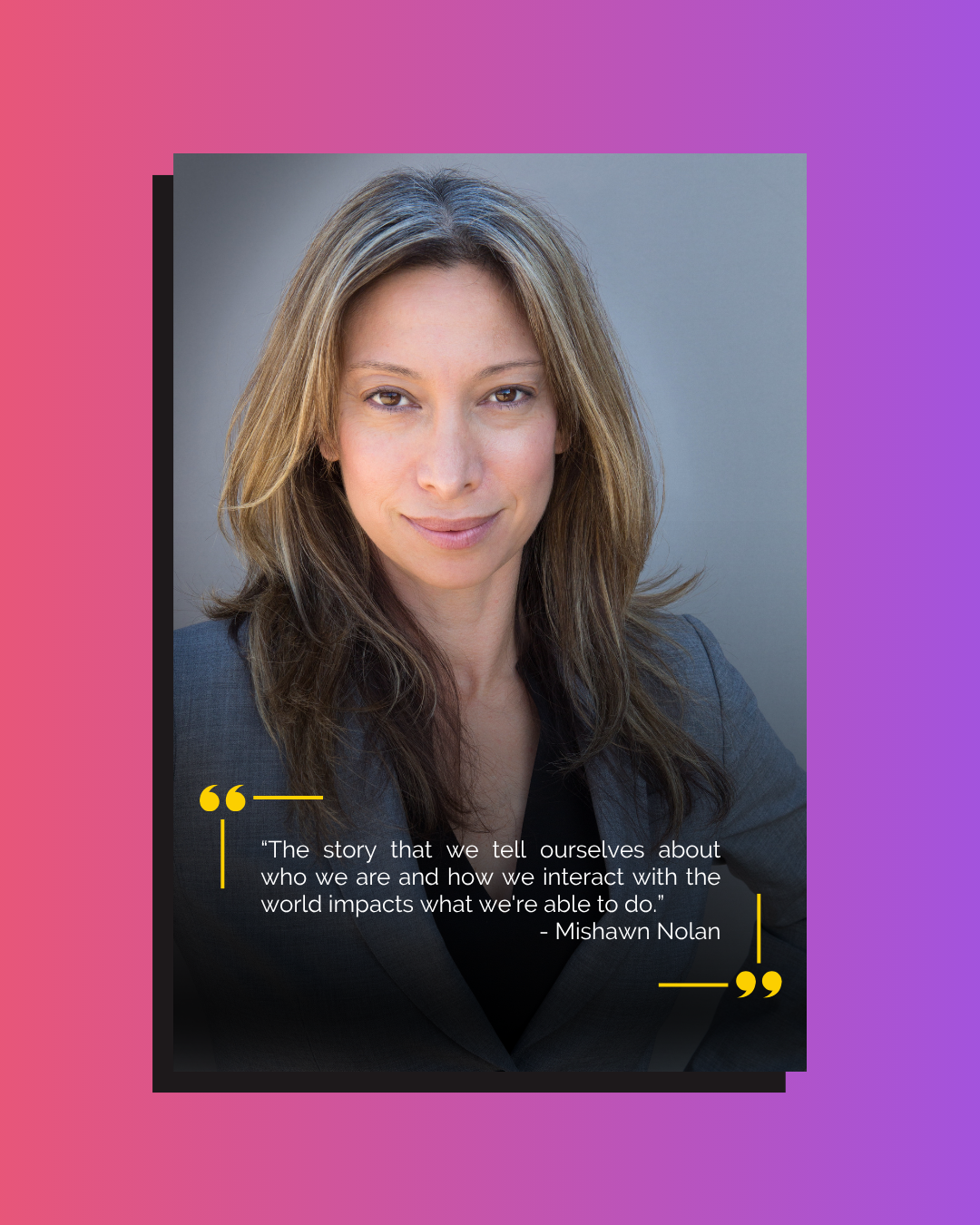
Mishawn: It’s really interesting you say that because I'm an attorney. I definitely identify myself as an attorney. But I'm a different kind of attorney. And you're right. The story that we tell ourselves about who we are and how we interact with the world impacts what we're able to do. So oftentimes, I'll have imposter syndrome. I'll be like, how did I get to do what I'm doing right now? Do you have that? Did you ever have that? And how did you deal with that?
Christopher Hill: Yeah, of course I've had that. Absolutely. When I first moved to Los Angeles in 2003, I was crashing on my friend's couch for the first two months and trying to figure out how to get started. I didn't know a lot of people in town. And by 2013, 10 years later, I was walking into an edit room with McG and Kevin Costner to work on their movie, Three Days to Kill. And to walk into that room, I had to talk myself into like, you belong here, you can do this. At the same time, for the first month that I was on that movie, I cleared my desk every night. I took everything, I left nothing in the edit room, because I was like, it is entirely possible that I'm going to get a phone call on my way home from work saying, thank you so much, we're going in a different direction because these are people who've won like Academy Awards and especially at that point in my career, I just wasn't sure if my work was at that level. It wasn't until the first screen test, you know, they test these movies in front of test audiences and they give audience scores, you know, before quadrant - older men, younger men, older women, younger women.
It wasn't until the end of that first test when the score went up and the studio and the director and Costner were like, you did a great job, that I stopped emptying my desk every night. And, I think it's those experiences that, if you get through them, when you get through them, conquer the imposter syndrome. And I sort of looked at it like, no matter what happens, I'm about to find out if I can do this. If not, they're going to let me know.
Mishawn: Right. And you just, you have to go for it. Right. So, what is next for you? What are your current projects? What do you see on the horizon?
Christopher Hill: In terms of the software, ShowBuild was just approved by Apple for the App Store, but it hasn't been launched yet. We're going to launch it as a private beta first, to really get it out there in a measured way and find out, set the expectations that this is brand new software that is not yet battle tested, but it's free.
I'm going to offer that, see who wants to try it. And then when it's ready, we'll put it on the app store. but I was excited to get the approval from Apple for that. On the editing side, I'm just finishing up a documentary Bitcoin Killing Satoshi, which is about this incredibly interesting person who may, or may not be, the inventor of Bitcoin. There's a compelling case to be made that he is, but it gets very complicated. So that's been really exciting to work on and they're currently turning that into a dramatic feature. Doug Liman's directing a movie that that doc is based on and that they're shooting right now. So, you I may end up being involved in that on some level.
I'm still doing visual effects. So, I'm working on another movie right now, just as a visual effects artist, oddly enough doing computer interfaces for the movie. So, they need a bunch of science fiction computer interfaces on screen. And they were looking for someone who could do UI. And I'm like, I've done a lot of real UI, let's see if we can do some, like, movie UI. So that’s been a lot of fun and I’m in the middle of that right now.
Mishawn: Very cool. Well, thank you very much for sharing your story sharing with us how you reinvent yourself constantly. Obviously, the spark is curiosity. So, what I've learned from you is not to define yourself by anything that you do, but to define yourself by the discovery and the journey that you want to undertake. So, thank you very much.
Christopher Hill: Thank you, thanks for having me.
Announcer: Thanks for listening to Every Deal Is a Dance. If you've enjoyed the show, please share with other creative business makers and kindly rate and review us on your favorite podcast platform. For more information on how we can help with your own legal needs, check out our services at nolanheimann.com. That's N-O-L-A-N-H-E-I-M-A-N-N.com.