
The Licensing Exchange Ep. 8: From Retail Floors to Iconic Brands: Miraculous Global Head of Consumer Products Rosalind Nowicki on Building Heritage and New IP
The Licensing Exchange is back with one of the most accomplished consumer products executives in the industry. Rosalind Nowicki, Global Head of Consumer Products at Miraculous, joins co-hosts David Schnider and Greg Pan for a conversation that traces a career across Disney, Universal Studios, 4Kids Entertainment, 20th Century Fox, Peanuts Worldwide, and Mattel — and lands at the helm of consumer products for one of the most successful new IPs of the last decade.
Rosalind shares how she got her start at Disney during the Little Mermaid boom, when licensing was being invented in real time, and how that "no rules" era shaped her instinct for unexpected partnerships — including a Breathless Mahoney evening gown collection for Dick Tracy that sat on retail floors most licensed product never reaches. From Peanuts collaborations with Levi's, Vans, and Marc Jacobs to Miraculous's nearly billion-play partnership with Roblox, she walks David and Greg through what makes a collaboration actually work for both sides — and why "you've got to have the fluff to sell the stuff."
The conversation also dives into the harder strategic questions: how to refresh a heritage brand for today's consumer, how to make the internal case for collaborations that build brand value over short-term revenue, what licensees need to bring to the table beyond a great pitch, and why retail compression — fewer retailers, faster-aging kids, the rise of digital play — has reshaped what a successful licensing program even looks like. Rosalind also pulls back the curtain on her Licensing Expo prep, including the pre-show virtual summit Miraculous now runs to free up booth time for the relationships that still drive the business.
For anyone working in or around brand licensing, this is a rare chance to hear from someone who has built programs across the full spectrum — from $1 billion film franchises to legacy properties to a 10-year-old IP being readied for its next decade.

The Licensing Exchange Ep. 8:
Podcast Transcript:
Announcer: You're listening to the Licensing Exchange, part of the Look Legal pods from the law firm Nolan Heimann lawyers for creative business makers. And now, here are your hosts, attorneys David Schnider and Greg Pan.
Greg Pan: Hello everyone. Welcome to The Licensing Exchange. I am your host, Greg Pan, and together with my co-host David Schnider.
David Schnider: Hey Greg, how you doing?
Greg Pan: We're doing great. And we have an excellent guest today, Roz Nowicki, who is currently the global head of consumer products at Miraculous. Roz has had an impeccable career almost everywhere with some of the biggest brands and properties that many of us have grown up on, including Disney, Universal Studios, 20th Century Fox, 4Kids Entertainment, Peanuts, Battelle, working on amazing properties in the Disney parks, the Little Mermaid, Jurassic Park, Pokemon, you name it, she has touched a lot of it and has been a part of collaborations and consumer products development throughout her career. Welcome, Roz. Fantastic. We're glad to have you on the show.
Roz Nowicki: Thank you so much for having me, Greg and David. Pleased to meet you.
David Schnider: So, Roz, I always like to start with the same question to each of our guests. maybe it was your high school dream to be in licensing, but I doubt it. So how did you get into this industry?
Roz Nowicki: Well, I'm sure you've heard this before, but I'd never heard of licensing. And I started as a retailer and then eventually made my way to Disney in product development for the theme parks. And one day I found myself in an interesting situation with the person that was running licensing who came over and offered me a role. And I said, I have no idea what that is. And he said, well, you know about product and I like your product sense, what you're doing for the parks. And I'd like you to join my new team that is Motion Picture and Television Licensing here at Disney. I can teach you licensing, but I can't teach you good product sense. And the rest is history and I was hooked.
David Schnider: What was it like working at Disney in those days?
Roz Nowicki: It was a very entrepreneurial environment. It really moved like a smaller company. And I think it was because we were in a discovery mode of really trying to figure out the licensing world because we hadn't really explored it outside of Micky, Minnie, Donald, Goofy, Daisy, you know, what we call the classic characters. So, we really hadn't had film and TV licensing in the portfolio. Ironically, before that, we really hadn't exploited it. So, it was just, it was really fun they were willing to try things and willing to try new things and there was no formula. And I think as a lot of companies progress, they lose that kind of, I don't know, juvenile joy of the world to discover new things and they kind of start becoming formulaic and very matrixed and very layered. And then back then it was not that way and it was a great experience.
David Schnider: So, Greg talked about the various companies you've worked up, but can you tell us a little bit about your path and how you got to where you are now?
Roz Nowicki: Sure, sure. After I left Disney, I ended up at Universal Studios. So, I kind of started this whole studio path, and that was not where I started originally. sorry guys, I was going to be a lawyer and then I decided that wasn't for me.
David Schnider: Wise choice.
Greg Pan: Fair enough.
Roz Nowicki: So, for me, the excitement of the licensing business, and it did culminate in some negotiation skills and obviously working very closely with lawyer partners. But I ended up at Universal for quite some time, and that's where I worked on things like Jurassic Park and even ET. It was super exciting there. And from there, I went to a company called 4Kids Entertainment, is well known from a lot of like our world, but not necessarily from the broader consumer world but we were responsible for a lot of things like bringing a lot of Asian brands to the US like Pokemon and I when I started there I was working on Yu-Gi-Oh and for me the excitement there was that I was able to do a lot of broader things we were smaller company bigger impact I was able to get more involved in international a lot more marketing. And then from 4Kids Entertainment, I was at Fox for a bit. So, you have Simpsons and Ice Age and things like that. So, kind of back into the foray of the studio world until I left there and I went to run Peanuts, not the Planters Peanuts, but the Schultz fam, because I often had to explain that, as you can imagine. And so, I ran that, the enterprise there, which is Peanuts Worldwide for four years. And that was really fun. It was a singular brand, really focused on that. Obviously, a very heritage brand with 70, now 75 years of brand equity. And that was very exciting until I left there and I went to Mattel and another very storied brand being Barbie and obviously Hot Wheels. Running all of this was really gradually larger responsibilities in the consumer product space.
And then I left for a few years, kind of took a hiatus, did a few advisory things, had a couple board seats until I ended up here at Miraculous, which I found to be super exciting. It's a brand I looked at, remember saying, what's going on there? This ladybug with all these spots and why is it doing so well? And I understood it more as a competitor at the time. Now, obviously you're all competitors in the licensing space when you're going for shelf space, right? And they approached me with this role and I found it to be a really exciting opportunity to take a 10-year-old brand and kind of take a fresher approach to it and really prepare it for the next 10 years. So, every brand is exciting in whatever stage they're in and they present you new challenges and opportunities. So, where I am today is with a now almost 11-year-old brand and really reinvigorating it with tons of new content that I'm not in charge of. I'm in charge of consumer products and really leveraging that to build the brand. So, it's exciting.
David Schnider: So, I remember the first time I saw Miraculous at licensing show and I had this kind of whoa moment. But I am not the target market for it. I had three boys, so they are not the target market either. Can you tell us more about the property and how it started and what you guys are doing now?
Roz Nowicki: Absolutely, a lot of the influence for the brand came from anime. So, it's an area that I know very well from working at 4Kids and some of the anime brands. And so, you can really see that in the animation. And we're a couple hundred people actually. The studio is based in France and we have the US offices here, mainly the business offices leading consumer products, but also the management and it's really a beautiful brand that has a female superhero, somebody you can aspire to be but also relate to because she is full of all of the angst and everything that goes along with being a teenage girl but yet she actually is a superhero with amazing powers.
And I think what people love about the brand is they see themselves in a character like that, it’s always good to have a real person that can do extraordinary things that you can emulate and I think that's what little girls and now young women actually aspire to be because you have, you know, 10 years of brand equity. So, you obviously have girls that have grown up with it around the world. And so, I'm finding exciting tapping into multiple demographics and segments that we can really explore to build the consumer product space. So that's kind of a little bit about the brand and it's about building a whole superhero universe with other young ladies that become amazing superheroes too. So, it really emanates from Ladybug though.
Greg Pan: And Roz, you mentioned kind of working on these up-and-coming brands, legacy brands, new brands. Can you talk a little bit about your approach for working on an older legacy evergreen brand versus like a new hot property that's getting pushed by a new movie and it's kind of lifting off due to popularity?
Roz Nowicki: Yeah, it's a great question. There are some similarities, but obviously there's no history with your, with, know, a brand-new brand. But you also look at history to kind of leverage it. You're looking at your competition with both the similarities are you're looking at competition in both cases, right? You're looking at what your points of difference are, what you're really going to lean into in terms of the brand DNA. But when you look at something like you walk into a Barbie, 70 years of brand equity, you walk into a Peanuts with 75, it's very different and it's also somewhat easier and somewhat harder, right? Because you're looking at and you're saying, well, we have all of this. So great, you've got built in awareness, but you still have to establish it and say what's relevant for today. So, you've got the history but you need to make sure that you're part of the cultural conversation of today's consumer and I think that makes it sometimes more challenging because you have to prove it right. It's like it's an old brand but what we're seeing in the market today is and especially they often say that when you know the world is in a difficult place which I'm not going to go there but it is in some ways right?
David Schnider: U-huh.
Roz Nowicki: That you really, your heart really wants to have something that keeps it feeling full and feeling full is harkening back to something your childhood where you didn't have a lot of troubles or things like that or the world situation. So, heritage brands are killing it these so those are really taking up the consumer awareness. So, when you have a brand-new brand, or even I would argue a newer brand and we're 10 years old, that's nothing compared to 70 years, you really have to look for ways that are unique that you can address the consumer or in this case, the first gatekeeper happens to be a retailer and your point of difference. So, you approach it a little bit differently with the heritage brand, having that history, but making it relevant for today. A brand-new brand, it's still the same thing. You're approaching it and what makes it unique and what makes it different and trying to, but it's harder to get the retailers to buy into something like that because they don't know. So, you're having to introduce it. I'm in a great space where I have something that's 10 years old, but you constantly have to refresh it. And so just because you're 70 years old or 100 years old, like Mickey, or you're one year old and you're coming on the scene like K-pop Demon Hunters, like crazy, you're still looking at the same strategies and still figuring out how you really fit into the overall ecosystem at retail, which is where you start and getting that consumer appeal.
David Schnider: How do you do that? How do you go about refreshing the brand with consumers?
Roz Nowicki: Well, it's interesting what I've really employed and you see it a lot out there and it's become more common, but early on it wasn't as common, was really approaching people for incredible collaborations and integrations with their brands. And so, you really look at things like in the case of Peanuts, earlier stage collaborations with companies like Levi's and Vans were at a place where kids were, but not little kids because Peanuts it's been like multi quadrant brand, but what the relevance for those kids that were buying at the time the Levi's 10 or 12 years ago, the key was that we wanted to be where the kids were. We wanted to be relevant. Those consumers, especially the millennials and the younger kids, the Gen Zs, are the ones that are the trendsetters, right? So, you really want to be in that space. And so, I think that really collaborations was a key there. Being very savvy on social media. That's really something that's staying current, looking at what's going on in culture and addressing it with your brand and making sure that they're engaging with your brand. And that's the social media piece. I think from a consumer products place, it was a lot of collaborations, figuring out what aligned with your brand or something that was just an aha moment that really was unexpected is also something, because it gets people talking. And then the social media piece, I think, is critical to address the younger consumers and know where they are.
David Schnider: Can you give some examples of some of the things you've done at Miraculous to either the social media or just creative brand projects or collaboration?
Roz Nowicki: Absolutely. Yeah, I mean, we really hadn't done a lot with social media a couple years ago. And we have a marketing team that's phenomenal, that's really leaning into that. Obviously, a lot of these are our target consumers that are running our social media. So, they really are doing what they call social listening, right? So, they're out there constantly seeing who's interacting with Miraculous and then going into their pages, if it's an influencer or a celebrity, and engaging them in conversation about Miraculous, so then their followers are seeing how we're engaging. So, it's kind of a really interesting way of weaving things into it.
We've also really leaned hard into gaming. And so, we've done a lot of gaming integrations, and kids are obviously there. We’re the number two game on Roblox in terms of branding. We have almost a billion plays, we've been there for five years. It's also first mover kind of - we definitely grew that space because we were one of the first brands to be on the Roblox platform. So, we're there and we're doing integrations with some of the leading games. So, leveraging that and you'll see more this year. Last year we did Talking Tom, Talking Angela, we did Stumble Guys. You know, if you know any of these brands, you know that some of these bring us visibility in other demographics and it helps them to the best collaborations help both sides, right? So that's something that we've done a lot of, the gaming, social media, we're working on some collaborations now that ⁓ we'll probably be announcing soon. And the biggest thing I have that I can talk about today is that we're doing a lot with experiential. And that's critical. And so, we're doing things with location-based experiences, what everybody calls it, and family entertainment centers, places where a family can go and engage and they can play out the Paris experience where you're saving Paris as a superhero, because that's really where our home is, that's where Ladybug lives. And that's every episode pretty much is about saving Paris. So, we really try to lean into that because we've been told, we're like, thanks a lot, you guys made my daughter want to go to Paris for her 12th birthday, and we're like, sorry guys, enjoy the trip, but it's really exciting, right?
So those are the kinds of things. I mean, letting them experience it through location-based experiences, a little bit of that happens in gaming, and then of course with the consumer products piece and really leveraging maybe products that they're already buying and really making sure that we're aligning it with Miraculous. So those are some of the handful of things that we're doing or we're working on.
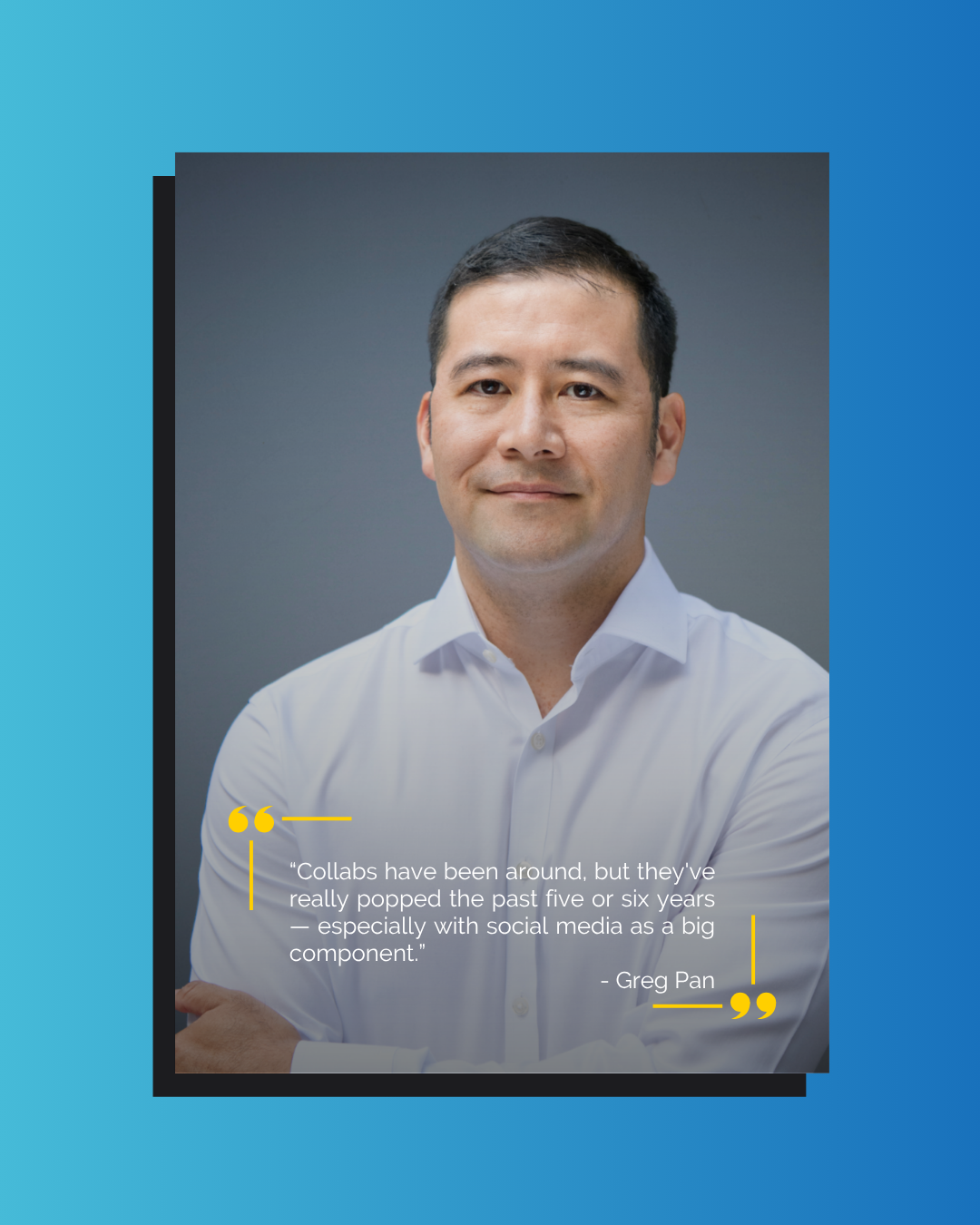
Greg Pan: When you talk about collaborations, like collaborations, not always, but very often, they're not necessarily the best royalty generating types of projects. You have to kind of play that intersection between marketing and licensing. Do you ever have difficulty working together with stakeholders and organizations kind of convincing them that this is licensing, but it's not a revenue play as much as it is a marketing play and convincing them to back that project, you know, put resources against it and understanding what that is. Collabs have been around, but they've really been popping significantly the past five, six years, especially with social media being a big component of it.
Roz Nowicki: I think every place I've ever been, I've had to explain the value of a collaboration, being honest. So not going to call out any particular studios or companies I've been at, but the truth is, obviously you're trying to generate revenues. And for the most part, I've been public companies. So, they're very focused on their quarterly reports. And so, when you're doing things that are building a brand and you're in the licensing space, you could argue that it's a marketing play. But oftentimes in the consumer product space, you're - as an example at Mattel, I was doing everything that wasn't vertical. So, my consumer products leadership there was really specifically to licensing out things that we weren't making. So, while we were the biggest doll brand in the entire world, effectively, we still hadn't really proven ourselves, let's say, in some other spaces. And whether it's fashion or beauty and things like that, there certainly was a lot of interest. There certainly was that viability for that but you still need to really build that and get that credibility. That's something I'm really working on here at Miraculous, the core of like our superhero when she's her regular self, she wants to be a fashion designer, right? So, I'm leaning into that heavily and really trying to make sure that I am working with collaborators that can build that credibility in the fashion space, because we don't have it right now.
You know, I mean, you have to build it with other companies. So yes, it sometimes was a difficult conversation, but when you explain to them that you have this plan and the plan is to start here and build on that, to build that credibility and you explain that it is a rainmaker and that that brings other collaborations and then financially brings you rewards. Most of the time I received a big thumbs up on that, but it's not without explaining the reason and also having a path to success.
Greg Pan: And then we talk about kind of branching out to new categories, going to like unknown and new domains. What's kind of your strategy and kind of identifying what these new categories and new audiences might be? And do you have any stories or deals that you've done in the past that were kind of venturing into unknown audiences?
Roz Nowicki: Right. You know, early, I knew, well, we talked a little bit out there at the top of the hour that, you know, here I was going into licensing. had no idea, right? There are no rules and, know, honestly back then, and we're just going to let's say late eighties, which is a long way away. There were no rules. I mean, licensing was kind of in that stage. So, for me, walking into Disney, I remember having this big idea that we were doing this, movie called Dick Tracy, a lot of people have heard of that. And it was something that I was trying to, figure out how you license it, because it's not an animated property, right? It's live action. There wasn't a lot of live action, licensing back then, that I can really put my finger on. And so, for me, I was like, well, what can I lean into? You've got this, you know, beautiful female character. with Madonna playing Breathless Mahoney, and what can I do? And I actually approached, because I came from the junior apparel space as a buyer before Disney. I approached an evening gown company that did basically prom dressing and accessible price point evening gowns, to do a Breathless Mahoney collection. Because she was this sexy sultry chanteuse in the movie, I had to work with Madonna's agent who was a little bit wary of it because obviously Madonna had her own personal branding, right? And we did a collection of evening gowns that, they were elegant and they had long gloves and very inspired by the Dick Tracy era. And I think that was something I was really proud of because it was kind of like one those, everyone went, we don't have to just do t-shirts and sneakers and hats and it's the traditional stuff.
There are other things we can do that kind of take it to a different direction and end up on floors of retailers that normally don't carry licensed products. So, I mean, that's a primary example of one. And I think I've used that as the benchmark for the rest of everything I do. It's like, what can we do that like, but it has to be something that actually fits for the brand, right? You can't just like think of just something and go, hey, we're going to do like high-end Mont Blanc pens for this brand unless you have some connection with it.
So, it's always about really analyzing the DNA. I mean, that is consistent with everything. What is right for the brand? If it just looks like a collaboration for the sake of just getting attention, I don't think those generally work. That's really fun for me. Every brand is like, what could we do? What's that out there thing? Let's not put a box around it. Let's figure out some really unique things that we can actually execute against. And we go for it and try it. Sometimes people look at us like we have 10 heads and other times they go, huh, that could be really cool because it gives my brand some awareness in maybe a demographic that I'm not capturing. So, you both win. I think those are the best collaborations. Both parties win and they're equal.
Greg Pan: And then when you identify those white spaces, what's kind of your process of putting everything together? Do you go to the retailer first saying, we're thinking about doing this. Can you recommend who your suppliers are or do you go to the manufacturers and try to work with them on the brand and then sell them to retail?
Roz Nowicki: It's interesting. It's kind of a culmination of what you just said. I mean, we look at those things and we look at the white space and we look like the opportunities. And then we, lot of companies, ourselves included, have a retail development team that also will talk to retailers on the side. Because sometimes you could say, hey, that could be a really good DTR opportunity. And for those of you that listen to this, probably know, but direct to retail is a huge category nowadays, whether you're going to a Primark or you're even talking to a Walmart or things like that, that is a key category. So, you have to say to yourself, if I'm going to approach this category, where will it sit? Because you really have to have that. You kind of can have those conversations at retail. And then you figure out who the top suppliers are in that category, assuming you might go after it from a traditional license. And even a DTR has two components. One could be the retailer makes it, and one could be their chosen supplier makes it exclusively for them. And that kind of is a hybrid DTR, right? And so, we really approach it from figuring out all those angles. And then, as trite as it sounds from a sales perspective, you kind of make a list of who you really want to get, and then your secondary and your tertiary until you, you kind of make your way down the list, and you approach them and put together a very bespoke, direct presentation for them.
And that's really key too. You have to go after these things and not make them feel like they're on a list, which is what I just said. It really has to be something where you put together ideation, where you think it's going to be. So, you approach them with the thought process. So, it's not just, hey, what do you think of this? You really have to go in with all of these ducks in a row, so to speak. So, you make sure that you have a path to success that they can recognize. And then ideally, they'll go for it and you end up putting together a deal.
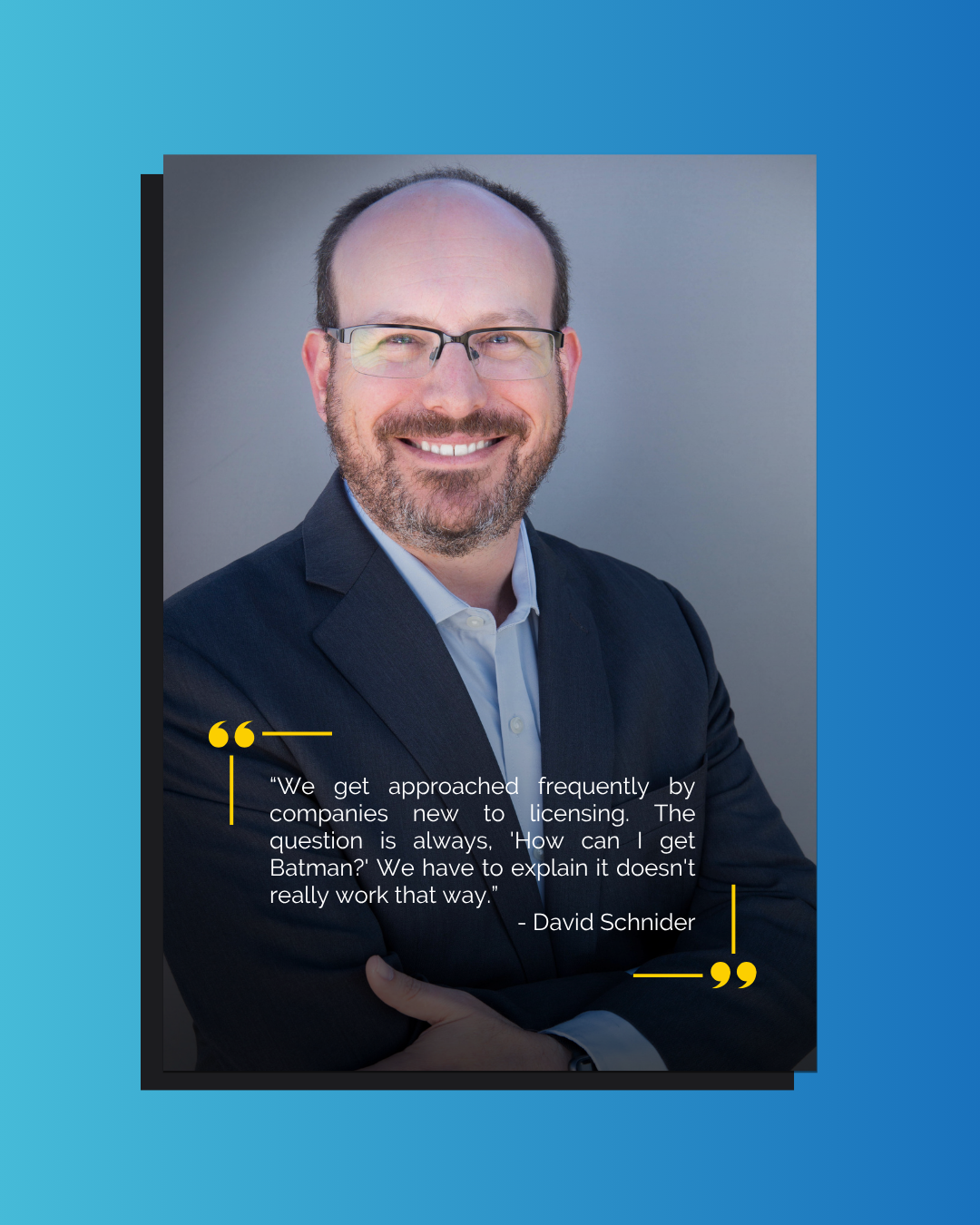
David Schnider: We get approached frequently by companies that are newer to the licensing industry. The question is always, great, how can I get Batman? And we have to explain it doesn't really work that way. But I'm curious when licensees are coming to you pitching products, either in your current role or in prior roles, what are you looking for in licensees? What do they have to show to really be able to get these licenses?
Roz Nowicki: Well, there's a few things. One is they really have to understand the market they're in because I've had people approach us or, you know, us or previous roles where they really are just really new. Like they're just trying to enter the market. So, in their minds, they're they haven't even shipped a product, but they're thinking the way they can get in is through applying a really killer license to their product. That's all good and fine, but you don't have a vendor number at Walmart. You don't have a path to success. You don't have a track record. So, number one, somebody really has to have that. It has to have already distribution in the marketplace and a firm understanding of it. A passion for the brand is another big part of it for me. They come in, they really don't know. like, we've seen the lady with it, we don't know what it is or anything. It's kind of like, well, wouldn't you do your homework? I mean, I would do my homework if I were approaching you. So what are you approaching? How do you see this? What's your creative take on this? That's another thing I really look for, innovation companies that look for things that are unique to the brand and will approach it from a less, shall we just say logo driven kind of opportunity and something that's really truly integrated.
So, it's really about distribution, the passion, the creativity, and clearly there's obviously metrics that are associated with it. it's nice to have someone approaching you that has a little bit of knowledge, which is why people come to you and you can educate them about royalty rates and turn you know clauses and all the different clauses that come into it and articles and all the things that we look for as licensors so they don't come in completely empty-handed but - I mean obviously it's critical that there's advances there's guarantees there's royalties and things like that and that's another piece of it but that really I don't even get to that point until I check all the other boxes you know.
David Schnider: Yeah. From a company perspective, you've been at a number of big companies on the licensor side. I know it can be challenging because there may be many properties and you have limited resources. Do licensors tend to develop a strategy around their properties? And if so, how do you go about figuring out what that strategy should be?
Roz Nowicki: Perfect, well it's different with, know, obviously this new, you have a new movie and you're at...Studio X, let's make it up because I've been with a few so I'm not going to pick one and you know, you're basically faced with a here's a script or even once in a while, which is really terrific, a producer, a director comes in and gives you the pitch. Which is really fantastic because I think that's the smartest thing. When I was at studios, they're really integrating the consumer products team into the process. Obviously, Disney, I think probably pioneered that process and maybe does it best. Sorry other studios, but true. And it really is important that the consumer products is kind of part of that whole ecosystem, you know? And so, I think that for us, then it's about understanding the script, making a list, like what are the opportunities? Is this going to be a big budget movie? What's the demographic it's approaching? I mean, you have to kind of know all of that before then you go, okay, well, our target's going to be kids. We're going after kids five to 11 and their families or whatever. And then you kind of start making a list of what you could do. And you have to start putting together a game plan, a marketing plan, who you're going to approach. if there's a consumer products rollout to it, and then there's marrying, if you're not the marketing team, marrying with that marketing team that happens to be at the studio marketing level, what promotions they're going to do to promote it, aligning, because there's so many different layers, especially if you're looking at a studio, that you have to really make sure that you're all in lock step.
So, the marketing plan often is the larger one for a theatrical release as an example. And then all of that, drills down to when the consumer products kind of comes into that. We would look at those and kind of fold into it. The smaller company, maybe it's not a theatrical release, you have a slightly different look at it because you're not emanating from that larger, broader marketing plan. You're kind of all of it, right? So, you're kind of creating that for that brand.
So, there's a lot of different ways I think that they approach it, but it really has to start from understanding that brand, what that point of difference is, what makes it special, and then really creating that marketing plan around that and CP kind of supports all of that. Because CP really should be, I've always talked about this, but I've had people call BS on me. It's like, consumer products isn't just about the money you're making, it's also about the value it gives you across the floor at a major retailer. You literally are across that.
So, every place you go, whether it's the cereal aisle, maybe you're lucky enough to get in the food and beverage aisle, and you're going across it. And then in a place like Walmart, I mean, they don't just have food, they have all the hard lines and soft lines goods. And you're impacting that store across the board, something that you normally wouldn't get from just a promotion. So, consumer products is more than just selling a t-shirt. It's the fact that that person is wearing that t-shirt maybe 50 more times and having that visibility for the brand and then also the impact that you're getting across the store across all those other levers that you're pulling that you wouldn't normally get if you didn't do a consumer products program.
Greg Pan: I'm just curious, I have this question for you, since you've been in a lot of departments. There are different philosophies in terms of quantity versus quality with licensees. Some licensors sort of like to just have best in class, big one, big licensees, and they don't try to deal with the smaller ones because you have to manage it and you want to work with like best in class. And other ones kind of like to have a very diverse portfolio. Maybe call them lottery tickets, I don't know, but like licensees a lot of different places, backup, secondary ones, and just so you're kind of hitting upon every channel of distribution as well as quality of product and price point. Do you have an opinion on like, do you think is like a better strategy?
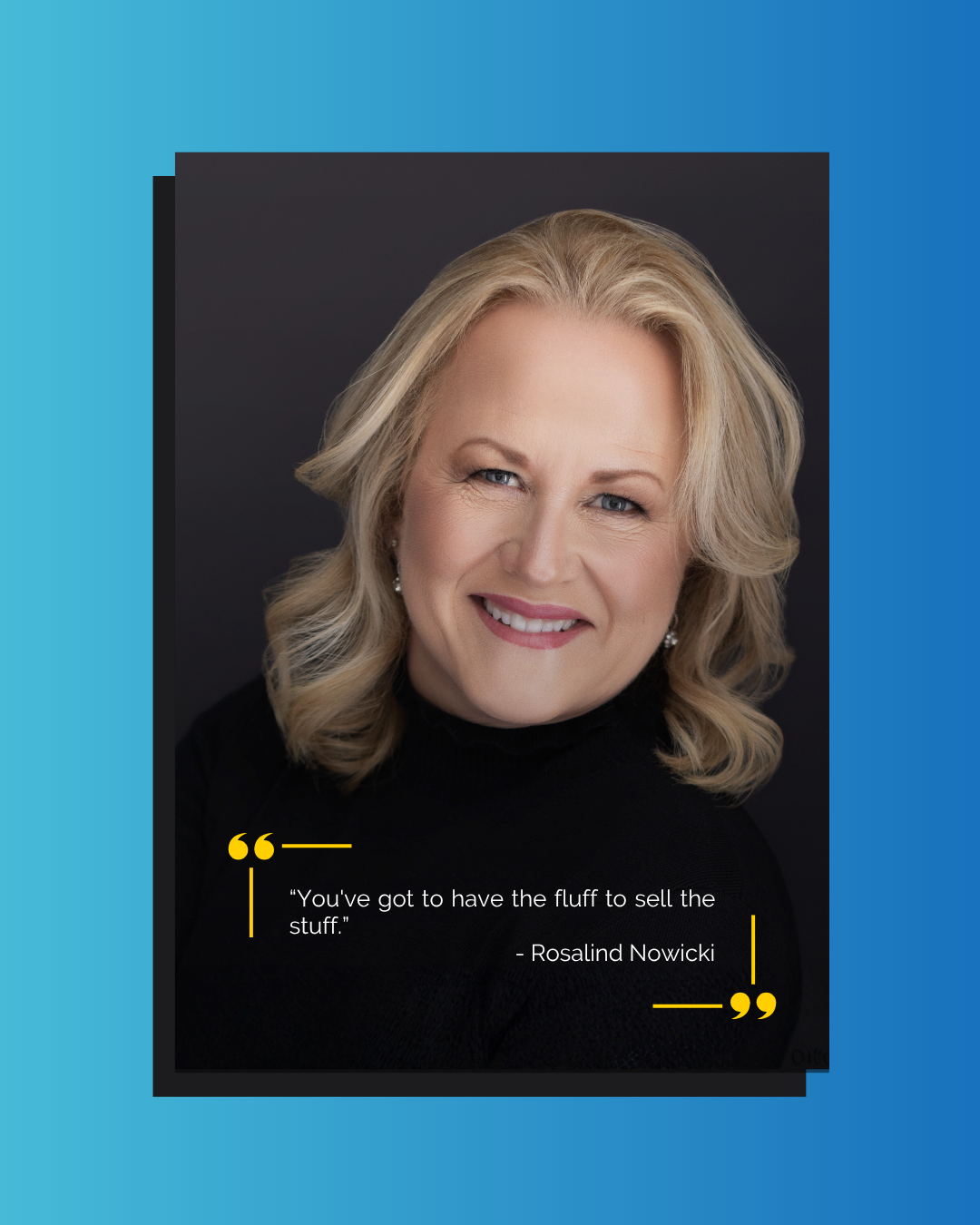
Roz Nowicki: Well, you know, I'm kind of like a little bit in the middle there because I'm not a big fan of a giant license program that has hundreds of partners. And I'm not a fan of that because most of the places I've been, it's not like you have a plethora of people that can manage all that. So, you're only as good as the support you provide to your licensees. So, if you're not able to manage a portfolio of 500, a thousand licensees as an example with product development, creative, being a strategic partner to them, it’s really - you're failing them. So, I really believe in something in the middle. And I've tried to actually reduce down the amount of licensees we have at Miraculous because we had a lot with a smaller team, being honest. And so, for me, it was about getting that core group of fantastic partners that we can really manage and support. But I also am not opposed to finding a really unique item that's going to be that point of difference. Like I have this saying back when I was a retailer, I said it too, it's like, you know, got to have the fluff to sell the stuff. And what that really means is you're telling the story and the story isn't just, okay, we're all the stuff we're making a ton of money on. It's also about some of those very special products that are going to really be the things that draw attention to the rest of it. And so, for me, I'm kind of that hybrid, if you will. And I think a lot of licensors take that approach too. You never want to say no to something. It might be a tiny program, collaboration, you name it, we talked about that already, but it's something that's special that's going to make sure everything else, all the boats rise so to speak. And so, for me, it's managing them properly, doing the right amount of licensees, but always having room for something very special and unique.
David Schnider: Can you share with us examples of any licensed products you've done that particularly surprised you doing either very well or much more poorly than you expected?
Roz Nowicki: Boy, that's a really good question. There's been a few things. mean, I think that, especially when I was at Peanuts or, certainly at Mattel too. I mean, you have these storied brands and you put these things out there and, if you build it, they will come kind of thing. It's like, you think it's going to do certain amounts and it's like triple what you think or, Peanuts had this amazing collaboration. I mentioned it earlier with Vans and Levi's. Well, guess what? The one collaboration turned into three or four or in more with the same company in different creative ways. So, I think that a lot of times those give you the opportunity to test the market and do a limited time opportunity. So, if it does fail, you can kind of go, well, it was only a limited period of time. But then you've got these really cool things that come out you're like, wow that really killed it, now I can do, and then they come back for more. Marc Jacobs was the same way, I'm really pointing to Peanuts, because I think those were mainly the ones that we knew would be great, but we just didn't know it was going to be four or five more collaborations, different art styles, going on for a longer period of time. Those are when magic happens, is like when you have something that you're like, I think it'll do pretty well, and then all of a sudden, it's just taken off, and you're chasing it.
And that's one of the more exciting things with this business. In terms of ones that didn't work well, there's plenty of them. I'm just trying to figure out if I want to talk about them.
David Schnider: You try to put them out of your memory, right?
Roz Nowicki: But overall, I think that the surprising ones generally tend to be the ones that just, you know, killed it and you sold out. Because a collaboration should be limited and it should because that makes it special. The scarcity factor and coming back for more but in a different way that's really, I think, probably the angle I'd rather address is the ones that really surprised, not surprised me, but definitely exceeded all expectations for sure.
David Schnider: Right. I know sometimes there's a tension when you're primarily in collaborations, but it can be in consumer products licensing as well, where you have a character that looks a certain way and licensees or collaborators may want to experiment with that and do their version of the character. How do you deal with that tension between wanting to do something unique, but wanting to stay true to the character?
Roz Nowicki: You know, it's really interesting because I've had that happen, whether I was at Fox with, Simpsons as an example, very specific art style, right? Peanuts, very specific. Charles Schulz drew very specifically. And we allowed artists to do their take on it but we wanted it to look like their take. And, an interesting thing happened, I think it happened at both companies, where we had storied artists that had such respect for both of those characters that would do things, but they were afraid to draw outside the lines. And the funny thing was the pushback was, hey guys, you go for it because they didn't want it to look so close that it just looked like, you know, almost the same, but just with a small thing. They're like, if you're going to do it, let's make it really different and let's take your style. That's why we want to work with you. And most of the time, this is with ⁓ very interesting art collaborations or touring projects and marketing kind of events. I've seen with most of them, they're like, go for it, but just make it yours. Make it so different that it truly looks like a collaboration. We appreciate that you're respectful of the original work, but - we're doing this is to stretch it and to go different places. So, I find for the most part, when they understand that and you work with them, they're not as precious with their work because they're like really excited to see what someone can do with something that is very unique. So that's what my experience has been at least.
David Schnider: I want to ask you a bigger and more challenging question, is you've been in the industry for a little while. I won't say more than that…
Roz Nowicki: Thank you, David.
David Schnider: How have you seen it change over the years?
Roz Nowicki: Wow, so different, right? I mean, my first licensed property was Little Mermaid, right? It was like printing money. It was like literally chasing, a shooting star. And that was like not a strategic approach. I'd say to anybody, I said that my first foray into it was trying to figure out how to just catch up. Also, but what I did learn was all the categories and how you could, everybody wanted a part of it. And then you always had to find a piece. So, we jokingly, even though we, mean, I think it's when it was a Disney invention, splicensing or slice, depending on how you want to say it. And I think that that was the start of it. And that was also the start of a lot of debate, right? How much do you slice it before everyone has this little sliver and you're really hurting yourself at retail because there's not that much differentiation, right?
So that's been a debate for years. mean, sliceensing, slicing, whatever, or do you find really amazing big companies that can kind of lean in and have a larger chunk of the pie rather than a bunch of little companies? And that goes back to the amount of them. But I think the biggest change has been retail compression. Everybody talks about it because it's just, there's two things about retail compression. There are fewer retailers, and then you also have compression of the kids. Kids growing up faster and video games really messed up licensing. Where I tell you it's a great opportunity, what happened was all those video games took away the tactile toys that kids were spending more time playing back in the day. So now you have kids going right from dolls for two, you know, like a girl or even a boy with action figures for a couple years where they used to spend about five years on them. And then the space at retail, of course, compressed. So, you're not getting the big toy aisles, you're getting a lot of digital space too.
David Schnider: Yeah.
Roz Nowicki: So, I think that there's just both of those things changed. And then you had regional retailers that turned into super mega retailers like Walmart and Target have taken that over. So smaller regional players don't even exist anymore for years. Every year there was like five or seven or eight more that were going out of business. I used to go on retail store tours and present, it would take me two weeks. Because you're visiting like, St. Louis for venture stores. It doesn't exist anymore. You're going to Bradley's Hills, Ames. You guys, I mean, I don't know where you all grew up or lived, but, certainly the listeners, those things you grew up shopping with your mom in, most of them aren't even there anymore. So, I think that's the biggest change. And it makes it challenging for a licensing company to really make sure they secure the space because there's fewer places to go.
Greg Pan: Right. And it's kind of the opposite problem when you go to international. They don't always have the Walmarts. It's distributors and small mom and pops. So, you also have to learn a different landscape in every territory you work in.
Roz Nowicki: Exactly, and luckily, we have people that kind of manage those territories and oversee them so they really understand. But you're even seeing that compression happening now. You have Lidl that's coming into other countries, right? That's a grocery chain. You got Primark that's actually opening a store, I think, next week in New York. And so, it's only a matter of time before we're going to start seeing those regional chains growing from being regional to even being global.
And Walmart has Mexico. Costco is everywhere. It's only a matter of time before we start seeing the boundaries or that everything is going to start blurring even more than just the United States or just individual countries.
David Schnider: A number of guests who've come on have talked about licensing having been maybe still being a relationship driven business. Do you feel that it is that and that that's still the case?
Roz Nowicki: It has been balanced out even more so by data, right? So, you can have a relationship, but if you don't have the data to support your thesis that your brand is going to succeed at retail, you got nothing. I have tons of relationships with people that I can't push a brand maybe right now, but I can have that relationship. But until you have those data points and can really ensure that you're going to replace whatever that item happens to be on their end cap or the four, six, eight feet they have at retail. The relationship is one element. So, you get that opportunity to present, but you better have the data to support that it's going to kill it when they can put it on their shelves.
Greg Pan: It's April as we record this. Licensing Expo in Las Vegas is in a month. I presume that you're a frequent visitor and you know that space and the people very well. What's your usual approach when you're going to Licensing Expo? What's your kind of agenda? What are you trying to accomplish? How do you approach it?
Roz Nowicki: Right. Well, we have a booth there. Most every company I've been with has a booth. And I think you try to ensure that the booth shows the latest. And in my case, it's about content. So, it's about how much content is showing on Netflix or Disney or how we're performing on YouTube. So, you really try to make sure that you're creating that visual of your brand in your booth that creates that excitement. And then you get the people in there and you really have the data points, the sales, you know, the real information. So, for us, we really prepare in advance with a, we have a virtual summit that we do about a week before. We started this last year, so I'm not saying it's like an every year thing. I've only been with the company less than two years, but we started doing this and it's so great because for a week before we take an hour, because we're very respectful of the fact that people do not love more than an hour of anything, and we hit them hard with the top line points and so we go into licensing expo because we have 15 minutes, sometimes 30 minute meetings, it's like speed dating. It's not like you have this opportunity to really dig in.
So, this is our big opportunity globally to get retail partners, wannabe partners, anybody you want. We are on this guest list, so to speak. We have everybody sign an NDA because sometimes we share some confidential things and we get them for an hour and we just really hit them hard with all the top line things. So, when they walk into licensing expo, the meetings we have can be more social because being really honest, it is a it is a business of -there's friendships that evolve. I've been in the business for let's just say over 30 years, right more. And I just you know, it is nice when you get to a trade show because we have fewer and fewer as we go to really get to sit down and talk to the people. And oftentimes, it's great to get that top line business point out of the way. So, then you can either talk about business and maybe also find out how they're doing. And I think it is a business of relationships in that regard.
So that's kind of how we plan for it. We sit down, we figure out what's new, and we put together that virtual strategy, and then we put together some sales materials. We make sure our calendars are all aligned. It's like all of the operations stuff happens. And it's exciting for me. I love the show for that reason, because there are very few times now that we all interact in real life. And it was really sad when we didn't have, you know, between COVID and we were all sitting there, you know pumping elbows and things like that at a booth and didn't feel very familial and honestly there's a lot of really good people in this industry and they've become friends over the years so I look forward to Expo for that reason alone but it's not without all the planning.
Greg Pan: It's a really amazing strategy. I don't know enough licensors that do that, who kind of do that early hype push and then you let them stew a little bit and think about it so that when they come to Licensing Expo, they have a plan. They're like, okay, we've looked at materials. This is what we think we should do as opposed to all the studios are showing trailers and things. People are signing NDAs. They're watching this stuff. They don't really have time to digest it. They're going over to the person that's like, what do you think about that trailer? And people are still forming their opinions. So, you get that out of the way. You can actually do business earlier. Smart.
Roz Nowicki: Yep, exactly. We don't take people off the floor and they have showcases. are nothing against them. A lot of the big studios do that. They certainly have that level. We have one brand. We want to hit you hard with that. We want to get you early because you're going to see all of that there. Be overwhelmed with it. So, let's hit you up first. And I think a lot of companies have started to do a little bit more of that and understanding that we now have great technology, whether it's how we do great podcasts or whatever. But we can certainly do a virtual summit and have hundreds and hundreds of people in the quote unquote room and really tackle that across all different time zones too. We actually do two of them to accommodate time zones. So, one of them I'm doing it like one in the morning because we have a pretty substantial business in the Middle East and then we also have Asia and then you also have Europe. So, you can't really do one. And for us, we don't even want to do a recording because if you're a truly global company, you have to demonstrate, hey, I'm here for you. Whatever time you're you want to work with me, I'll be here for you. And that's another really key piece of the relationship.
Greg Pan: When I talk with work with licensees, the number one thing they want sometimes is accessibility. They don't want to just, throwing emails out and getting no response.
Roz Nowicki: Correct, and that's key is to be easy to work with and I know that you know, no naming names, but I know when they complain about waiting for something for weeks at a time or even months that can only go so long and if your brand is not the hottest thing in the world to get away with that - I mean you don't get away with it is what I'm saying so it's really important to also be easy to work with.
Greg Pan: So, still on licensing expo, for if you're like a new licensee or licensor going to Vegas for your first time, do have any recommendations on how they should approach the show? It's very intimidating your first time there. You see those booths and booths and brands and brands. How do you recommend they kind of strategize when going there?
Roz Nowicki: It's interesting because we also, I'm on the Licensing International Foundation Board, and oftentimes we have our scholarship winners go, right? They tour around and they get to go to booths and talking to a few of us and things like that. And these kids are so wide-eyed and excited. But then as a business person coming in there, you really just have to know in your head say, what am I looking for? Like, do I need a kid’s brand? Do I need a fashion brand? Kind of have to have at least some kind of strategy on your own before you walk in there. And then the expo is kind of laid out where you know, kind of have the kid’s brands. The kind of have some of the international brands in one place. You have the fashion brands and things like that, like CAA, IMG, those guys. And I think you should have your, little bit of a shopping list. If you have no clue, I think it's a little overwhelming. And then maybe you're trying to derive your strategy from walking that floor. I don't know how anybody could do if you're a licensee, like what's my product? What does it fit with? I think I'd be really, well, I want to do a fashion brand and I want to champion on my whatever mugs - I'm making this up - and you really should have at least a pretty good idea before you walk on that show. I think it otherwise would be pretty overwhelming and as a licensor that is probably the better approach. If you're brand new, you have a brand, you really do have to walk the whole floor and kind of figure out and try to be that person that kind of chats it up with somebody to figure things out and become part of the association you know or reach out to somebody like you guys that helps people out. But you know licensing international is a great opportunity for brand new companies to figure it out to that booth and go to some of the seminars. They have a lot of people talking, all week, whether it's the keynotes and then some. So, there's a lot of great educational opportunities at the show.
Greg Pan: So, Roz, thank you so much for joining us. I've been in awe in all the answers and kinds of stories you share with us. You've really seen the industry changing and evolve. You've been there at so many key moments with brands. So, it was such a delight and opportunity to have you share with us all your stories and perspectives on the industry. It's a fun industry to work in. So, it's always great to talk with someone who's seen a little bit of everything.
Roz Nowicki: Thank you. I know I love the industry as you can tell. I have a passion for it. Even after so many years, it's just constantly evolving, changing, and the people make it what it is. And it's very special that way too. So, thank you for having me.
Greg Pan: Thank you so much.
David Schnider: Pleasure, take care.
Announcer: Thanks for listening to the Licensing Exchange. If you enjoyed the show, please share with others and kindly rate and review us on your favorite podcast platform. For more information on how we can help with your own legal needs, check out our services at nolanheimann.com. That's N-O-L-A-N-H-E-I-M-A-N-N.com.