
In this episode, David Schnider and Greg Pan interview Veronica Hart, Chief Growth Officer at RWS Global, about the explosive growth of location-based entertainment and how IP licensing is evolving to serve experiential design. Veronica brings 20+ years of leadership experience—from the Jim Henson Company and Sesame Workshop to Paramount and CBS—and discusses how companies are moving beyond traditional licensing into immersive attractions, live entertainment, and sports venues worldwide.
Explore how brand strategy, entertainment law, and franchise planning shape the future of experiential entertainment. Connect with Veronica Hart on LinkedIn to learn more about her work in the space.
The Licensing Exchange Ep. 9:
Podcast Transcript:
Announcer: You're listening to the Licensing Exchange, part of the Look Legal pods from the law firm Nolan Heimann lawyers for creative business makers. And now, here are your hosts, attorneys David Schnider and Greg Pan.
David Schnider: Hi, my name is David Schnider. Welcome to the Licensing Exchange podcast. With me today is my co-host, Greg Pan. Hey Greg.
Greg Pan: Hey David, how are we doing?
David Schnider: Doing well. So, we have a guest with us today that I'm very excited about. We're joined by Veronica Hart. She is the Chief Growth Officer at RWS Global, where she leads the company's worldwide growth strategy across live entertainment, immersive experiences, sports, and destination design. With more than two decades of leadership experience spanning global entertainment, licensing, brand strategy, and franchise development, Veronica has held senior roles at major organizations, including Paramount, CBS, Sesame Workshop, and HIT Entertainment. She is also the outgoing chair of Licensing International's Board of Directors. Veronica, it's great to have you with us today.
Veronica Hart: David and Greg, thank you so much for having me on today. And I hope I live up to that great introduction. Thank you.
David Schnider: So, I start with the same question of every guest, which is how did you end up in the licensing industry? Because this is not an obvious choice for most people.
Veronica Hart: No, it's not an obvious choice. And like most people that are in licensing, I fell into licensing, which I think is the normal process. I knew - again, we're going back to me being in college, economics major, Columbia University, Barnard, didn't know what I wanted to do with my life, but figured out pretty quickly as much as I enjoyed law, and my family - I come from a family of lawyers - and as much as I enjoyed the idea of going into finance, I just didn't want to go on that kind of a straight path. I loved entertainment. I loved the idea of being involved in the entertainment industry in some way, but not as a performer or artist. And I had no idea what careers existed. So, I was able to find an internship and then a job at a very small - at the time - children's production company that ended up getting bought by Sony. And that's the first time that I met anybody in licensing. And when I heard the ingredients of what that industry is, that it's somewhat creative, it's very much business minded, it certainly puts entertainment at the front of what you're trying to create. I thought it was really compelling and eventually talked my way into getting into that side of the business.
David Schnider: Once you were in there, how did you actually start doing licensing deals and work your way up to positions in studios?
Veronica Hart: From the internship role that I was in, I was hired out of college to work in our marketing and PR team and I ended up growing in that business. It was a company called Sunbow Entertainment, later part of Sony Wonder, and then also spun off after that. But I again I learned what licensing was. I thought it was really interesting. I was writing about the deals that we were doing and going to the trade shows.
I felt like I was kind of part of the industry. and then I met Glenn Hendricks, who is a legend in licensing, who was in that role at the time, who unfortunately we recently lost. And he really taught me what the industry was overall. When I left there, I went to the Jim Henson company. And again, I started doing marketing and PR for them, and it was a great job working with the Muppets and being their publicists, not terrible, going on talk shows, again doing some of the trade side as well. But I also got to work with two legends, Isabel Miller and Betts Fitzgerald, who really showed me not just the business side, but the importance of the relationships that you have to cultivate with partners and Isabel being global, it was the first time I was really working with agents and partners and building kind of a plan with her on how could we promote all of these things.
And at some point, she did turn to me and said, like, I think this is the business for you. I think you shouldn't talk about what we're doing, you should do it with us. And she actually moved me into first a domestic licensing role. I grew there for a bit. I went from the Jim Henson company to Sesame Workshop through again, I got the job by interviewing, but through connections that Isabel had when I worked with Ann Kearns, and then Liz Kalodner who became another huge mentor to me in my life. I ended up at Sesame Workshop becoming global toy, working again under Ann Kearns, but working very closely with Liz Kalodner and the senior team. And then when Liz left Sesame, she ended up, I ended up leaving Sesame as well. I went to HIT Entertainment to run licensing cross category. And then when she went to CBS, she ended up asking me to join her at CBS and build the licensing division there when they had split from Paramount. So really, learned a lot and then grew in that role until I was running the global licensing consumer products business and started franchise for them. And then we became part of Paramount and I was running global franchise planning with Pam Kaufman. So, I've had the luxury of working with a lot of great people and learning a lot about the business over time.
David Schnider: Yeah, so you've had as I get that there - Kermit the Frog, Big Bird, Captain Kirk, the whole gamut.
Veronica Hart: The whole gamut, SpongeBob, yeah, SpongeBob and Blues Clues and a lot of great IP that I've gotten to touch over the years. Thomas the Tank Engine, really fun stuff, kind of every stage of life.
Greg Pan: Titans there, yeah. It's - a lot of us say we work with Muppets, but you literally did get to work with the Muppets.
Veronica Hart: Yeah, literally and figuratively. But yes, I nothing quite like seeing people's faces when the puppeteer goes into full character mode. When I was at Henson, I did a lot with Bear in the Big Blue House, which was on the Disney Channel, kind of full-size puppet, and watching him in parades and experiences and building that licensing program, it was it was so fun. But I have still really close friends with people at both Sesame and Henson and still go to the puppet workshop occasionally and it's really magical.
David Schnider: So, where you're at now at RWS is a little different from the prior places you've been at. Can you tell us more about the company and what the company does and what you do there?
Veronica Hart: Of course. So, I as a client, when I was on the brand side, first with Thomas the Tank Engine, and then when I was at CBS with Survivor - first and most notably, another show that I'm still a huge fan of, I had the opportunity to meet Ryan Stana, who's executive chairman at RWS Global and was the founder. And I gave him IP rights to do projects together. I've always been across the experiential side as well as the more tangible consumer product side. It's always been one of my favorite categories to work on and really build worlds because there's nothing quite like creating an actual literal world experience about something that somebody loves to read about or see on screen or be part of. And you really do feel like you're bringing IP to life in a very clear way so I got to do that with him. I was very impressed with him, with his team, some of whom I've known since then and are still part of our team today, some are on my team today. And we just stayed connected and I was really impressed with the work that they had done. But they expanded and grew and changed really dramatically in those 20 plus years since I've met him. Where they were interested in getting more into the sports space, something that we've since done in a very significant way, we've become more global, which has been a big part of his business. And what started as more of a live entertainment business truly grew into a company that, as we are today, designs and builds world-class attractions all around the world. And then separately has live entertainment side of our business where we produce for the hospitality industry, whether that's resorts, cruises, theme parks, a lot of immersive experiences, touring venues.
Then we also have a sports venue where we produce international sports competitions all around the world, across that divisions, things like the Paris Olympics and we're doing work with World Cup right now and a lot of other projects. And we have a merchandise division. So, once I learned more about what he did, I got a bit more involved. I joined the board and advising from the board I started consulting with them, and then I came in house as chief growth officer. It's really a space that's exploding. IP is so rampant in this space and there's so much more that can be done with IP in this space. And it was an exciting time to flex all of that and continue to learn and work with a team that I really respected. So, it's been great.
David Schnider: Can you describe some of the projects you guys have worked on that you've worked on there so we get a sense of what we're talking about?
Veronica Hart: Sure. Company-wise, some of the large-scale attractions are things like Ferrari World, Abu Dhabi, which again, IP at the heart of that business, on the live entertainment side, we do a lot with Merlin Entertainments. So, we work with the Legoland parks, with all of the IP that they work again, working on projects across what they've done with F1 and with some of the new attractions that they've built, including Bluey and Paw Patrol. So again, lots of work with brands there. On the sports side, as I mentioned, we we've done the Cricket T20 World Cup that was in North America. We've done several Olympics. We do a lot championships and moments and aquatics events. We're part of major sports competition right now that's happening this summer across North America and then we're able to produce merchandise for some of the work that we do. So again, a lot of that touches IP as well. And then we do a lot of other just design work, ideation, concepting, working with clients across retail, entertainment, venues, and sports. So, it's a really interesting business and have a lot of touch points for fans and guests.
Greg Pan: Do you remember the first location-based entertainment thing that you did before? The first immersive experience that you did and kind of like how it changed your thought process and interpretation of how licensing works?
Veronica Hart: When I first started, obviously there was a lot of learnings. I learned a lot when I was at the Thomas the Tank Engine because working at HIT, which now those brands are owned by Mattel. Julie, who runs the experiences business, was already there. And so, I learned a lot about kind of the tactics of how to construct some of those deals and those relationships, and then over time did more of that.
But working on attractions for Star Trek around the world, the fan conventions for Star Trek, which were licensed, and then a Star Trek cruise, which ironically, Ryan Stana from RWS, he introduced me to the cruise company because I called him. I had what I thought was a really wacky idea for the 50th anniversary of Star Trek that it would be fun to do a cruise that was fully themed and everybody on board was a fan and it could be fully, fully immersive.
He recommended a company to me that now still has the rights to a Star Trek cruise 10 years later, and it still sells out within hours every year of it going on sale. So that was always exciting just to see those types of things go to life. And since I've been involved in RWS, I'm learning about the attraction space and the cruise space. And we're working with again best-in-class partners across so many things. on the cruise side, we did a deal with Holland America, who's a big partner of ours to do a show for Fosse, the choreography of Fosse and Gwen Verdon his wife, and the work that they've done together.
So, to tell a story about kind of their relationship and their experiences through some of the great music and choreography that he was responsible for and she starred in. And that was a license. And that's a whole different type of construction of a license that I was involved in, of course, with the company. So just finding new ways to create business models for me is the most intriguing part of what I do. And it's what I think continues to push our whole industry forward, that people are finding new ways to exploit in the positive way, IP in ways that we would never would have imagined even five, ten years ago for sure.
David Schnider: Greg and I - as a licensing expert and I think you may have done this too - did the Friends experience this year, we did the John Wick experience last year. These are becoming a lot more, I'm you're in that part of the industry, what do you think are the elements that make for a really great experience?
Veronica Hart: A great question. Well, first of all, RWS actually designed the first Friends experience for OGX, the New York one. So, I've seen the work and it really is the caliber of, again, bringing something so beloved to life in such a fun way was great to be a part of.
But I think what makes any experience right and strong and for the fans is the authenticity of it. Like you really have to come up with what's the DNA of whatever that IP is, who's the audience that you're going after, have some honesty in your approach of what is the right scale for this IP, what is the right scale for that fandom, really knowing your audience and knowing what they're looking for.
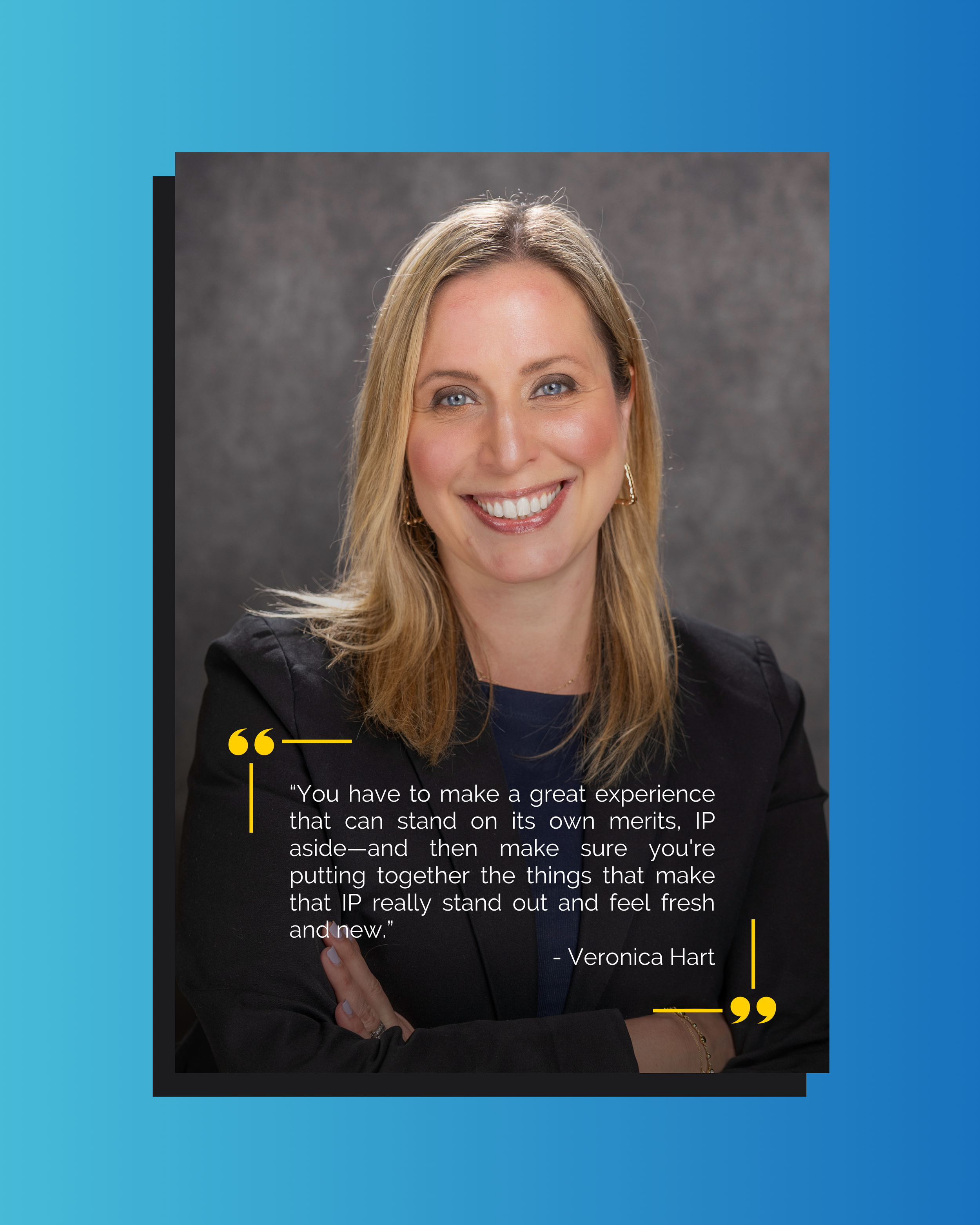
But you have to make a great experience that can stand on its own merits, IP aside, and you have to make sure that you’re putting together the things that make that IP really stand out and make it feel fresh and new from you know other things that are out in the ether. So, everything we do the design team that I get to see at work every day, is everything has a narrative storytelling at its heart. And it's just how do you execute that storytelling that can be completely different every time, even if they're all immersive experiences, you want everything to feel really fresh and cutting edge and adaptable as time goes by.
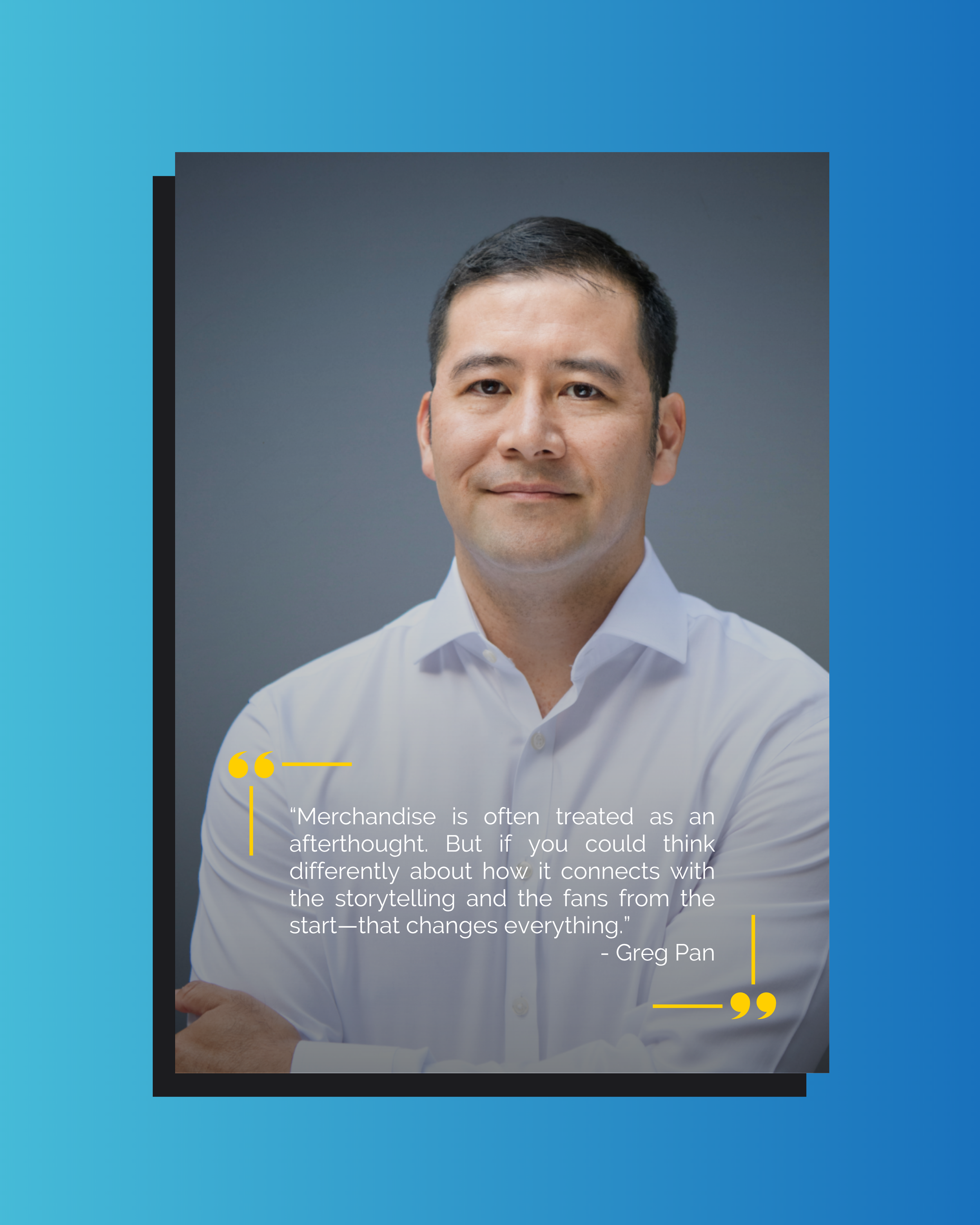
Greg Pan: Given your starting point for like merchandising consumer products, when you're working on these types of experiences, I presume you're thinking a lot much earlier on how this merchandise can connect with the storytelling and connect with the fans. Because oftentimes for these types of experiences, merchandise is an of afterthought. People focus on the experience and say, well, just put a gift shop at the end. But it sounds like you're a lot more thoughtful on this. What's kind of your thought process and how much earlier do you prepare in advance when integrating merchandise?
Veronica Hart: Yeah, I mean it's interesting you say that because we know from being in the industry that it takes as long to make a game or a fantastic plush as it does to create the show that's around it or the experience that's around it. Often it takes longer than it takes for the movie itself that the product is based on. And if you're not in this business in your core, you might not be as thoughtful about that. But it was one of the things that I was intrigued by in RWS. And I'm glad that team that's part of my remit is leading our merchandise team and really making sure that from the get-go, again, our business is much more of an agency. So, we're hired in in large part, we're hired by people where things constantly transform. They're always different models.
But when we're designing an experience or an immersive, we do a lot in the Halloween space, for instance, and a lot in the the holiday time period, we can say, here's the idea for the experience, or here's the room, the atmosphere we should create. Here's how the live entertainment can bring that experience to life. But then also here's the merchandise that can be created alongside it in that same timeline that can enhance the experience of the stage show or enhance the experience of that moment. and also, be the physical souvenir to go along with the emotional souvenir that you're creating from the get go. So, let's not make it an afterthought.
Let's actually do it concurrently with the same creative vision. And then we can execute it at, again, the right price point, the right quality that you need to be able to sell it, go through all the testing that you need, but not make it an afterthought where you're just throwing something in. We have a great partnership, a slightly different vein, but with Medora, which is a park kind of on the foothills of Teddy Roosevelt National Park. And it's a beautiful location.
We do an amazing stage show just launching next week, in fact, for the summer. And we again we created merchandise to go along with that experience that's sold with it that you can see there's some characters in the show that we created, kind of almost new IP hat are proprietary characters to them. And so, we created plush for those characters as well as other accessories. And all of it, what could be small pieces, end up if you do it the right way, you can harness the power to make it exponentially more impactful if it's all done as one comprehensive strategy and approach.
David Schnider: So, I think a lot of people in the licensing industry tend to think of location-based entertainment as just another license and an extension of their licensing program. But I think from our experience, those deals are very different. They work differently and even though they share elements, the terms are really different. Can you talk about how they're different and how people in traditional licensing should be thinking about LBE deals?
Veronica Hart: Yeah, no, it is interesting. And I think it's shifting a lot in that space, and some of the again, the kind of amazing experiences, that have launched the last year, they're all different business models. You can still find deals that are more traditional licensing, but to really have your complete fingerprint on a project or to know that you're fully influencing the, again the strategy, the end result, a lot of IP holders are starting to look at different models where they're investing in projects and getting more of the return on them. Or we've been hired by some IP, and I know there are other people in the industry that do this where IP or brands will hire us to consult on a strategy for an area of experiences or live entertainment that they want to get into because you want the complete vision, and you want to be able to show what it is, not just talk about what you want to do. You want to actually have a creative vision that you're selling to people and really take ownership of the process.
It's not to say consumer products licensing is passive in any way, but you can't just be along for the ride. You have to help drive it for it to be done really thoughtfully and successfully. I think Lionsgate does a great job. You mentioned the John Wick experience. I just went through that again last week with them and with the other people. They do a great job. And again, they were more thoughtful about really purposely driving that business as opposed to waiting for someone to come to them. We weren't involved in that one, but it was really great to see. And then certainly you're seeing that with Universal and not just what they're doing with Epic and their own footprint, but how are they leveraging licensing of their IP into other experiences. It all has to fit into this bigger strategy that takes an investment. It isn't just a passive licensing deal anymore.
Greg Pan: So, technology obviously plays a huge part in making and turning these immersive experiences real. We go to these trade shows, there's always some new technology gimmick that's being shown, whether it's VR or using some app on your phone or things like that. Is there anything that you think particularly works really well? Is there anything you've ever seen that you tried that you thought would work but didn't work as well?
Veronica Hart: I mean, I think both of those things are true. I won't name the examples of the things that don't work, but that's the challenge with technology that you have to be on the cutting edge of it. But obviously it's changing rapidly every single second. And what we're seeing is probably the biggest rapid change of technology over time. Again, we have a technology team that's really focused on build the vision, it's all narrative storytelling. What are the right ways to execute? And what's the technology that's going to bring that to life in the right way? But then kind of wait till the last possible moment to install the actual technology so that it's the most up-to-date, kind of generative version of it, and then be able to make it adaptable over time.
What I'm seeing more and more, and what we're seeing and talking about is that it's no secret that a lot of experiences, especially in certain parts of the world, you know, Middle East, China, et cetera, experiences are getting bigger and bigger and bigger. But people and fans are more sophisticated than they've ever been, and they're so used to a personalized experience because of technology, that you have to find a way incorporate both of that. You can't just have someone being a cog in a wheel.
Everyone needs to have a personalized experience within these kinds of bigger footprints. So that balance of how are you tying in people's likes, dislikes, obviously recognizing people as they're walking through experiences and things that are calling out to you that are part of the visual spectacle that you have to have with technology is becoming more in the forefront and a lot more of the expectation. And obviously locations like the Sphere and Cosm and just what you're able to do with screens now, even for some of the lower as a guest table stakes environments like you know, Cosm, you're going in for a limited time. It's not the same kind of a ticket price as a theme park, but the expectation of that consumer is the same and it's carrying wherever you go.
So, you have to be really smart about incorporating technology and what should be analog because that makes that experience, you know, you don't want to make it all technology. You want there to be tactile moments and things that really bring you out of that and make you feel like you're in a physical environment too. So, it's the balance that you have to get right that I wouldn't do. But again, having great creatives really helps guide that delicate balance a bit more.
Greg Pan: Yeah, new technology can definitely be buggy when you start actually playing with it.
Veronica Hart: Yeah, and I mean that happens in the best of times and it's and it certainly happens in in the worst of times, but adaptable technology and being able to swap that out or creating experiences that especially with IP, as you learn again your audience size and the expectations. But you also want to continually be able to refresh, whether it's seasonally, whether it's to incorporate multi visit experiences, you have to be able to continually adapt content in order to make everything fresh for visitors.
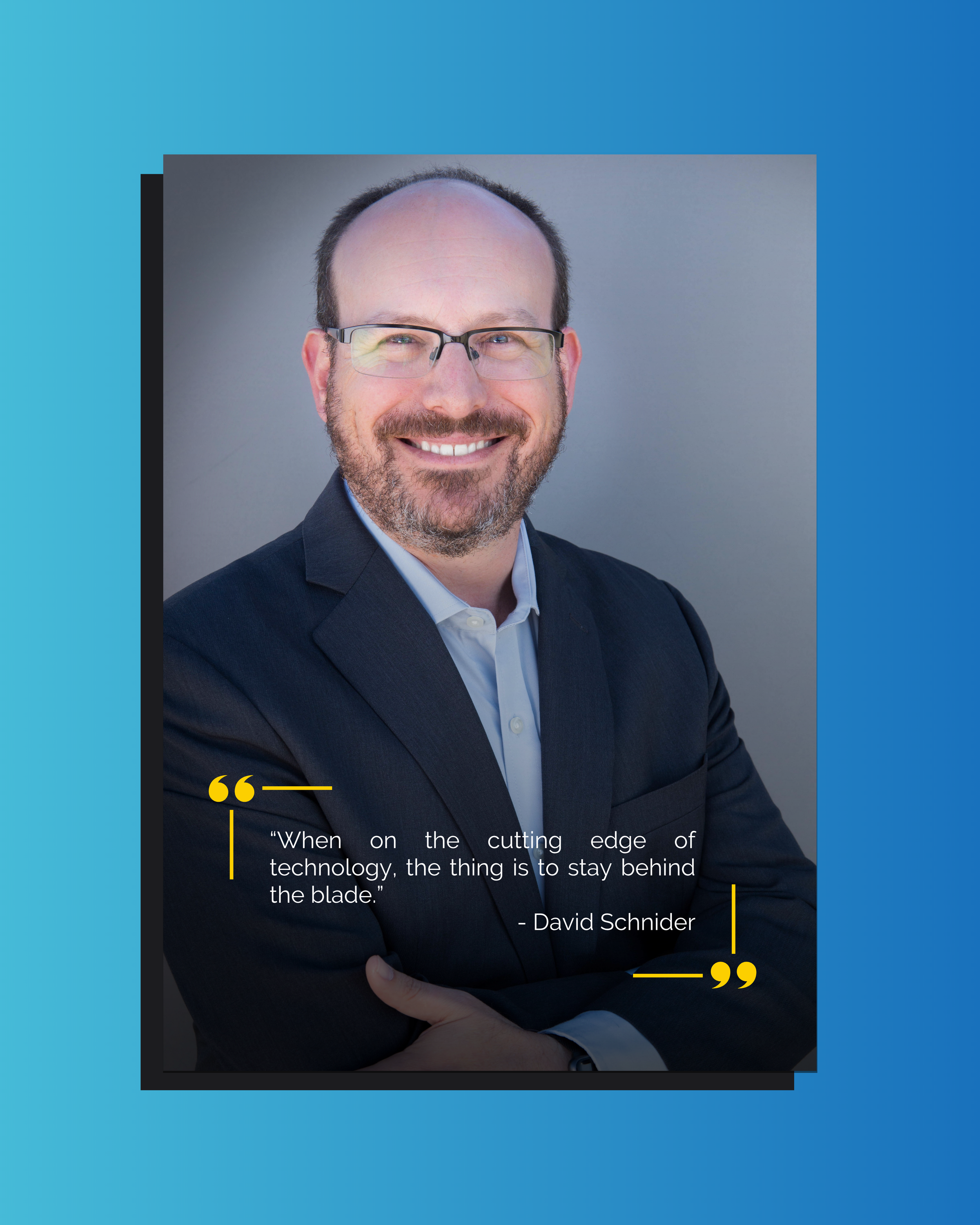
David Schnider: One of my favorite quotes is I attributed to this guy Haynes Gaffner who said, when on the cutting edge of technology, the thing is to stay behind the blade. I thought was it's a great quote.
Veronica Hart: It is.
David Schnider: I’m curious though. So, when you're one of the people who makes the sausage, sometimes it kind of spoils these things for you because you know how it's done. But are there any experiences you've been to that wowed you or you thought, wow. That was incredible how they did that, how they created an effect.
Veronica Hart: Yeah, I mean a lot, a lot of times. I mean, I just don't mean to keep saying Universal, but I just came back from Epic again this week and I've been a few times and that Harry Potter ride, the technology that's in that and the visual appeal of what was used to be kind of the throwaway waiting area and the amount of investment and true world building is exceptional to see. Tron, seeing that come to life with Disney, that ride experience to me was incredible.
But I mean, the scale from a scale standpoint, it's the scale and the scope of some of these bigger projects that are happening in Saudi and Abu Dhabi, to the absolute massive when you look at block for block, just how big these experiences are and knowing that IP is driving a lot of that. It's really exceptional to watch. And some of those projects we're working on right now that we can't quite talk about, but IP is behind all of them and you're literally building a city from scratch. It's really incredible.
I also just from a brand experience, I never thought would be one that would be so compelling. I went to Disney Shanghai and that Zootopia world that they created, also it's just exceptional. You really do feel like you're in the movie, the scale feels so big. It's really impressive and a fun ride as well.
Greg Pan: Talking more about kind of international experiences, when you work on those types of things, how is your approach different? Because I know for like in the US, we're kind of conditioned for certain types of experiences and attractions. When you're working on those projects, are you do you look at them different or approach them given the local kind of needs and their opinions and kind of take on how to do these attractions and exhibits?
Veronica Hart: You have to. You have to - we're truly a global company now. And I again I've learned a ton about working across different markets, what expectations are, but having core people on the ground that are truly aware of everything that's needed, brand nuance as well as cultural nuance, what should be included, what shouldn't, is critical. You can't have a one size fits all approach, what works in the US is nine times out of ten not going to work in Australia, never mind it's not going to work in in Shanghai. So, we have offices in Shanghai.
We opened our offices in Riyadh this past year, and we're in the UK as well as in Australia and several offices in the US, but we've also done a lot to - as we work with Merlin and other partners globally, and we have teams on the ground, because we're actually hiring not just performers, but technicians and entertainment teams and all of these projects that we have, obviously project managers that are staying with these projects, we've built this kind of global network that we can tap into, whether it's formally or anecdotally, make sure that the right people are in the room, as well as data and research. That's key. You can't just have a gut about these things, like what are the feasibility studies that exist? What are the connecting points? What else is resonating in that market? What isn't? Where is an IP in the life cycle in that market? Where isn't it?
Because again, obviously brands also have a lot of - I learned that doing global franchise planning for Paramount as well as CBS - that every market could be the biggest thing in Germany, but it hasn't hit yet in the UK. And maybe in the US it feels like it's out of favor, but it's still just picking up steam in Australia or wherever the market might be. So, trying to be thoughtful about building a true roadmap of what works and also being honest about what doesn't work, which is sometimes harder for brands as well as developers, are the crucial parts of trying to get these things right.
David Schnider: It seems to me like one of the real challenges must be the cost of putting these projects together. I mean, if you're dealing with the Universal, sure they have lots of money and they're funding parks, but there are all kinds of experiences that are not in that type of setting. I just did the David Bowie thing at the Lighthouse in London, which was fantastic. There are other projects around the Van Gogh experience that was here. You know, those can't be cheap to put together and I think they're highly risky because if you don't get the audience, you're in trouble. How do you go about or how do people go about getting the funding needed to put those projects together? And is that the kind of challenge I think it must be?
Veronica Hart: Yeah. yes. I again we have the luxury of being often brought in to projects that have people behind, but we have again constructed some of those relationships or been part of them kind of matchmaking deals as well as being the creative behind or the master planning behind some of these projects or the operator behind some of these. But certainly, funding is always the piece of it. I think to your point, there's the big budget ones that you have to get right because again, it's such an investment. It's going to take so long, even in the most successful versions, to have a return on the investment. But also figuring out what you can do at different scales.
We just opened an exhibit at the Bronx Zoo with Daniel Tiger and by design, that's meant to be again, much more interactive with kids, much less about technology, much more about both understanding about kinds of animals and care for animals as well as bilingual. And you're able to do things like that that feels really authentic, really on brand, really high quality without that same level of investment. And that's the type of project we built it for the Bronx Zoo as the first location, but it will go to other zoos around the country and you know other markets that make sense. So that pilot to scale model is another interesting one, trying to get whatever learnings you can before the next one. and then for the bigger ticket items, do you want to do something, test the waters as a pop-up experience before you go into this kind of more permanent attraction?
I mean famously the Friends experience that has proven so successful in New York and now is in Vegas and other locations was meant to be a very short-term pop-up experience in New York, really a marketing initiative that proved so successful. It became a business model. So, I think that kind of test and learn is another way in while you're trying to build a case for the bigger picture funding for what you're trying to do. Again, if I'm putting my brand cap on or my licensee cap on. But otherwise finding the chain of funding, there is certainly financing around and there's a big appetite for experiential. That's not the problem. The problem is ensuring that you're putting it in the right space, at the right location, at the right size, with the right expectations to be able to get the ROI on it at the end of the day.
Greg Pan: You know we're talking about like Epic Universal building theme parts everywhere, but we also have these small experiences popping up. Do you see it going more for larger, bigger experiences or do you see kind of more smaller ones popping up every or both, because I'm just seeing it, I'm just seeing it everywhere.
Veronica Hart: Yeah, I mean, I feel like right now we're in a moment of both - certainly the attention is being focused on the big projects that are cropping as it should be. I mean, that's where a huge amount of investment is happening. But to your point, and where I think there's such a big appetite and also growth potential is on the mid-range experiences, in addition to those.
Obviously, the big destinations where people are going to spend a vacation or multi-day trips or go to a location that has multi-experiences attached to it, that should never go away. That is for the more die-hard investment vacation type mentality. And research has shown that people are saving - they are not stopping those big experiences. You can see it on the concert side as well that people would rather save up and still have that kind of once-in-a-lifetime trip. They're not going away from them, but you can't do those every day. So, there's such an opportunity with again the world that we come from within retail space, the mall environment, to create more reasons for people to come.
A big focus for me personally is how can we do more? And how can retailers do more to make the retail environment immersive? You're really competing against people getting off the couch and leaving their house and not just shopping on their phone. How do you create something that's stickier for that person to want to come back or come for two hours with their kids and then be able to come back again in the afternoon and you know, try to find these mid-range bite-sized experiences? So, I don't think any of that will go away.
If you're on the brand side, it's figuring out how many of those can coexist without cannibalizing each other, how many in the world make sense, since the world’s, I mean, obviously markets, every market's different, but the world's also a smaller place than it used to be in a lot of ways. So, what is sustainable? And then I just think there's an opportunity for more people to think creatively about turning everyday locations into immersive experiences, because -whether with IP or not.
Because that's really, again, the way to get people to remember it, want to come back and leave the house to do it time and time again. And I think Netflix House is a great example of looking at what you would consider to be non-traditional locations for, what is in their case a much more major experience, but what else can be done in that space and how can retailers treat themselves that way? Even if the IP is interchangeable in order to build that relationship with the consumer.
David Schnider: What do you think about that Netflix House concept? I mean, on the one hand, you're put I understand it, they're putting a bunch of experiences in one location. So, it might be a destination people can go to many times. On the other hand, it's sort of a big investment in locations with lots of properties that might be a one and done and people are out. And what is your sense of how that's going to work or if it'll work?
Veronica Hart: I know it's really early and but reads are strong that there was clearly you know, great marketing around it. I think it's what they are looking for in that. I would say that you you're going to want repeat visits for an experience like that. So, creating that seasonality, interchangeability, bringing in kind of that new almost exhibit approach and creating the moments in between the bigger, more permanent installation sides of it are a key component of it. But it's, I mean, it's fun, it's gorgeous. I've been to the one the King of Prussia sites. So, it it'll really be interesting to see. But I think it shows a commitment to think a little bit differently about what an experience should be or where it should be. I hope it works because I think it opens up an avenue of opportunity for other brands and IP.
David Schnider: Well, it's either a brilliant or a disaster, but they've got a pretty good track record of being brilliant. Yeah.
Veronica Hart: I guess we'll find out. Yeah. Yeah. I mean I do think they're going to want to do some things that are higher investment and some things that are lower investment to keep that current, but I know they've got a good team on it. So, we'll see what they do.
David Schnider: Thinking about the merchandise side, you've mentioned this a couple of times. You know, think about experiences I've done and almost every time they drop you out in the gift shop. But oftentimes the gift shop is just trinkets, a shirt, some pens, something like that. Do you think there's an opportunity there for merchandising at the experiences and for the merchandise to be really more a part of the experience so people are taking a piece of it home?
Veronica Hart: I do. I mean, I think that's what we're talking to our clients about now is - I mean the gift shop is great as much as we all complain about it, people do walk out the door with that sweatshirt or the souvenir.
But if you could think differently about what the experience is, or even package things differently where you come and incorporate it in the ticket price, there's something that enhances your experience as you're going through it or like the kind of must-have wear item, light up item. We've all been to a kid’s arena show where everyone's got the light up wands because you want it during the show itself. I think if more people had that mentality of do those things work together. I mean, you know, again, the like the Harry Potter wand experience of like how that brings the Universal Park to life. Like I bought it for my kids. They, you know, I think they used it that day and you're going to invest in it if you feel like it's going to make the day more memorable.
And there's more of an opportunity for people to do that. I mean, Greg, you were talking about technology. Technology today, you know, again, there's some technology that isn't that expensive or it's so small, you could put it in products, it could interact with the experiences around you, kind of be timed with the experience, things could happen. So those are the types of things we're trying to do, in addition to the more traditional plush and accessories that you would want to go along with those experiences just to enhance the overall day that you're having, not just something to remember it once you get home.
David Schnider: Yeah, Universal is brilliant. I have three wands somewhere in my house that have never been used other than once, but I paid fifty bucks for each of them and I'd be a terrible dad if I didn't.
Veronica Hart: Exactly. And I went back. And of course, my kids did not bring their wands the second time we went. So, like lost on them. But it's really brilliant. And if I think if more people did that, you know, again, kind of the same the Disney, the dress up experience. Like, how does product become more than product? How does it become kind of a ‘must have’ part of the experience, as it were? And I also think being creative, again, not my side of the business today, but when we're advising people, be creative about the pricing.
So, some of this can be included because it's really you can be careful on pricing as long as there's enough value proposition in it. It it's really what is the experience people are getting? Do they think it's worth it? And people have walked away from experiences that aren't that high a ticket price thinking it wasn't worth it. And then they've spent a higher ticket price thinking that it was worth you know every penny of that so there's a balance between those two things as well and you kind of have to through trial-and-error to figure it out.
David Schnider: Yeah, I have a gold coin from the Wick experience sitting on my desk and the Friends experience, they gave us a picture of all of us on the couch and I didn't think I cared that much, but now that I have it, I want to frame it and put it up. It really - it's sort of a smart way to connect.
Veronica Hart: Yeah, exactly. Right. It's memory. Yeah, and the photo piece of merchandise, people that have not cracked the photo piece of merchandise, that's a real miss too, because to your point, like you think you don't want it, but especially today, like it didn't happen if you don't have it for your socials, like you have to have a version of that as well.
Greg Pan: David's very brave. He also did the Ross and Rachel marriage thing with one of our other friends.
Veronica Hart: I love that. That is brave.
David Schnider: Well, once you're in there, I felt committed to it, right? But that's, that's the whole idea. You get in, you get excited about the experience. And by bizarre coincidence, I don't really watch Friends that much, but my son started watching and just happened to have that episode on the T V a week before, so I was familiar with it. Yeah. Had to do it, yeah.
Veronica Hart: My goodness. So, you had to you had to lean into the marriage experience. Well, I've seen every episode many times. So yeah, no, but there's nothing like seeing something that you love come to life. I really think that's true. I mean, when I was at Paramount, we opened the Nickelodeon Riviera Maya experience. And it's still incredibly popular.
Like I know it does very well because it creates this magical environment where you get to do kind of that orange carpet experience every day. You really do feel like you're in SpongeBob's world. You're eating at the Teenage Mute Ninja Turtles pizza restaurant. Like it's just, it becomes all-encompassing and you'll spend more to do that, especially if you're doing it for something you like and your kids like. I think there's always a willingness there to do more.
Greg Pan: Yeah, speaking back with like merchandise, like popcorn buckets have been kind of crazy the past couple of years. Is there any kind of trend that you want to manifest that you want that you think is like worthy of getting that viral sensation?
Veronica Hart: I mean, I'm sure there is. I wish I had thought of the popcorn bucket. I saw those guys at licensing expo and said they're having an amazing time. But no, I do think that it's those types everyday items that you can reinvent for new audiences. So, we're certainly testing some things. Will it be the next big thing? I don't know. But something that has utility to it, something that's a wearable I think goes a long way if it can be reused and again reused creatively. So, we're doing some work in that area, but it was brilliant. Making a commodity item feel like an essential is really smart.
David Schnider: All right, well Veronica, thank you for joining us. It's been great talking to you about this. Greg and I both find the experiential world fascinating and we really appreciate the insights you shared. Do you want to tell people where they can find out more about RWS?
Veronica Hart: Sure. Yeah. First of all, David, Greg, thank you so much for having me. This was so much fun. please check us out. RWS Global. So, you can go to our website, rwsglobal.com. certainly you can look me up on LinkedIn, Veronica Hart, H A R T, but we'd love to tell you more about who we are, what we do. Again, I think it's the diversity of what we do in the experiences side as well as sports that really sets us apart.
We have a lot of great industry collaborators and competition in the market, but the breadth of a company that can go from designing and building an attraction to bringing the live entertainment to life, managing and operating the staffing and the talent, and then creating merchandise that goes along with it is really our secret sauce. It's an ability to be more of a turnkey, important partner to our clients, to brands, to developers, to real estate to try to figure out what is the next big thing.
And I'm certainly with my team when I have a licensing team because it is so important to us. We're keeping our finger on the pulse of where IP is today and where it's going and where it should be. And I think there's a lot of opportunity to explore. I think that growth trend that we're seeing is really still at the beginning of the space. So, thank you guys and I can't wait to do this again.
Greg Pan: Amazing, thank you so much.
Announcer: Thanks for listening to the Licensing Exchange. If you enjoyed the show, please share with others and kindly rate and review us on your favorite podcast platform. For more information on how we can help with your own legal needs, check out our services at nolanheimann.com. That's N-O-L-A-N-H-E-I-M-A-N-N.com.