
The Licensing Exchange Ep. 10: Leading the Future of Licensing: Maura Regan on Global Growth, AI & Brand Strategy

What does the future of the global licensing industry look like—and who is shaping it?
In Episode 10 of The Licensing Exchange, hosts David Schnider and Greg Pan welcome Maura Regan, President of Licensing International, for an insightful conversation about the evolution of one of the world's most dynamic business sectors.
As the leader of the industry's premier trade organization, Maura has a front-row seat to the trends transforming licensing around the globe. Together, they explore how the licensing landscape continues to evolve through globalization, technological innovation, retail transformation, and the growing influence of artificial intelligence. They also discuss the enduring importance of relationships, trust, and education in an industry built on collaboration.
From AI's impact on intellectual property and licensing strategy to the opportunities created by experiential licensing and emerging markets, Maura shares practical insights for licensors, licensees, brand owners, entrepreneurs, and anyone looking to better understand where the business of licensing is headed.
Whether you're already working in licensing or exploring how intellectual property can fuel business growth, this episode offers a thoughtful look at the forces shaping the industry's future.

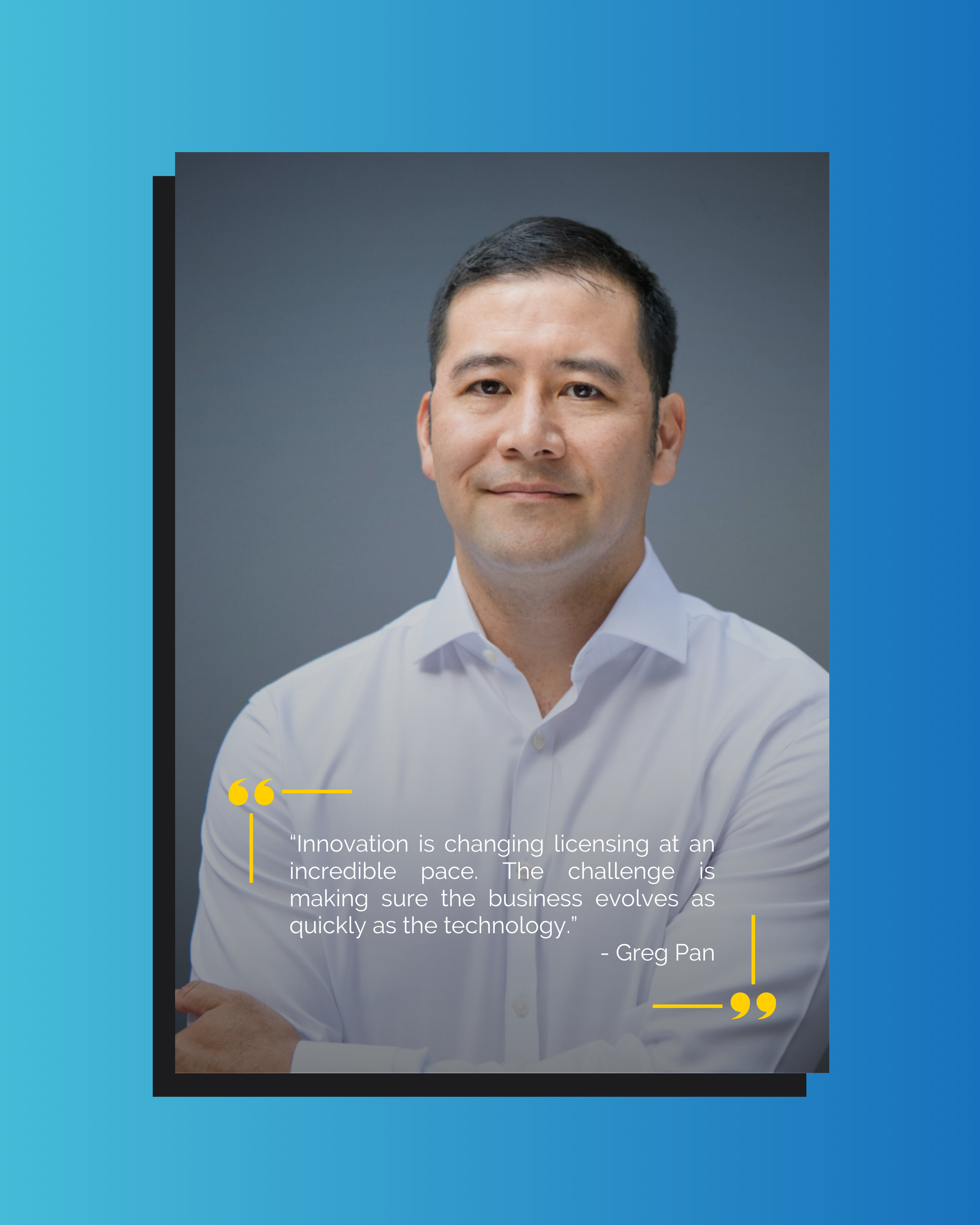
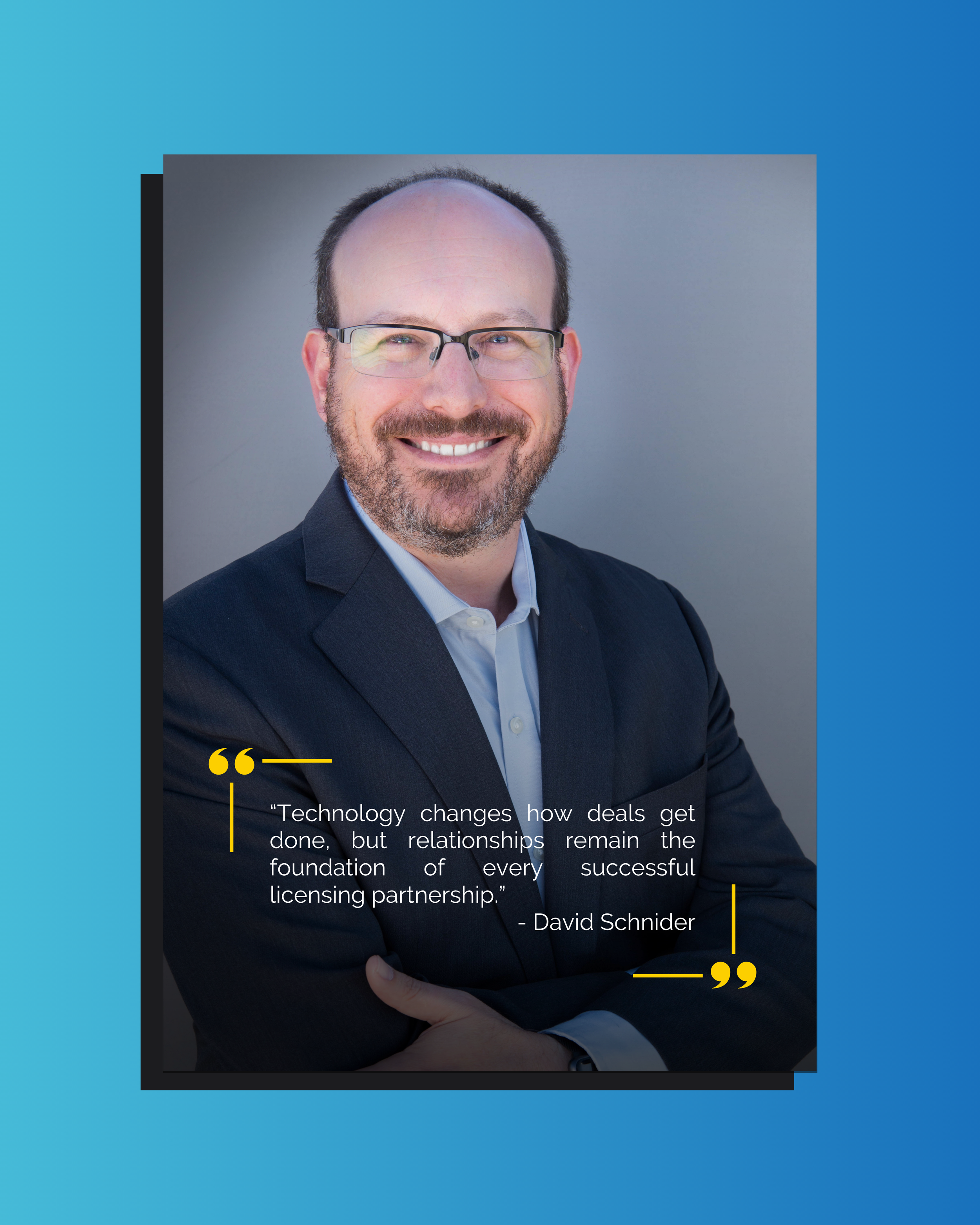
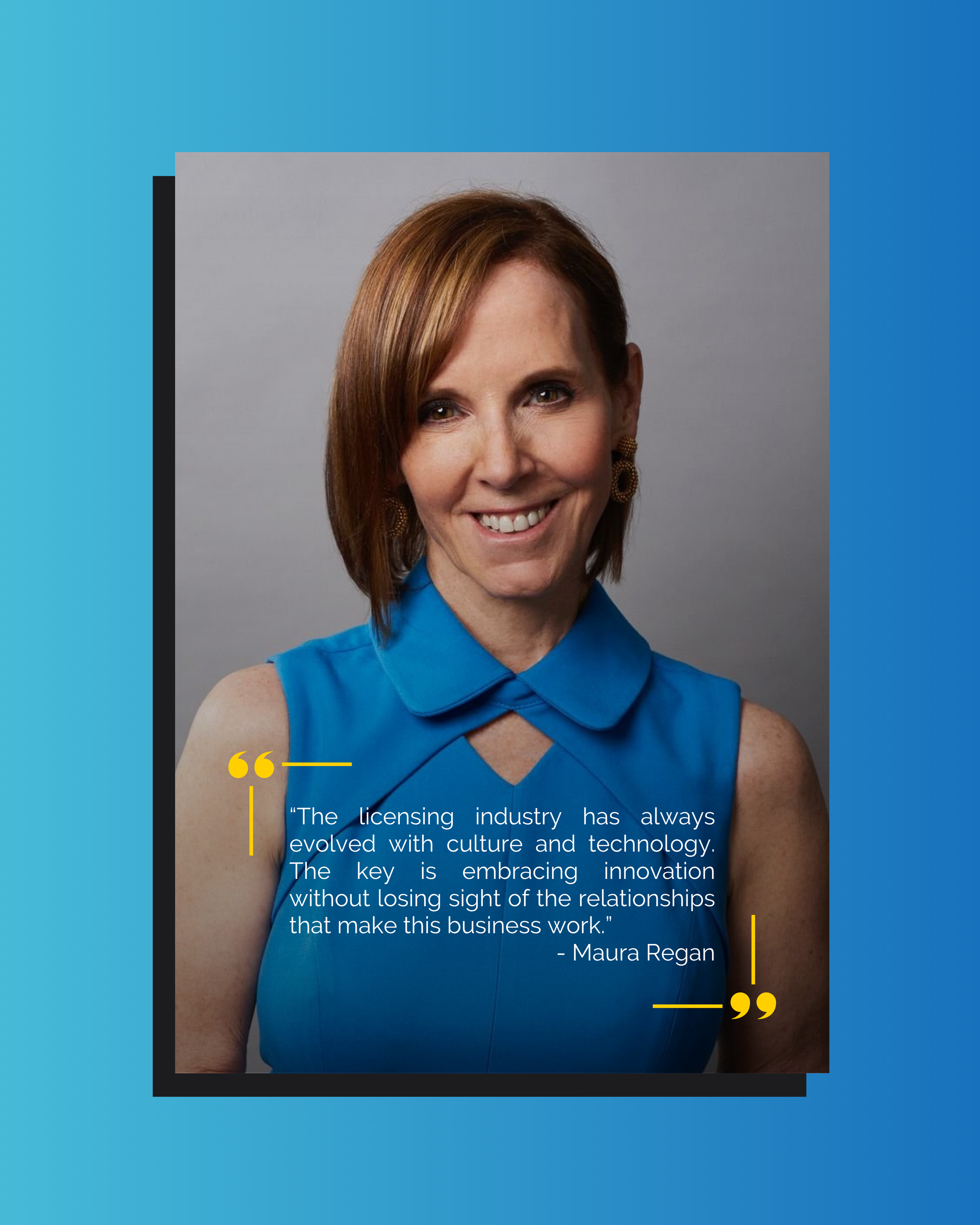
The Licensing Exchange Ep. 10:
Podcast Transcript:
Announcer: You're listening to the Licensing Exchange, part of the Look Legal pods from the law firm Nolan Heimann lawyers for creative business makers. And now, here are your hosts, attorneys David Schnider and Greg Pan.
David Schnider: Welcome to the Licensing Exchange podcast. My name is David Schnider. With me today is my co-host, Greg Pan. Hello, Greg.
Greg Pan: Good morning, David. How are you?
David Schnider: I'm doing well. Today we are excited to welcome Maura Regan, the president of Licensing International, to the show. Maura joined Licensing International in 2016, bringing over 20 years of experience in global brand licensing and media. Licensing International is the top association for the global brand licensing industry, and Maura leads the team in expanding licensing worldwide while raising awareness about how licensing benefits businesses everywhere.
Before joining Licensing International, Maura was the head of global consumer products at Sesame Workshop, where she drove the organization's strategic commercial initiatives supporting their philanthropic mission. And before Sesame Workshop, she held executive roles at MTV Networks, Scholastic Entertainment, and the Jim Henson Company. So, Maura, it's fantastic to have you on.
Maura Regan: Well, thank you guys. I'm so happy to be here with you guys talking about one of my favorite subjects, the business of licensing.
David Schnider: Well, so start with the same question for every guest, which is how did you get into this industry?
Maura Regan: I wish I could make it a lot more exciting and glamorous, but like so many of us in this industry, I fell into it was very much the accidental career. And I was meeting some friends for a happy hour, as we used to do in our twenties, and they were working at the Jim Henson Company, and I was waiting there for them, and a couple weeks after meeting some executives there, I was called about a job opening, and ⁓ the rest, as they say, sort of became history. So, it really is just the good luck and good fortune of having friends who had great jobs.
David Schnider: Did you come from a licensing background or were you doing other things when you joined the Henson company?
Maura Regan: No, not at all. I was in the media business. So, it was not related at all to licensing. I had no idea what licensing was.
David Schnider: So how did you end up making that switch to doing licensing?
Maura Regan: It was again purely you know, good fortune, good luck, serendipitous for me. I met while I was waiting to go out with my friends, the head of Global Consumer Products at the Jim Henson Company, this amazing woman, Isabel Miller. She was just an incredible person. And we just started chatting, not about business or licensing or anything like that, but just talking about career and life. And I was in my early twenties and she was running all of really all of the licensing and a lot of other stuff at Jim Henson Company. And we just kind of just had a real connection. Then a couple of weeks later, she called me and she said, you know, we're looking for somebody in our licensing team, in our international- because I traveled and lived overseas and stuff.
So, of course, I said yes when she offered me a job. It was paying more money than I was making. And the way I was raised, is that if someone offers you something like this, you just say yes. I had no idea what it was. I had no idea what it meant. And I would sit for hours after work and just go through binders of contracts because those are the days where, you couldn't take, well I don't think you should still take binders of contracts home with you, but I definitely wasn't doing that. So, I would literally sit on the floor and just go through things to really understand terms and things like that. So, it was really just wonderful.
David Schnider: So, we talk about the business side, but you were literally working with Muppets. What was that like?
Maura Regan: It was everything one would hope it would be, which was completely magical. I still think they're kind of real in many ways because they've been infused with such incredible personalities that just as any of our favorite stories over the years or, characterizations of characters that stays with you similarly. and real people, of course.
The Muppets were developed through the genius of Jim Henson. and brought to life by incredible puppeteers including Jim, that they are like real people and just who never go out of character. And so, it was it was really incredible. It was really an incredible opportunity. and also, our responsibility. I think you know, you felt that when you were there, that you were sort of part of something that was so much bigger and has had such an impact on folks over the years that you don't take that lightly. And it was it was really a very special time to be there and a great place really to learn the business of licensing from the very best of the best.
David Schnider: Talking about the business of licensing, can you tell us more about what Licensing International is, what it does, and what is your role?
Maura Regan: Sure. Well, Licensing international, I mean, we were formerly World Trade Association, which means that we represent the industry at large. So, everyone in the industry can become a member, and most everyone is a member, corporate member. So, if you're a studio or Disney or a sports league, there's a corporate membership, but everyone in that organization is effectively a part of the licensing - our association. So, our membership is about 1200 worldwide.
But easily because of the individuals associated with it, it's we're probably 10x of that, I would say. And our business, our goal, is effectively your business. So, you know, for you folks on your side of the business, we're helping you connect with the industry and tap into your expertise. And we're also trying to help all of our members really just be even more successful with their businesses. To go further, to go further faster, and to help think about things that in their day to day they may not be thinking about, but will have impact on their businesses.
Greg Pan: And the industry of licensing is so multifaceted. What are what are the larger challenges that you see trying to help the industry?
Maura Regan: What’s interesting about the industry is that it is multifaceted and it cuts across so many parts of business. So, there's licensees, manufacturers, brand owners, licensors, there's retailers, service providers, and everything is ultimately part of the business construct of licensing because that's really all it is, is a business model. And certainly, I think there are challenges inherent and specific to various segments of the licensing industry. On the retail side, clearly consolidation, pressures on consumers due to inflation and things like that. On the content or storytelling brand side, there's just competition and a lot less doors to sell products or platforms to produce and distribute content on. So, there are those challenges.
There are sort of macroeconomics that cut across regions. Certainly, we've seen geopolitical challenges as well, you know, issues around not just supply chain and things like that, but you know, if there's some kind of a drought and cotton is impacted, well, of course, that's going to translate down the line, downstream, to the apparel industry, which is so heavily reliant and soft lines in general on cotton.
Distribution as we've seen over the years, that's been challenged as well. Of course, tariffs, the cost of goods and just, you know, as we've seen the protracted challenges around oil. We know that so many plastics, you know, plastics is petroleum-based, which is oil. And so again, putting pressure. So, there's a lot of sort of overarching challenges as well as specific to industries, but ultimately, it's an incredibly resilient industry and a resilient business model that's predicated on, high tide floats all boats. So, everyone pulls together, which I think enables a lot more success other industries get to enjoy.
Greg Pan: So, would you say that's a mix of education, problem solving, reacting towards global things that happen, as well as connecting partners in ways that can each other out within the industry.
Maura Regan: Absolutely. I think our role, we're not the smartest folks in the room, but we know how to get the smartest folks in the room like you guys and bring folks together to have these discussions and dialogue about how to move forward. So, we didn't know, we don't have the answers around tariffs or what it really meant day to day. And so, we were able to assemble really quickly the right folks to have the start of the conversation, subsequent webinars. Around these issues because it is so multifaceted and it's not just sort of one size fits all.
David Schnider: So, I think of you as kind of the queen of the licensing industry and in some sense the main cheerleader for it as well. What do you think is so valuable about the licensing industry and this business model? Why do you cheerlead for it?
Maura Regan: I like cheerleader. Queen always makes me feel a little… I don't know. I think it's important to have someone championing your industry, your business. I feel really strongly the power of positivity. I know that sounds a little Pollyanna-ish, but and not to date this podcast, but certainly as we saw in evidence with the Knicks winning in New York. It's palatable how much positivity really plays into sort of all of our collective psyches. And that doesn't, it's not any different in the business community. You have to really, believe in it. you know, certainly again to use another basketball analogy. Jalen Brunson said, the magic is in the work, and it is really true. And it's an industry that I think is committed to hard work, to exciting, innovative work. It's very entrepreneurial. And I think it should be celebrated.
Why wouldn't we want to celebrate what this industry does and how it brings joy to so many people year after year after year, while providing really incredible lifestyles and livelihoods for so many folks?
David Schnider: So why do you think companies should consider licensing as opposed to maybe going direct and doing products themselves?
Maura Regan: Well, I think first of all the profit margins. Again, you kind of always look at, you know, it's what you keep, not necessarily what you make. And on a net profit margin, I think you're hard pressed to find a better business model than licensing. And it's again, it's going to play into your core strength. Why, if you're, using Sesame Street, where Sesame Street's in the business of making incredible children's content. They’re not in the business of the toy business.
Why would they want to take on all of that risk and all of those challenges when they can, in fact, partner with the best? And similarly, there are so many licensee manufacturers who are incredible at making amazing toys or other products, but they haven't had the opportunity or the ability, or would they want you to invest in creating a brand and investing that over 20 years to sustain that. And so, they partner and together really what's created is so much bigger than either of them could do separately with a better return ultimately on their investments, respective investments.
David Schnider: Yeah, sounds like a situation where one plus one equals three.
Maura Regan: Exactly, exactly.
David Schnider: So, I wanted to talk a little about bit about the global study that Licensing International does. Can you tell us about what that is?
Maura Regan: Sure, we've been the before I got to the organization, we've been benchmarking the industry with a wonderful research firm called Brandar. And again, we don't field any research on our own. We always commission outside folks. So, whether it's the Brandar study, our global study, brand trends, or Euromonitors, that's all done through third parties. And it's benchmarking the industry year over year. So, it is a look back to see how the industry performed.
In this case, obviously, we're in 2026, so we're looking at 25, looking at growth from in this case, it was growth, and it's been consistently growth from 24 to 25, which is terrific. But it cuts across category, it cuts across industry, it cuts across markets, territories. So it's really doing a deep dive, pretty much any way you would want to understand the business of licensing as you're going into your long-range planning because is a body of work now that we have that you're able to really see from a trend perspective, really how the business is shaping or shape-shifting in some cases, and make some educated guesses on where the business will go to.
David Schnider: Yeah, there were three things in the summary that kind of stood out to me. One was that Asia was the fastest growing territory for licensing. Two was that most of the growth in entertainment was coming from anime games and comics and social media, even more so than film and TV. And the third one was that the growth in toys was largely fueled by kidults like me and Greg, who love to collect all these toys. I'm curious what trends you're seeing, and what do you think those particular points highlight if there are shifts in the industry coming that these kind of are signaling?
Maura Regan: I think you know, we've been talking about kidults for quite a while, and I always love to quote Brian Goldner, who was just an amazing, amazing leader, business person, and human, frankly. And he was the CEO of Hasbro for many years. I don’t know when it was - zillions of years ago, something he said at a presentation really struck me, which is that everyone's talking about yes, you know, the challenge around kids getting older, younger, right? We saw this at Sesame, they kind of get in and get out of these cherished, really young children's brands very early. So, yes, children are getting older, younger. However, adults certainly are staying younger, older. And so, I think this has been something that we've been seeing for quite a while, and I think it's been accelerated because of a lot of trends that have impact on that.
Certainly, I think we can't ignore the pandemic where families, for better or worse, were all together. And so, all of a sudden, we started looking at a lot of classic play patterns that were very familiar and it was stretching from very young to very old. And it wasn't just the board games or the puzzles, but it was you know all kinds of video games and things like that. I'm looking at you guys, behind you with those wonderful, collectibles and things like that, and the stories that go along with them. So that I think became probably a real platform that there was so much connection between generations within families that's just continued. It hasn't really slowed down. And certainly, we've all been talking about declining birth rates globally.
But again, I think what's really driving it is that there's an appreciation for the underlying story behind great brands that have been translated into a lot of toy properties. And if you take a step back and really think about what are those stories and how they really go from very young to very old, it certainly, I think, driving so much of the kidult, experience that we're seeing. And it's really, I would say, taking it away from being a trend as just directionally where the industry is going. And again, no slowing down on that front.
And I think, sort of taking a look at what's happening in Asia specifically and seeing the growth there has been kind of exciting to see where Southeast Asia is really picking up a lot of the slack. Obviously, we certainly see what's happening in China. But again, you know, just from a numbers perspective I think as we do a deeper dive to really see where that's picking up and to see where the new consumers are. So that's been exciting for us to see.
Lastly, I think is what's been super interesting as we think about, entertainment and anime and manga specifically, is to see that it's really become much broader in its appeal. It's really gotten away from being driven by gender specific attributes and it's really crossed over and it's infused really into mainstream entertainment in so many ways.
Of course, K-pop Demon Hunters was just an exciting phenomenon that really set helped to sort of propel. But I think it's what came before K-pop Demon Hunters that we were seeing this already bubbling up there and that just really lifted it overall. And so, I think what we'll see when we look at 26 numbers is to see this even greater. But I think entertainment, we've had some rough years frankly the writer strike and things like that and then just you know how consumers are consuming has been a challenge, but great stories always, always I think connect with all of us. We all want those kinds of storytelling that I think we can't get enough of. So, the more that it's brought to experiences, whether through location-based experiences or on a screen or on a small screen, I think that's also not slowing down.
David Schnider: Talking about the international side of it, you know, in the United States we kind of take for granted how robust and deep the industry has been in licensing, but a lot of these other territories, especially in Asia, it's relatively - it doesn't go as deep and it's a little bit newer or it's been kind of just managed by agencies, but now there's a massive growth in licensing. How is Licensing International helping those territories and growing this industry and sharing information and building these, through like conventions and trade shows and organizations? How are you helping out with those countries?
Maura Regan: Thanks. It's super important. You know, my background, I started in international, so I'm always sort of lean towards that instinctively. And we have an incredible bench on the ground with our local MDs. So Tani Wong, who's based in Hong Kong, ex Warner, so she's really, really very, very strong. Kaori Tanaka comes out of the retail area. We've got very, very strong local presence in the markets for if we're looking at lumping in sort of Australia, New Zealand, and that will throw that into the mix as well. Lisa Sweeney, who runs our business for us, based in Australia but overseas New Zealand as well, comes out of retail. You know, it really starts with having strong talent on the ground who really know the business. We also know how important it is to bring folks together and provide best practices.
So, helping them build the business locally, but also help folks who are looking for entry strategies understand the market. So, a lot of matchmaking, a lot of identifying the best places to convene. So, whether it's at, the Australia Toy Fair that they do in March, that the team there, Alice does a great job. Our friends at Informa do a wonderful job. I'm going next month in July to Shanghai, and then there's another trade show in October. These are really great forums, and we spend a lot of time with partners, putting them together. We've got a licensing academy, we've got panel discussions, presentations, a lot of matchmaking, a lot of networking. This is an industry that also loves a good party. Celebrate. And just a lot of best practices. We've partnered with IAP and the Themed Entertainment Association, two associations in the location-based experience space to be able to bring in that community as well because it's being driven by brands. And so, finding the right people to have in the room together and bring the industry, whether you're local and looking to enter or expand your business, or you're outside of those markets and are looking for an entry strategy support, that's what we provide.
David Schnider: Going back to the different sources of entertainment, we've seen a lot of properties starting to come up through social media, Asian properties becoming much more popular, social media has enabled a degree of niche marketing where even smaller properties can connect with an audience outside of sort of the mainstream channels. Do you think that these all signal a fundamental shift in entertainment away from the big tent pole properties or not?
Maura Regan: Well, I think it always starts with consumer behavior. How is the consumer consuming, whether it's a product or an experience or some kind of a storytelling, whether it's you know long-form or theatrical or whatever it might be. I think so it always starts there. And certainly, as consumers are shifting and changing how they consume, I think that's ultimately what's driving all of the change. All of us are consumers as well as business people and I just think back to how we're consuming, how are we connecting with new brands, our favorite brands? That's really, I think, determining how things change.
David Schnider: You had mentioned some of the educational programs that Licensing International has. Can you can you tell us what the organization does to bring new people into the industry and educate them about the industry?
Maura Regan: Well, we've invested very much in developing, the next generation of licensing professionals. So, in addition to having professionals networking events and things like that globally, we started a a foundation a few years ago and that's dedicated to providing scholarships for students who are interested primarily really these days in adjacent industries, since there's no dedicated licensing degrees. There are some courses at different colleges and universities. So, we work very closely on a global basis providing scholarships to students who are interested in the business of licensing and adjacent industries. And that's a great funnel, frankly, to bring people into the industry. In addition to providing scholarships, we also then provide them with mentorship and connections.
We also bring a cohort Expo and then also to VLE to meet one-on-one with executives in the industry. So, we do that piece of it. We have rising stars where we identify through all of you, new talent in the industry, and again to really create a pipeline to bring people in the industry but also keep them in this industry. That's really critical for us. And a lot of work with colleges and universities around the world. So, we love doing that. And then we have coursework that we that we provide. So, whether it's our coursework and licensing studies or a platform that we're developing now with Gen Connect, all of those are to help folks A, get into the industry. Sort of if you want to get in, there's you know entry-level coursework basics. If you want to sharpen your skills for mid-careers, there's also an offering there. And then certainly, if you're just looking to stay informed around topics that are sort of the moment, but yet you're further on, you're not necessarily looking for any kind of a career change necessarily, it's just being really informed about sort of hot topics, we also have offerings for you at that stage of your career.
David Schnider: Yeah, I did the qualified licensing professional certification, which was a great experience. And I know there are people out there like we talked to Stu Seltzer and Stephen Extracht, who wrote a book and are teaching courses. I know there are other people out there trying to promote education about the industry, but do you think there's a pathway to having it be more of an ultimately a formal educational path so people in college or business school can actually start out by learning about the industry in school and pursuing it as a career.
Maura Regan: Yes, we've been we are in ongoing discussions with different universities around providing not just a sort of a course here or there that we do because we also participate in those things, but really have a formal degree program. So just as there's you know you can get a degree in advertising and marketing, what about licensing? And so, we've been having those conversations it seems like forever. I remain ever hopeful. But yes, that's really important. And now we've just gone through the first phase with Gen Connect with our online platform and the initial coursework the basics has been accredited by Oxford University has been credentialed there and then ultimately our goal is to have a certificate program that again is certified a full-on program from Oxford so that's what we're working towards.
David Schnider: I think there's a mentorship program as well. We've had other guests who said they participated. I'm curious what that is and how it works and who the participants are.
Maura Regan: It's matchmaking. We have mentors and mentees. Last year we were at 40 matches. This year we were at 60 matches. Laurie Smith, I don't know if you know her, she's with the Brand Liaison. She's a dynamo. She's chair of our mentoring committee. It's been fantastic. And we go through and we open it up, whoever wants to be a mentor or mentee in the industry, and then we go through and we matchmake and we put them together. And it's not a heavy lift in terms of a time commitment. It's about an hour or so every month or it could be more.
Again, that generally gets worked out between the mentor or the mentee, but formally we've set it up so that it is an hour at least once a month and it goes for a year. And there's certain prompts that we have on questions and things like that and topics and subject matters. But as someone who's been doing mentoring for a while and I tend to never really let go of my mentees because I selfishly find that I learn so much from them. It's a way of me tapping into the expertise of these rising professionals or mid-careers in many cases, that I wouldn't necessarily have that input day to day.
So, I've had some that we've just stayed connected for years. And I just personally selfishly get so much more of it, I think, than they probably get from me.
But it is a great program and we do open it up and at any point are open for folks suggesting others who might want to join or if they themselves don't necessarily and we talk to folks very frankly about bandwidth. You all are super busy, we know that. So, we've tried to provide mechanisms that make it a lot easier to facilitate these relationships.
Greg Pan: It’s extremely important for people getting out of college who are younger. They have their own fan bases that they're part of. They understand the culture; they understand the media and the content. They have so much to offer, to buy, bringing what they love, what they like, what they experience into the licensing industry. A lot of us people who have been for longer we're you know, it's not a rigid industry where everything stays the same. It moves very, very fast based on consumer trends. So having people who are familiar with these who actually love.
I think for me, like one of the best things I had when I joined Marvel, I was a big fan of the properties. So, I could understand where the trends were going, which characters might be popular. I could have nerdy conversations with the business development people. I think that helped me a lot in my career. It's no different for all these people in entering the industry who understand the anime crowd and understand what they want to collect and how they want to experience and connect with those properties. So, it's very important, I think, the earlier you understand, you find, you discover this industry, the better it is for you.
Maura Regan: But I think you know, again, there was a question earlier around cheerleading and sort of you know, just the excitement. And I think, the reality is that we're an industry that is not a must-have for what we're all developing and creating. Everything that we do in this industry is just add-on and plus. And it's a wonderfully, I think fortunate, place to be in. And I think it's that same spirit that infuses so many rising professionals that they get to be in this industry that takes advantage of their particular passions.
So, whether you're, someone who loves anime and that universe, or if you're in sports or entertainment in any way, I think there's a place for you. And I think it's important that we're bringing these smart young professionals into our industry and importantly for us is to keep them in the industry. We want to make sure that they understand that there is a pathway to continuously learn and take on new things and also, sort of meet like-minded individuals because I think that's also really important. I think it's we probably most of us have gotten where we are because of the folks that we got to hang out with.
David Schnider: So, I think we'd be remiss if we didn't ask about AI. It's a popular subject; comes up with everyone we talk to. I’m curious from your perspective, since you're sort of at a higher level, how are you seeing AI impacting the industry and how are you seeing people using it in licensing?
Maura Regan: We've done a few, and we're this is an ongoing theme because again it's I think as soon as we have a discussion around it, it's already changing about shape shifting, right? So, we've worked with different partners over the last couple of years to really again just bring together folks in the room to have these discussions, whether it's from a legal perspective or how do you use assets, you know, very sort of tactical, how do what do you use, how do you use it?
So, I think you know, AI is a tool. it's not good or bad. most of us are already using some form of AI in our personal as well as our professional lives, whether we know it or not. But I think there's no turning away from it. It's how do we use this? How do we help, from our perspective, the industry understand the opportunities, the implications, the consequences, the unintended and otherwise? It's always, you guys know this well, the unknown unknowns that people always talk about. How do we help folks see around the corner? But it really starts with getting folks in a room and really understanding what it is first of all and what are the opportunities around it, but equally what are the challenges. So, we are seeing across the board that folks are using it from everything from jumpstarting a pitch deck to sort of helping accelerate product development to thinking through remarks for a presentation. What we understand so far is that it's none of it is final product.
And that the real I think benefit is the ability to really accelerate the process of whatever it is you're doing. And I think with that comes a recognition finally that in fact isn't necessarily taking away work, but creating a different kind of work that folks are doing and ultimately will create more work. So, there's that, I think that's coming to the forefront in a way that it hadn't been initially. I think it can be a little overwhelming for big companies who need to create best practices and policy on these things. So, I think that's still a little here and there. It's not consistent. But you know what we keep saying is that it will be evolving. But again, have as you're writing policy for how it gets used or what programs are allowed on computers and desktops.
Get an informed, I think, committee, within your organization to understand best practices, taking from what's out there and applying it internally, but know that over time it will have to evolve.
David Schnider: Yeah, we're seeing on the contract end already, some studios have contracts that prohibit the use of AI in any way, shape, or form, which I think is very short sighted. And then you have like Netflix, which I think has been fairly public about allowing and in some cases encouraging the use of AI, primarily to cut costs, but having clear guidelines about when you can use it and when you can't. Primarily because I think anything created with AI, there's no copyright.
So, they're very wary about their properties being used in connection with AI. But it does seem like as you're saying, it's evolving and very quickly I think people will be adopting it and finding ways to use it productively.
Maura Regan: Well Hasbro announced that they have an AI studio that they're opening. I think that it's how do you navigate this going forward and put in place best practices. I am old enough to remember when, companies weren't allowing folks to have access to the internet on your computer.
David Schnider: Yeah.
Maura Regan: Thought was that people would just do whatever shopping or whatever. if I were to say that to my daughter, she'd be what were you thinking? So, I think these things have a way of evolving, but it's not without risk. And you guys are the sort of the keepers, right, of protecting ultimately IP and what that really means. But how do you manage that?
And I think so there's a lot of big important questions that need to be answered and I think shutting it down doesn't help. I think you just have to really sort of work through and try and with smart counsel like yourselves really think through from all four corners of the page what are the things that we can't even imagine but we should be somehow thinking about what's that little thing that's nagging at us and start to put pen to paper and just really map out what are the possibilities.
David Schnider: Yeah, I look back to when streaming music first became available and the recording industry responded by suing its customers trying to fight the tide, which I thought was a terrible idea. And it seems like Hollywood in particular is having a different reaction to AI. They are still suing companies, but there's a lot more of trying to roll with it. The Disney Sora deal, the Hasbro platform, it seems like companies are trying to if you can't beat join them and they're finding ways to save them, join them.
Maura Regan: Yeah. Yeah, it is fascinating. It is it is really, really interesting to see where this will all land.
Greg Pan: I want to talk a little bit about smaller brands that are trying to grow within the industry. The challenge, I speak a lot with whenever I go to the trade shows. You have these new up and coming brands on kind of the periphery. They're trying to grow in the US market. And there's kind of a blockade on the retail side. It's very difficult to get into retail when you're a new brand. It's also very difficult to meet MOQs with your licensees if you don't have the ability to break into the retail. How does licensing international help those brands to kind of figure out a licensing strategy so they can move into that next level?
Maura Regan: Yeah, it is it is an ongoing challenge. And listen, it's also a challenge even for big brands that are launching a new property. I think, people were not rallying necessarily around certain properties that that we're all familiar with now that in hindsight are huge hits. But there were days where, they were called different executives at these companies from the big studios were pitching these up-and-coming brands, and they had the power of a studio behind them and yet it was really difficult to get any traction. So retail is very difficult. It's a challenge. You're only as good as how your product performs. And so, whether you're a Disney or an up-and-coming brand, if you're not, turning over product on a weekly basis to the right level, you're off the shelf.
So, I think for small brands, it is particularly challenging because they don't have the backing that these bigger companies have. And so what we do is we spend a lot of time helping them and connecting them with folks that will help them produce product in a different way, produce it in different markets to do, you know, Amazon has a small business team that really helps small businesses, small companies or up-and-coming companies get on and set up a shop so that you can really test and learn and see what's getting gaining traction. Know it's interesting to see things like TikTok shop and again going directly to the consumer.
Again, anything that you can really create that proof of concept. But it is, I can't, and I say the same thing that I'll say to them, I'll say to you. It's not easy and it's not for the faint of heart because it is a financial commitment regardless of how small because you as a small business owner, a brand owner, you're going to be investing in having product produced for the most part. Even before you find a licensee, there's oftentimes you're going to have to prove to a licensee manufacturer before you even get to a retailer that there's a there there. And you're going have to invest in some tooling and things like that. So, it's not an inexpensive endeavor. But we try and match folks with companies who are used to dealing with smaller MOQs that could maybe, prototype some designs for you so that you could go to a terrific manufacturer, licensee, and retailer with some proof of concept that might work, as well as getting it on a virtual shelf.
Greg Pan: Yeah. I mean it's it sounds like it's not just a audience issue. You can be a brand with a massive audio with massive audience on. You can be a content creator with Mr. Beast with five hundred billion subscribers. These still have challenges getting into retail because they don't - they haven't really built up a system of licensing, licensing partners or their own manufacturing or an e commerce system as well, which is a good way to kind of test and get data on where you could possibly grow to.
Maura Regan: Yeah. I mean retailers are also managing their businesses. They're managing the number of vendor numbers they have because everyone's stressed with personnel changes, how many folks you need to really manage these shipments and things like that. It all sort of; on all levels there's a lot of challenges. But ultimately, I think a great product, a great brand prevails but it's not without some kind of risk. You're the lawyers for that. Nothing's without risk.
Greg Pan: Right. Yeah, not.
David Schnider: Ha!
Greg Pan: Yeah. But that's a fun part about licensing is sometimes these matchmaking and these relationships work out just really, really well with consumers. The licensee gets it and their audience matches with the brand owner's audience as well.
Maura Regan: Yeah. And you know, that's where Toys R Us was just an amazing, is an amazing retailer still. Once again, you know, they incubate brands and they really, really understand what it takes to invest and certain things will capture their imagination and they'll bring it in. And certainly, I think the folks at Hot Topic, similarly, again, these are smaller retailers, so they have a little more flexibility and so they can actually take on some of these startup brands and sort of nurture them in a way that the bigger guys can’t.
Greg Pan: Yeah. I mean think for Hot Topic in particular, they more have an appetite that they always need to be recycling and using new brands for their audience.
David Schnider: All right, well, Marua, it was great to talk to you. Thank you for coming on. let people know how they can find you or licensing international if they want to learn more.
Maura Regan: Thank you guys. Absolutely, please reach out to us. out to us directly. My email address is mregan at licensing.org. Check out our website as well. Our office is in Midtown, Manhattan. We love having visitors. We're at 1350 Broadway in the heart of the Garment District. Just let us know so we can register you with our lobby security. But we really do want to hear from folks. So, there's no question too big or too small. We don't always have the answers, often we don't. But we know that we can tap into folks like you and Greg to really find the expertise that folks need in our industry. So happy, happy to be there for that.
Greg Pan: Thank you so much.
David Schnider: Pleasure. Thanks for coming on the show.
Announcer: Thanks for listening to the Licensing Exchange. If you enjoyed the show, please share with others and kindly rate and review us on your favorite podcast platform. For more information on how we can help with your own legal needs, check out our services at nolanheimann.com. That's N-O-L-A-N-H-E-I-M-A-N-N.com.