
The Licensing Exchange Ep. 12: From Bartender to Global Licensing Executive: Ted Larkins, SVP of Licensing at Octane 5, on Data, Relationships and the "Get To" Mindset
From bartending in Osaka to managing hundreds of millions in licensed product sales, Ted Larkins has witnessed the licensing industry's evolution firsthand. In this episode, David Schnider and Greg Pan dig into Ted's three-decade Asian licensing operation, his role building Octane 5's platform, and his philosophy on why relationships still outweigh data—even as AI transforms the industry.
We also explore Comic Con's shift toward collectibles-driven economics, the explosive growth of anime properties in North America, and how Ted's "Get To" mindset—a reframe from victim language to gratitude—has shaped his career and personal life.
Whether you're a licensor managing 100+ licensees or just entering the space, Ted's practical insights on scaling, the role of software, and the enduring power of human connection offer a masterclass in modern licensing.
Listen in to hear about hanging out with Mother Teresa, why New Balance in Japan needed a foreign face, and what happens when you stop saying "I have to" and start saying "I get to."
The Licensing Exchange Ep. 12:
Podcast Transcript:
Announcer: You're listening to the Licensing Exchange, part of the Look Legal pods from the law firm Nolan Heimann lawyers for creative business makers. And now, here are your hosts, attorneys David Schnider and Greg Pan.
David Schnider: Welcome to the Licensing Exchange podcast. My name is David Schnider and with me as always is my co-host, Greg Pan. Hey Greg.
Greg Pan: Hi David, good to see you again.
David Schnider: Good to see you too. Greg, today our guest is Ted Larkins. Ted is the Senior Vice President of Global Licensing at Octane 5, which is an online licensing management platform. Prior to joining Octane 5, Ted was a product licensing and promotional executive for 35 years, generating over $500 million in sales of licensed product.
During his 30 years working in Japan, Ted co-developed one of the largest entertainment licensing companies in Asia, representing PepsiCola, New Balance, and many of the Hollywood movie studios, including Paramount, Sony, MGM, Fox, and DreamWorks. Ted represented artists including Audrey Hepburn, John Bon Jovi, Celine Dion, and Mariah Carey. In 2014, Ted joined DHX Media as senior vice president of licensing and oversaw the rollout of entertainment brands, such as Teletubbies, Inspector Gadget, Felix the Cat, Space Invaders, and Mega Man, some of our favorites. Ted is also an author and his award-winning book Get to Be Happy is a powerful reframe of how we look at life, and Ted is known in the industry for promoting the “getto” mindset. So, Ted, welcome to the podcast.
Ted Larkins: So great to be here. Hey David, hey Greg. I'm super excited to be with you guys, talk all things licensing and get to”.
David Schnider: So, I always start with the same question, I'm going to ask it of you, how did you get into licensing?
Ted Larkins: The short version, although I'll go a little bit long, I was kind of traveling around the west coast. I was bartending and doing some stuff. I was twenty-six and I was bartending in LA and my girlfriend at the time got a job. She was the piano singer in the lounge where I was bartending at the Sheraton. She got a job offer to play the piano in Osaka and she said, come with me and I said, okay, and I jumped on a plane and went to Osaka, Japan. That's what you do when you're twenty-six and you're bartending. And about three months in, you know, she had a place set up there. So, we were there. And she said, Okay, I'm, you know, going. Let's go back to LA. And I said, Sayonara, I'm going to stay here and learn this language. So, I was bartending, you know, I was I was like a token foreigner there at the Wild West Club in Osaka, Japan. And a guy came to the bar and we kind of became friends and he said, hey, I want you to call this phone number. He gave me a ripped piece paper. I want to put James Dean on t-shirts.
I said, what does what's that mean? I said, okay, and that night I went to his house, I dialed the phone, and a guy answered. I said, Hey, my name's Ted. I'm in Japan with this guy. He wants to put James Dean on t-shirts. Can you help me? He said, my name's Marcus Winslow. I'm James Dean's cousin. This is called licensing. Like, wow, okay, whatever. I said, what’s it going to take? He said, Look, how much are you going to sell? And I was, you know, in my dictionary with this guy to speak a little Japanese. He said, we’ll sell ten a hundred thousand dollars.
I said that to Mark because he said, well, that's called a royalty. I'll take ten percent of that, send me a check for ten thousand dollars and I'll send you some photos. And this is back in nineteen eighty-eight, eighty-nine. So, we did that, and the guy like those photos came, and this guy, I'm still bartending. The guy started selling James Dean product. He came back to the bar a couple months later maybe he said, hey, call him back, I want to do hats. I called him back, we added hats, a little bit later he called he said, call him back, I want to do socks.
Over the next five years, we did over eighty million dollars of James Dean product. We were working with CMG Worldwide, who was, became the agent for Marcus and you know, for his cousin. I'd fly to Indianapolis from Japan with checks for you know, we ended up paying him over four million dollars. So, in royalty. So that was my introduction into licensing. And from there, the guy, you know, Yoshida was his name. He said, Hey, call Pepsi-Cola.
I called Pepsi-Cola. I said hey, I'm in licensing. Still didn't know what it was really, but we ended up becoming the, you know, representing Pepsi-Cola. We did hundreds of millions of dollars. This is during the age of the America fascination in Japan of the Americana. We sold hundreds of millions of dollars of dollars in Pepsi product and then we became the agent for Paramount because we were doing that and then Sony and GM and DreamWorks. And so, I helped this guy while he was bartending build out a licensing program there and here it is thirty-seven years later and I'm talking to you guys and it's the best career thing I've could ever have imagined.
Greg Pan: That's an incredible story. And like that's one thing that we really love about this licensing and the licensing industry is that you can share a little bit of information. You can be nice to someone, just teach them what does a licensing deal look like, even though they're on paper your opposition. And you can create these amazing partnerships that just generate lots of products and connect with the fans and bring that James Dean to Japan. It's an amazing story.
Ted Larkins: Yeah, thank you. Yeah, it's been super it's been great. And I think I'm sure we'll touch on this, but for me, it's the relationships that I built back then as I was representing the studios, and a lot of the folks from the different studios would come over to visit with our licensees. And we, you know, we built these relationships that I still have today after all those years. It's been, it's been fascinating. And all of the incredible deals. I know all of us as we're as we're looking and we read the news, the different deals that are coming out, that there is so much that's just fascinating.
David Schnider: So, I assume when you went to Japan you didn't speak any Japanese, did you?
Ted Larkins: I didn't, no. I got there, I was like, I knew, no, I didn't know anything. I did know sushi. I think I knew that word.
David Schnider: (laughs)
Ted Larkins: And but I'll tell you I got there and just fell in love with the culture, with it was it was just new, it was completely foreign, of course. And when my girlfriend at the time, and we're still friends, her name's Marlene, we've stayed friends for all these years, but as she left, I just thought, I know that if I dig into this culture, if I dig into this language, it could be something for me. And it turned out that. And I studied very hard. I became fluent in Japanese. And as the business grew, we did a lot of some really cool deals. We did an Audrey Hepburn Cafe. We did a lot of Pachinko deals for Planet of the Apes and Twenty-Four and Star Trek and just all kinds of really, really interesting things.
David Schnider: Was licensing in general new to Japan when you started doing it or was there a tradition there of licensing and you were just bringing in the American brands?
Ted Larkins: That's a great question. I think they already had I mean, Hello Kitty was just coming out and it was but it was already established, so there was that mentality about l about licensing. I think Betty Boop at the time had a big following in Tokyo and that's actually what inspired this guy, Yoshida, to contact me. And he made a smart move. He was like, I want a foreigner I didn't know this at the time. He said, I want a foreigner to relate with the counterparts in America, not just have a Japanese guy that's learning the language or whatever. And I would and I just was like, hey, what's going on? I can do some licensing for you. Let's do some deals. And so, he was smart in that bringing on somebody that was native to America would really help him and his small company stand out among, the major corporations that were trying to do this, but were, a little bit stiff. And I think the licensing business, the society that we're in is more relaxed. They want to have people that are more friendly. And so, I think we brought that to the table and it made it not only some great business, but really a lot of fun. That you know, like all of us, we go to the licensing parties or the licensing expo or BLA or whatever. They're really fun.
David Schnider: So, what ended up bringing you back to the US?
Ted Larkins: I ended up, I was there. I had an apartment. I lived there for nine years, kept the apartment there, and at some point, I was done. I was like, okay, nine years in Japan, great country. And for me, it was a little bit stifling. I wanted to come back to America. And so, I said to the company, I'll open an office here. By that time, we were representing Sony, MGM, DreamWorks, Paramount Pictures and Sony Music. So I was, you know, working with Mariah Carey, Selene Dion. And I said, look, let me go back, open an office there and be closer to the studios and be more accessible to them. And it was a it was a good move. I think they would have preferred that I stayed there. Of course, they have the Japanese mentality of you just keep coming here, coming to work. I'm like, no, I'm going to go back to America. And it worked out worked out very well because I was able then to visit the studios more often. But I would go back then from there, after nine years living full time, I still kept an apartment and I went back and forth sometimes every month to Japan. So, it was a fascinating time there too. So that was the decision. And I love Japan. I love visiting and there's something great to be said about the US, the American dream and really the liberties that we have here that I think we all know is a challenge around the world.
Greg Pan: Interestingly enough, you look at that kind of US trends the past few years, you're seeing a lot more Japanese anime brands breaking into licensing. It's a massive category, massive, massive properties, One Piece, Dragon Ball Z, all these. What's your take on how these properties are coming to the US, how those deals are being negotiated? Kind of seeing it from the from the opposite end.
Ted Larkins: I think that there's still some incredible, opportunities for that anime, that whole genre coming over- in Korea as well. They have their entire repertoire of anime and things coming over as well. I know that the there's the anime New York City that's starting August 20th. So that's exciting and but that just shows the power of those brands.
And to answer your question, I think that there's still so many opportunities with those properties. They're still coming out, they're growing. There's an incredible fandom all around that. And we find, you know, for Octane Five, one of our clients is Sega, and just being involved in that world is pretty fascinating. And there just a shout out on August 20th, Thursday, there during the anime festival is Stephen Extract and Sid Kaufman together, a great program on the Thursday. Octane 5 is a sponsor. I'm the MC and it's going to be really exciting. So, a little shout out to that that group too.
Greg Pan: We are sponsors as well and I'll be on one of the panels.
Ted Larkin: That's all right. That's great. Well great. Okay, My God, that's awesome. Great Greg. I look forward to doing to doing that with you. David, you going to be there?
David Schnider: Not for New York. I'll be in the LA one in September.
Ted Larkins: Okay.
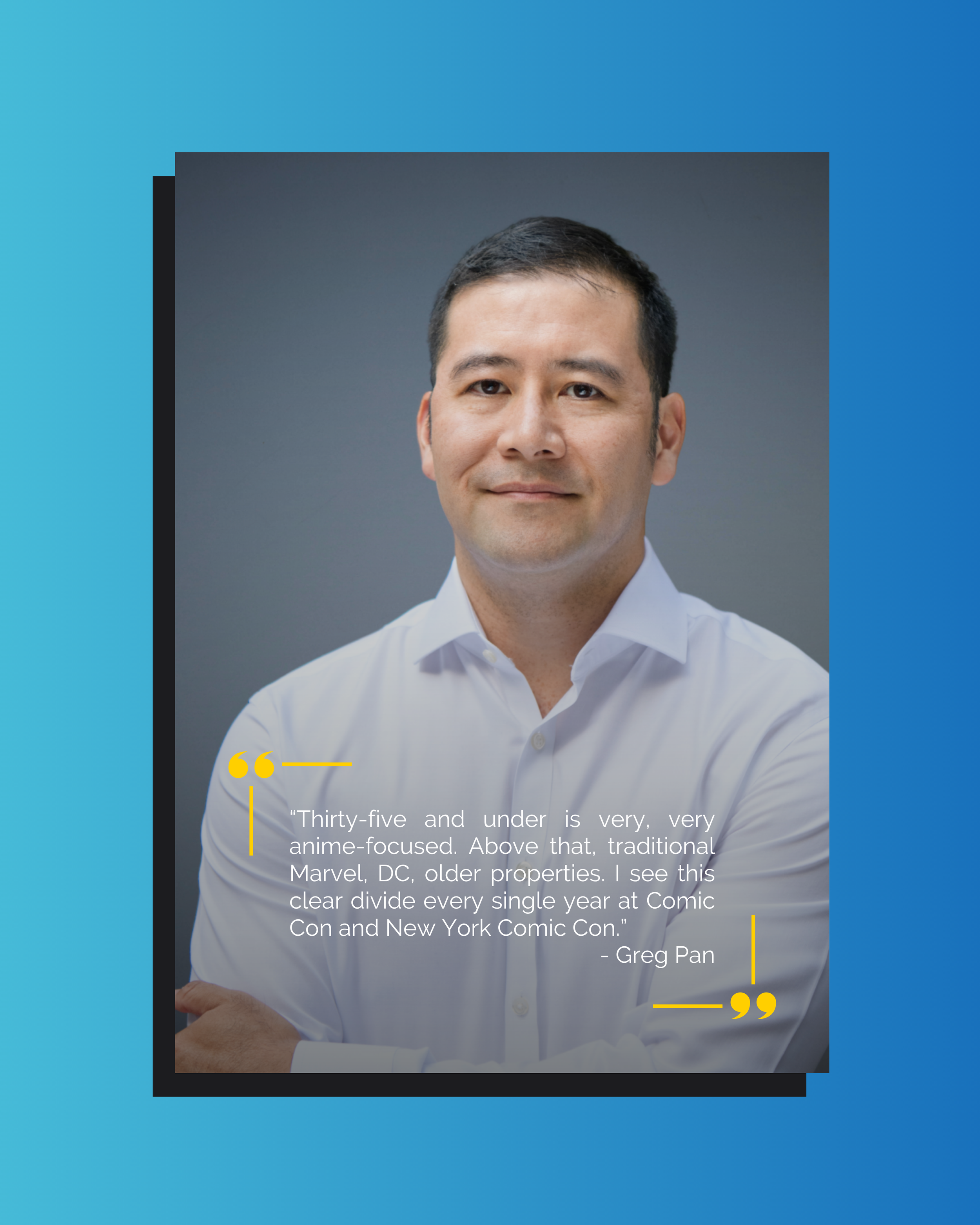
Greg Pan: Yeah, David handles the west coast things, I handle the east coast Yeah. I mean Davidand I just came back from San Diego Comic Con and I see this every year, both New York and San Diego, is there is a clear age divide between - of fandoms - like thirty-five and under is very, very anime focused. And above that it's you know, then you have traditional, you know, Marvel,D C, older properties. I say older now, that's my pro these are my properties.
Ted Larkins: That's interesting. Yeah, don't get me started on age.
David Schnider: Right.
Greg Pan: But that there's that clear like split off that, thirties and under is very, very anime centric. People are dressed as Demon Slayer, One Piece, all these top anime brands.
Ted Larkins: Hmm. Yeah.
Greg Pan: Do you have any thoughts on like what changed in the audience's tastes? Like are these properties just better at marketing and reaching these demographics or is the other way around that the US studios are less effective in reaching?
Ted Larkins: No, I, you know, I think that for me, you know, I watch and look at and see anime, but it's not really, it's not like I don't dig into it, like you say, I'm more on the more traditional on the - as an almost sixty-four year old, right? You know, I'm more in that traditional. But there is something about the style, the anime style that attracts that younger demographic that are into that quick, fast, you know. I know it's hard to explain really what that what that anime looks like, but I think it's very attractive to them. I don't know that it's necessarily bad poor marketing on the behalf of, you know, American studios necessarily. I just think that what the anime, what the Japanese have tapped into and are bringing to the audience is really unique and maybe a little bit quicker and faster paced than you know than the other, you know, the other genres. And how was, and just to ask you guys, how was Comic Con? Was it just as crazy as always?
David Schnider: It was pretty amazing. I think because I'm local, I've been going for a number of years. One of my clients started taking me years ago and coming
out of COVID, you know, they had one year where it was very lightly attended and I was actually joking that the show was about comic books. Who knew? But it it's really, it's come back in a big way since then. The crowds are back now. I think the studios they still have a presence, but not quite as dominant of a presence as they used to. It's not as entertainment, as studio driven as it was for many years. But there are there are a number of companies are coming back. Sideshow who I work with came back for the first time this year was really great to see them on the floor. And it there it’s all sort of back to where it was with a nice mix of collectibles and comic books and some studios and properties, a lot of anime and just a sea of humanity on the floor.
Ted Larkins: And did they have the panels for the movies, the new movie releases? Because I remember there was a time when that was a big thing, you know, the actors coming in and doing panel discussions for new movie releases and things like that.
David Schnider: They had one really big one for the new Marvel-
Greg Pan: Doomsday. They had the whole most of the cast there. without revealing too much my issue, they try out the cast but they don't really talk about what to be excited about. So, I'm at the age where I'm not excited about talent. So, I want to know about the movie. I'm still curious what the movie is going to be about. Yeah.
Ted Larkins: Hmm. Yeah. You still don't know. Yeah. that's interesting. Yeah. And I'm look, I'm excited for New York, anime, New York City. That'll be fascinating. I hear - I haven't been. I've heard it's grown just exponentially over the last number of years. And there's so much interest in that for I think it's a four-day show. So that'll be, I'll be curious. I'll be curious your take too, Greg, having been at Comic Con and then comparative to, you know, what happens in New York.
Greg Pan: Yeah. So, I've gone to New York Comic Con for close to twenty years in a row now. I've only I'd only been to San Diego once ten years ago. So, I see them as comparable shows, but I guess the main distinguishing factor is there's a little bit more movie stuff just because the timing is better. New York Comic Con's in October, it's kind of a crummy time to promote anything. It just doesn't really fit in with people's schedules, except for like T V. So, you'll see a little more T V streaming announcements during that time period it's a little bit too late for this for like the movies because they're either in too early in production or the movies just came out. and then there's a lot more I'd say like weirder, like weirder booth sponsors in New York Comic Con. Like you'll see kind of very generalized services, which I didn't see as much in San Diego. Like, for example, like Nippon Airways has a has had a massive booth in New York Comic Con for years. And the sell is hey, people who like anime, fly our airplane. That's kind of like the sell. whereas-
Ted Larkins: That's funny. Yeah.
Greg Pan: Like San Diego Comic Con, I feel like the services and companies there are a little bit more directly related to the fan base. I feel like a lot of the space in New York Comic Con has been kind of bought out by sponsors, which is right. It's a little more corporate. And then-
Ted Larkins: It's more corporate, yeah.
Greg Pan: You know, I think this is getting worse every year for both Comic Cons, but it's just kind of turning into like a product exclusivity like marketplace. So, you got to pay your money to get in to Comic Con and then, it's just lines and lines and lines. And, you know, it's there's so many exclusive, whether it's like trading cards, pins, action figures, everything. It's just lines everywhere. And it's almost like you're in a theme park, except, you're in a line to buy stuff. And I get it, like I think there's definitely-
Ted Larkins: Wow. Right.
Greg Pan: - this collector economy at this moment where you know you have a chunk of people who are collecting and they this is the only way they can get it because if they don't, they're going to be paying three times as much on the secondary market. Yeah, people buying these to sell them on the secondary market, or people buying them for themselves and their friends. Or just like hoard, because it's like now a this is now an investment proposition. So, it's kind of a it this the economy-
Ted Larkins: Yeah, right. That's fascinating.
Greg Pan: - of collectibles is really changing how these shows are constructed. It used to be, I mean, it still is about the fandom, it still is opportunity to meet the talent involved, whether it's voice actors or artists or writers or, you know, actors or producers, that's always great but if people are spending half the show standing in line, what happens to that experience? Right. It's just it's just a shopping experience.
Ted Larkins: Trying to get something. yeah. But yeah, right Yeah, yeah, for sure. I remember it used to be you could just walk up to booths, you could walk up and you know, to booths and get stuff, and it was really more interactive. Again, I haven't been and the anime New York City in a couple of weeks will be interesting as well. I'll be curious about that. That still seems to be more personal, right? More fans, more of that without the corporate pool. See how that that goes. Yeah.
Greg Pan: Yeah. I haven't been myself, so this is my this is my first year attending, so we'll see.
Ted Larkins: Okay.
David Schnider: So, Ted, tell us about Octane Five and what the company does and what you're doing there.
Ted Larkins: Yeah, I was in Japan, I was an agent for most of the movie studios. I did that for pretty much twenty years or so. And then I connected when I was back here, I connected with CPLG, DHX Media, which is now WildBrain CPLG and I opened their Hollywood office in twenty fourteen. It was a fascinating experience to be part of that, to go onto the licensor side.
And you know, we represented Telly Tubbies and Space Invaders, it was really a great opportunity. I was in that for four years, and then DHX bought Peanuts and they already had their office in New York headed up by Roz Nowicki, as you guys - Roz was on your show as well. Love Roz.
David Schnider: Yep. She was.
Greg Pan: That's right.
Ted Larkins: And yeah, and so they decided to, close the LA office, it's a fair deal, and just shift everything over to New York.
And that's when I went out. I wrote my book, Get to Be Happy. That was a super fun experience for about a year. And at the same time, I started consulting for a software provider. There's an old company they're gone now called Brainbase, and I helped them develop this software. And in the midst of that, over the four or five years I worked for them, you know, I really learned this side of the business. And then I was approached by the guys at Octane Five. Who had a long history. They're 15 years old and have built this platform that really helps brands manage all aspects of their licensing experience, from you know, product approvals to digital assets, contracts, royalties, everything in one source of truth ecosystem. And so, I came on with them I handled Global Sales for them, licensing. And it's fascinating. It's so fun to help organizations really start to, you know, a lot of people they're on they're on Excel sheets or they get, you know, email designs or all that. It's all different portals using things. And we bring it all together so then at the end of a quarter you can do comparative and data analysis on what, you know, what's the best-selling product in Target or what brand or what style guide is producing the most sales or what licensee is doing the best. So, it's this data that comes from that. That is really super fun for me when we bring on a customer and to after a little while to see that the results they get from using the platform. Plus, it makes it easier. We have a mobile app and so you can do product approvals while you're getting a Starbucks coffee and some of these things that really make a licensor's life easier and in turn the licensees that are working with those licensors. So that's kind of what we're about.
We also have a hang tag and a micro-optic program where you know how they have the old holograms used to be the kind of the way that people verified their product was authentic. Well,we use a micro-optic, it's the same technology in the one-hundred-dollar bill. And so, it creates this authenticity and also, we create this portal for customers when you buy a product scan the code and it takes you into this whole customer journey for brands. And so that's a super really exciting aspect of what we do as well. And look, I've used all these years of experience. Now I'm reaching out to people and saying, How, are you doing in this aspect? Can we talk from some of the relationships and we're doing really well. It's super fun, yeah.
David Schnider: So, is the software primarily for licensors or is it also licensees?
Ted Larkins: It is geared for licensors. We have just launched a licensee version that they're able to use. We also have launched at License Expo. In May, we launched something called Ask Brad, which is our AI tool, which is really a powerful tool where you can just say, Hey Brad, it's from BrandComply. Hey Brad, what are my top selling? You know, instead of going in and trying to do some reports, what are my top selling products in mass for the last two quarters, and it just generates reports for you. So, we launched that. And then we also launched a marketplace, which we have 20,000 licensees, we have hundreds of brands on our platform. And we thought, well, why not make a portal where those are accessible for each other to you know find each other? So, we launched that in May as well, and then we've made that and why limit it to just our clients, so we've made that a public feature as well.
So, if you have a brand and you want to find licensees, go on, log in, put the parameters that you're willing to accept and go for it. And the same if you're a licensee or manufacturer, you can go ahead and use that portal as well. That's just a free service that we offer for our clients and for everybody.
Greg Pan: For licensors and licensees, you know, obviously when you start in the licensing, you start kind of small and you slowly grow and expand. At what stage should they be looking at your services where this is going to be a game changer and change how they do processing and data?
Ted Larkins: Look, if you have five or ten licensees, it's pretty, pretty easy to manage, I think. But once you get beyond that, then you're talking about at the end of a quarter you're getting 10, if you're getting, if you have more, you know, 15, 20 royalty reports. But even then, they're coming in separate and you're not you don't have the ability to collate all that data, right, into one place and then be able to manage that. And so, once you get above the 10, 15, you know, contract area, then we become very, very supportive of you, I think. And we work with Amazon and GM Studios, Nike, Coca-Cola Ford, and then we work with a smaller agency. CLC is a smaller agency that we work with. Art the Clown that does the Terrifier movies, they have a small program, but they've come on and they really, talk about fascinating content, you know, but they've come on to utilize the platform as well. So, it really goes across the gamut, whatever you're looking for. And we work we work with everybody.
Greg Pan: We talked a little bit earlier about how this is a very relationship focused industry. I think one of the conversations we've had with other people around is, you know, data is changing that a little bit. Have you seen little bit? Like now it's instead of having calls of your contacts getting information about how the license is doing, what products are doing well, it's just data spreadsheets and things like that. Do you see a change? You think do you see a data changing the relationship side of the business?
Ted Larkins: You know, this whole AI thing, right?
Greg Pan: Yeah.
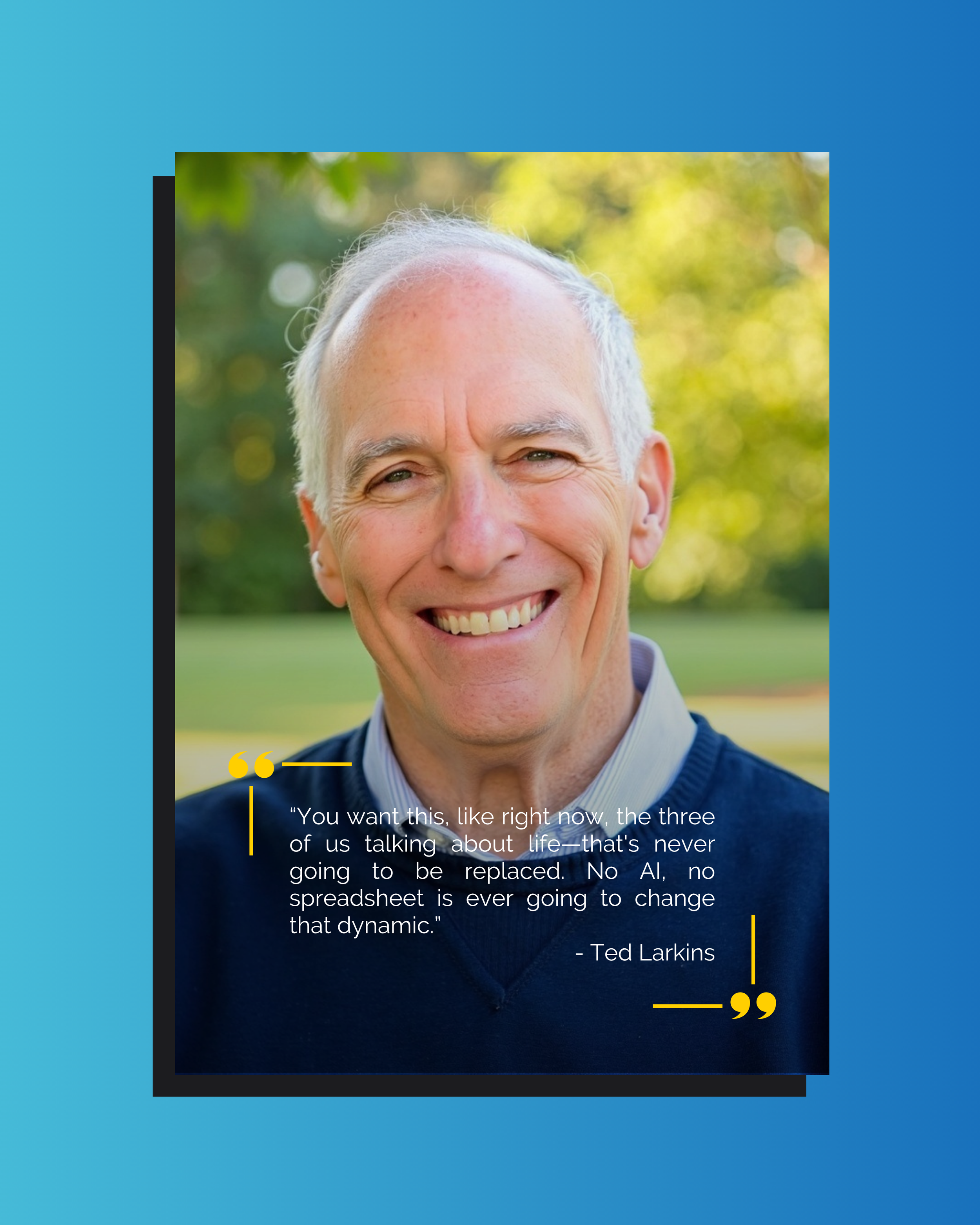
Ted Larkins: One of the things I love is speaking languages and learning languages. It's just one of the things I'm into. I speak Japanese, I now I speak Portuguese, and people say, yeah, but AI is going to take out the human element. I don't see that at all. You want this, like right now, the three of us rapping about life, that's never going to be replaced. And it's the same with data. We have, we offer managed intelligence reviews, that's what we call them. We go to each of our clients on a quarterly basis. We go in and have a face to face. This is what your data looks like. This is what what's going on, this is where you could improve, things like that. No AI, no spreadsheet is ever going to change that dynamic. I don't think. And of course, there could be a whole show about how AI is changing everything, but I just believe that this human element that we have is too powerful to go away. And so, yeah, there's better data. That's awesome. But then there's better data than to work with your counterparts in - as a licensee with your license or between license or and licensee. And you can talk more intelligently about the business, strategize even more. And I think that's even for us, even though we're incorporating AI into our products, we're still very focused on - my job's not going away. People don't want to just buy from a bot. They want to talk. They want to hear. They want to feel. And that's what we are. And AI will never feel like we feel. And I'm very confident about that, for the future for all of us. And I say it with my kids, who are eighteen and twenty-one, saying, Dad, holy crap, what's going on with this? And I just say, you guys, utilize it, see the power in it, but then don't forget that there's going to be the human element always. I don't know if that answers your question there, Greg, but you really…
Greg Pan: No, that's encouraging.
Ted Larkins: I'm very encouraged. I know you can look at it both sides, right? It’s whatever, but for me, I just think if you use it wisely and for what it is, you'll be better for it. And then use it to, expand your relationships, deepen your relationships, why not?
David Schnider: Yeah, we talk about all the time on the legal side how AI is a great tool for us because we can use it to help us analyze a contract and write provisions, but it doesn't replace the judgment and the human element and it's really the combination of the two that's the secret sauce.
Ted Larkins: You guys will never be replaced. I can see if you have five hundred attorneys in a big corporation, that you're not going to need five hundred people to analyze contracts. That's going to be done, I get it. But there is always going to be a need for the face-to-face, for the person-to-person interaction on this stuff, just like you guys. And a small firm like you definitely will have that, always have that. And I know even as we incorporate AI, but the negotiation and the feeling, all of that is still one to one and it will be I think forever, that's my AI take for the day.
David Schnider: Goes back to your origin story. Nothing replaces the call from the American in the bar in Japan.
Ted Larkins: No, yes, exactly. Yeah, yeah.
Greg Pan: Speaking of lawyers, how have you typically worked with lawyers at either at Octane Five or prior to that?
Ted Larkins: Usually, like when I was an agent in Japan when I was representing the movie studios, I usually had of course I had a point person, right? That that was account manager or what have you. But when we would bring a contract, especially like Paramount Pictures, I was their agent for eighteen years over there and I got I got to know a guy named Norman Becker, great guy. He was he still is the you know, the head of licensing contract management there at Paramount. You know him, David?
David Schnider: I've worked with many people under him and I never got to meet him because he was at lunch.
Ted Larkins: Super anyway, super great guy. But all these guys, all these people, at least when I was in Japan, it was so fun to walk in their office and say, just look, I know it's crazy, but this is Japan. Come on. They would they would laugh, Norman would laugh. All right, all right, that's good. Because you're looking at what's going to help the brand and you don't of course you don't want to do something that's going to diminish the value or perception of the brand, but in Japan, come on. And even here, I don't know, I think when you get into it, of course you've got to follow the rules. But I think as you again bring that human element to it, when I'm speaking to attorneys, when I'm speaking to you guys, I know that there's a there's a conversation to be had. It's not just so cut and dry. And so, if you just maintain that and really have those relationships, it makes all the difference in the world to the contracts, the deals you can do really like I didn't think about that. Okay, let's allow that. Let's see where this can go. And that's kind of that's my experience with attorneys.
David Schnider: So, let's talk about your books and the “get to” mindset. Can you tell us, well first tell us what that's about and then maybe what prompted you to write it.
Ted Larkins: I was on for that for the position there at DHX SCP LG in Los Angeles. I took the train, two hours each way from Costa Mesa, which was down in Orange County, up to the office. And at some point, I did that for three and a half years. People say, my God, how did you do it? I'm like, my God, I sat on a train, either the Amtrak or the Metro Link there in Orange County and I would sit at table and I would work or read books. And at some point, I said, I'm going towrite a book. And I'd had this a recent experience where I was doing the dishes and grumbling, you know, I have to do the dishes. And something clicked, I said, no, I get to do the dishes. And it kind of shifted how I was thinking. It was really kind of powerful. I was like, yeah, and I just kind of felt not so bad about doing the dishes. And then soon after that, I was about after dinner one night, I was about to go to, you know, go back to work because I was working with Japan, so it was the evening time. And my boy Will, I think he was 11 at the time, he said, Dad, you said you would play. And I said, that's right, I got to go play with Will. And I turned around and started walking to him. He was on the ground playing with some Legos or something. And I said, Yeah, I have to. And I remembered a school shooting, and I said, Holy cow, I don't have to. I “get to” sit with my boy, and I'll tell you a light bulb went off. I was like, wow. And as soon as I started saying that, I realized, wow, I get to change from that victim of “I have to” to incredible gratitude, incredible compassion for others that don't have what I have. And so that was the beginning, that thought process. And so, I'm in the train, I'm thinking about this, and I started developing the “get to” principle.
Which is really that mind shift set, no matter what you're doing. And we have as a as in the English language, “have to” is like very ubiquitous. Have to do this. I have to get a cup of coffee. I have to go to work. I have to. And it's just filled with victimhood. If you say it, I have to, it's like you don't have any choice. And if you just shift that to “I get to”- I get to go to work, you all of a sudden think, wow, how many people don't have jobs? My God, how lucky am I?
And you have compassion; you have great appreciation. So, I started saying that for myself over and over. And I started writing the book and I started talking to people about it and it became kind of a thing. And I published the book. It was well received. I was picked up by a publishing company called Simple Truths and I wrote another book called The Get To Principle. I did some speaking and I was a wannabe Anthony Robbins, Tony Robbins, but it never got there. I got sucked back into licensing because I, you know, because I love it so much. But the truth is I still use that and I still speak about it. And I think everyone should really, really recognize what they have no matter where you are, to be able to say, I get to do this. I don't have to, I get to. And smile. And then the world kind of gets a little bit brighter and then things start changing in your life.
So that's kind of the basics of what get to is about. It's been an incredible journey. I launched, I published that book probably eight years ago. And still people read it. I have an Audible and it's super fun. So, my licensing journey and including so many things, you know, just kind of my life, things that have happened and a lot of the luck, if you will, and experiences that I've had in life. I got lucky I went to Calcutta, I was living in Japan and a friend that I had met in Japan was going to Calcutta to work with Mother Teresa, to work in her orphanages as a doctor. And so, I went over after he'd been there a couple months. He wrote me a postcard. I said, I'll come over. So, I flew to Calcutta. And boy, just being in Calcutta, in the slums, and just saying, wow, it was like I get to have what I have and I have great compassion. I got to meet Mother Teresa. She was walking, she was in a hallway. We walked by, and then mother she clasped my hands and said, bless you, my child. I'm like, yes, thanks, Mom. And with all reverence, with all reverence. It was really, it was special. But anyway, so that's kind of all of that is built into the book that I that wrote and the and the principle that I like to live by.
Greg Pan: Sounds a lot about both acknowledging and being thankful of being present in every situation.
Ted Larkins: It's so true. It's easy to get caught up. And I'm just like I'm just like everybody. I get caught up. We get stuck in this whirlwind of thought, right? It takes over. And the ability to stop that thought, like you're thinking about the past, you're thinking about something that's bugging you, and that and you get into this loop, and the ability to stop that and recognize it's just a thought. It's not it's actually not real. And when you say I get to, it helps do that.
And this goes along with meditation, if you do any kind of meditation or yoga, which helps to quiet the mind, which is like this monkey thing going around. And if you're able to do that, the more you're able to do that, I think the more peace, the more happiness you find. And I think that yes, it's great to go out and help the world do what we can, but if you're nice, if you're living from this space of gratitude and compassion, then others feel it. And that's what we're all about.
And the more we can all do that, I think it's a I think it's a game changer for the for the world. And I'm not here to change the world, but I am one person at a time hoping to give some love and happiness and help people smile a little.
Greg Pan: How do you deal with people who don't have compassion?
Ted Larkins: It's tough. You do, look, you just keep what I find is that when people don't have compassion or you meet some crappy people, and there are times I'm not saying like it's all foo foo and all, you know, hey, everybody's happy. No, there's some really, really bad stuff out there. And if you're in a bad situation, you're with bad, malintent people, you don't get, I get to no.
You take care of yourself, you take care of the people around you, you protect yourselves, you move to a safe space. That's totally what needs to happen. But as soon as you're done with that, as soon as you're in a safe space, then come back to just saying, okay, look, that person, they're doing the best they can, and they may be awful and they may need to go to jail. I don't know. But just continue to maintain that that I this is what I teach my kids. You know, somebody honks at you, somebody's mean to you, you don't know what happened to them that day. You don't know what happened to them as a child. Give them a break. Separate yourself. Take care of yourself. Do whatever needs to happen. But also have maintained that compassion for people. Because we don't know. We all know what it's like to wake up in a in a crappy mood or have something bad happen to us and be there. And don't you wish that somebody would smile and say, I get you. I get it. Yeah. I'm here for you. You get to experience that. I am careful. There was a time, my wife was walking out the door at ten o'clock. The kids had been throwing up, they were, you know, small kids. And she was on her way to, you know, to the drugstore to get some medicine or something. She said, I’ve got to go to the store. I said, “you get to” boy, the look I got-
David Schnider: (laughs)
Ted Larkins: - man. So, there are times, there are times when you keep it to yourself, I get it. Yeah. But it's super fun. Yeah.
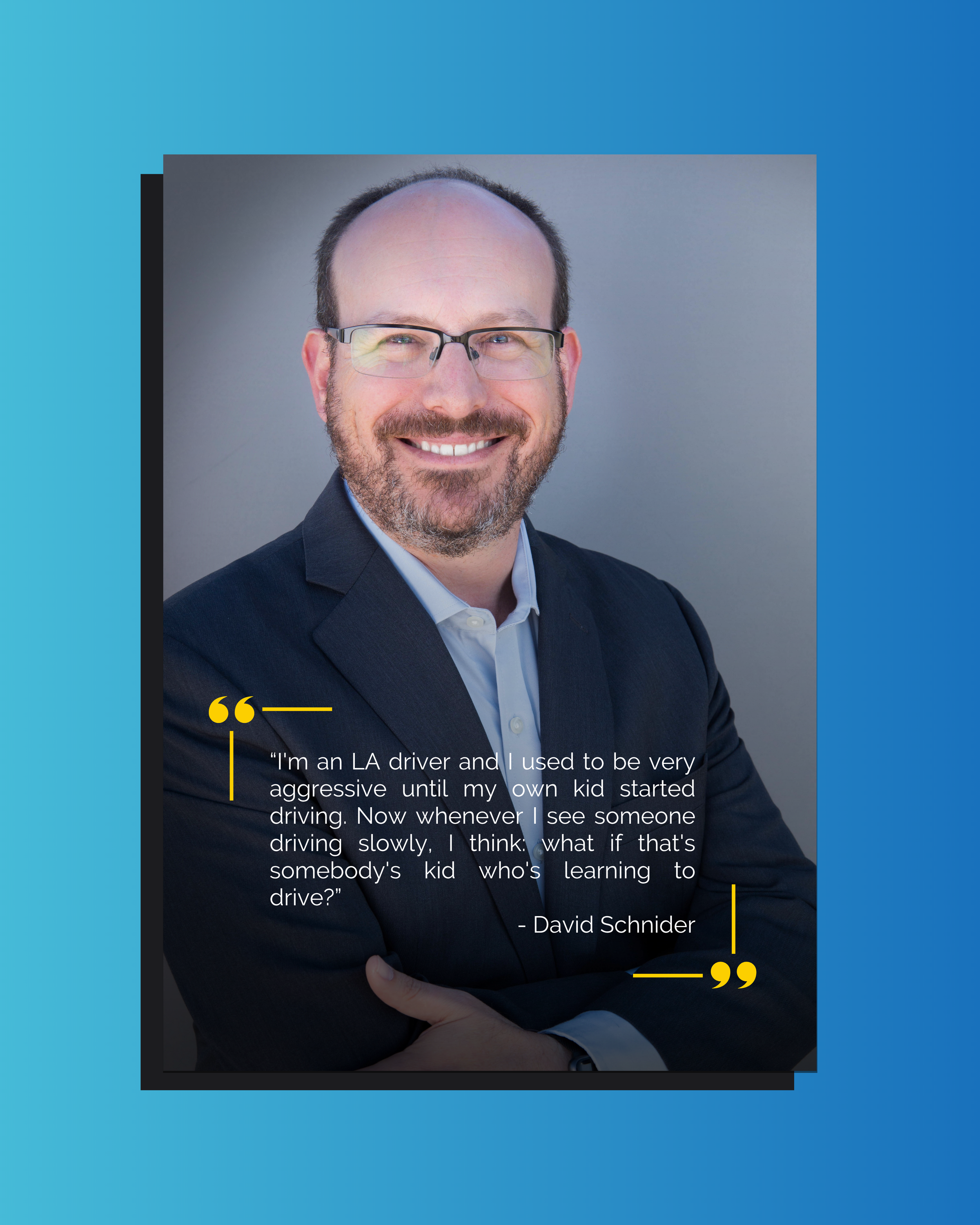
David Schnider: I'm an LA driver and I used to be very aggressive until my own kid started driving. And now whenever I have someone driving slowly or not driving so well, I think what if that's somebody's kid who's learning to drive?
Ted Larkins: Wow.
David Schnider: And it changes my mindset for how I approach them.
Ted Larkins: Right? I, yeah. And I always say I and when I was in LA and I was driving with the kids, I would say, they're like, that driver, he's so dah dah dah. I'm like, you don't know if laying in the back seat is his that if the guy, if his wife is pregnant and on their way to the hospital. You don't know. So, it's easy to judge. So just back off, give room and let do their thing, you know? And call 911 if you have to to protect yourselves and others. I don't know. But really just keep that mindset as much as we can, I think it really helps a lot.
In fact, let me I would like to add this. So, I did write a book, The Get To Principle, which is also along with Get To Be Happy on Amazon, if you don't mind my plug there. Here are some get-to thoughts, and then the opposite are the victim thoughts. And you, as I read these, I'll I have a list, but I'll read a few and just feel this.
So, “get to” thoughts, be grateful, receive graciously, have compassion, want others to succeed, extend favors to others, take inspired action, be courageous. And on the other side, the victim thoughts with where a lot of us live, take things for granted, criticize others, hold others in contempt, secretly hope others fail, blame others for failures, fear change. Can you feel the difference on those two?
And that is what we're looking, I think all of us are looking to do is to shift into that more of a “get to” positive mindset. So, there you go, I'll leave you with that, thought process.
David Schnider: That is a perfect ending note. I want to thank you for talking to us today. It was a pleasure. I really enjoyed it. Let people know how they can find you in Octane 5.
Ted Larkins: You can go to octane5.com or you can find me at Ted@octane5.com as well. Happy to talk business. I love to talk about life. I love to talk about “get to”. I love to share. So,if it's something that you just like, you know, I have some thoughts about that, please reach out. I'd be honored to have a chat and follow up on all aspects. If you're looking for licensing software, sure, but if you're looking for a little bit chat on about life. So, thank you guys, thank you for the opportunity to be here. It's been really fantastic.
Greg Pan: Thank you, Ted. It's been fun.
Thanks for listening to the Licensing Exchange. If you enjoyed the show, please share with others and kindly rate and review us on your favorite podcast platform. For more information on how we can help with your own legal needs, check out our services at nolanheimann.com. That's N-O-L-A-N-H-E-I-M-A-N-N.com.