

Purpose, Play, and the Business Case for Doing Good
Genna Rosenberg has worked in toys and licensing for 30 years. Her first job out of college was doing PR on licensing deals for The Wiggles and Bananas in Pajamas. After twelve years in leadership at JAKKS Pacific, she founded GennComm, and her team now holds patents in sensory play. She is also the founding industry ambassador for Autism in Entertainment, and the Los Angeles Business Journal named her its 2026 Innovator of the Year.
On this episode of The Licensing Exchange, Genna joins hosts David Schnider and Gregory Pan. She explains how GennComm ImaGENNation looks for white space in the toy market and how its patents on memory foam in plush helped start a category. She also shares what inventors should know before pitching a manufacturer: who already leads the category, what the product will cost, and where it will sit on the retail shelf. The conversation covers how licensed mock-ups help partners see a product’s potential, and why speed to market sets today’s most nimble toy companies apart.
The second half of the conversation turns to purpose. Genna argues that social impact lasts only when it works for the business too. She draws on her own work at JAKKS, round-up campaigns and the 100% profit pledges made by Newman’s Own and Dr. Seuss Enterprises. She also talks about her work with Autism in Entertainment and the untapped talent the licensing industry can welcome.
For brand owners, inventors and licensing professionals, the episode is a practical look at turning a strong idea into a product people want, and building purpose into it from the start. To learn more about how Nolan Heimann supports licensors and licensees, visit our Brand Licensing, Identity & Innovation practice.

The Licensing Exchange Ep. 14:
Podcast Transcript:
Announcer: You're listening to the Licensing Exchange, part of the Look Legal pods from the law firm Nolan Heimann lawyers for creative business makers. And now, here are your hosts, attorneys David Schnider and Greg Pan.
David Schnider: Welcome to the Licensing Exchange podcast. My name is David Schnider. With me today is my partner and co-host, Greg Pan. Hey Greg.
Greg Pan: Good morning, David.
David Schnider: So today we have on our podcast Genna Rosenberg. Genna is a longtime toy licensing and entertainment executive, an award-winning social impact strategist, entrepreneur, and keynote speaker with more than 30 years experience at the intersection of business, culture, and play. As CEO and chief ideator of GennComm, she helps companies and organizations uncover authentic opportunities where purpose and business naturally align.
She is the creator of Lean into Purpose and the founding industry ambassador for Toys and Licensing and Consumer Products for Autism and Entertainment.
Genna has been a featured speaker at Licensing Expo and Toy Fair, served in leadership roles with Women in Toys, Licensing and Entertainment, and in 2026 was named Innovator of the Year by the Los Angeles Business Journal, where she also delivered the closing visionary keynote. Genna, it is great to have you on today.
Genna Rosenberg: Thank you so much, thrilled to be here.
David Schnider: So, I I'm going to ask you the same question. I always start with all of our guests, which is how did you get into licensing?
Genna Rosenberg: Well, my first job right out of college, actually, I worked at a PR and marketing agency in Beverly Hills, and a licensing agent named Sid Kaufman hired us to do PR on his deals. And his deals were on kids' properties called the Bananas and Pajamas and the Wiggles. So actually, my very first year out of school, I ended up going to licensing show, which was in New York and have been in licensing ever since.
David Schnider: That's actually got to be one of the most direct paths into licensing we've heard from a guest. Did you know what licensing was before Sid hired you guys?
Genna Rosenberg: I'm sure I didn't. I'm sure I didn't.
David Schnider: (laughing)
Genna Rosenberg: But yeah, we learned you know, it was there were two really popular kids’ properties at the time, the Bananas in Pajamas and The Wiggles. And I've actually ended up representing The Wiggles probably four or five times throughout my career after that in different roles that I was in. But we had these finger puppets of the Bananas in Pajamas from Tomy Toys that I still keep on my desk 30 years later. And you know, I think when I first got started, I didn't really know the business. I didn't really even understand what a lane was. So, we just did lots of different things. Like I remember creating a cross promotion with Huggy's diapers for that was owned by Kimberly Clark for people to win a Bananas in Pajamas plush toys and they sold them into supermarkets. So, like I didn't even realize that, you know, was not necessarily something that we might normally do. But people said yes. It was really fun. It was a fun time.
David Schnider: So, our listeners can get some idea of the kind of different experiences you've had in the industry. Will you tell us what your career path was and the different places you've worked?
Genna Rosenberg: Sure. Well, I started out as I studied journalism in college with an emphasis in public relations. Actually, my tenth-grade English teacher said, Genna you should do public relations. And I was like, okay, I didn't even know what that was either, but I she saw something in me about my storytelling and I guess ability to influence people. And so, I went to Maryland for that. And along the way I discovered social justice and double majored in women's studies. So, I thought I was going to go into nonprofit work. But then when I moved to California, I'm a New Yorker, I ended up getting a job at Sharp PR and Marketing. And we had a little tiny company, but big clients like Coca-Cola and the Leukemia Society. And then we ended up, working on these licensed kid’s brands. And then little by little ended up getting more toy companies.
Tomy saw what we were doing with the Bananas and they hired us to do their PR. And we read about JAKKS Pacific in the newspaper and went after them, and we ended up being their first in-house PR department and Imperial Toy, and on and on. So eventually, after being there four and a half years, I went in house at JAKKS. So, they were a hot, fast-growing company. I was in my early 20s, and they said, if it's not you, it's going to be someone else, and I jumped at the chance.
So, I ended up staying there for twelve years and I was the head of, when I left the company, I was like the SVP, I think, of communications, investor relations, and philanthropy. So, I really got my fill of loving social impact by being able to create their philanthropic departments. And while I was there, I was able to give sixty million dollars’ worth of toys away to different organizations and get the company really involved. So, but then I left there because I didn't just want to tell the stories at the end. I really wanted to create product and create brands and be more part of the whole process. So, for a short time I went over to Imperial Toy and the two owners of the company, they had been a former client of mine, brought me in as their protege.
And they really taught me all the other parts that I hadn't done at JAKKS. I had worked with every department at JAKKS, to communicate the earnings and operational issues and manufacturing technicalities and all these different things, but I wasn't responsible for them. So, at Imperial I was, and learned all those parts. And that was like a great stepping stone for me, but culturally wasn't a fit. So, I left and started my company, Genncomm, which I've had for the last, I think, 14 years. And Genncomm started as a PR marketing agency, and also at the same time had a product development and licensing division called Genncomm Imagination.
And my team and I represented like all the top licensed brands, all the top toy companies, manufacturer studios. It was very exciting. Everyone from Ghostbusters to Pac-Man, to pretty much everyone. Disney Princess. I look over at my wall. I have all my favorite toys here. And then, but we've also been developing our own IP. And so that has actually emerged as what I spend a lot of my time on now and don't take on PR clients anymore. And just focus on that and social impact.
David Schnider: Yeah, so that's a little unusual for a licensing agency. You know, can you tell us what the products are, what you've developed and a little more about those?
Genna Rosenberg: Sure. Well, Jeremy Medwed is my head of innovation at Genncomm Imagination. And he's a very dear friend, and he's also a brilliant product developer. So, he often, a lot of the, not all of them, but a lot of the ideas originate with him where he'll be, you know, we're watching trends at Genncomm and looking at hot categories. We really know what's going on in the cultural zeitgeist and in toys and licensing.
We're looking for white space. So, we find opportunities. for example, we have six patents in the use of memory foam inside of plush. So, we didn't create plush, we didn't create memory foam, but we figured out, Jeremy figured out, he's the inventor on all the patents, how to make the material work great inside of plush toys so that you can squish it down and then make it grow. It's an incredible kid powered feature. And at the time when we started working on it in 2016, we saw that you know, painted foam was really a hot category in toys and blind packaging and mini collectibles, but nobody was doing foam in plush. So, he figured it out.
And we really launched a whole entire category with our first licensee. They were first to market with a product called Squeezamals. And yeah, now there's many, many dozens and dozens of companies that have come out with squishy, squishy plush. So that's really fun. And we're constantly innovating. We work on slime and our sweet spot has really been sensory tactile toys and they could be used with licenses or under unique newly developed brands.
David Schnider: We have a lot of clients who come to us who have come up with an idea, something along those lines. I have a great idea for a toy. and it is so challenging for them to then bring it to market. You had the background in the industry and the context, but how did you find the process?
Genna Rosenberg: Well, yeah, it's definitely not easy. And along the way, you know, one of the things that if you work in the toy industry or in the consumer product space, you understand that there are so many products that they like almost make it and then something happens and it doesn't turn into the big hit that you think it's going to be. But a few of the things that people can do to help stack the deck or make it more pop potential is really knowing the space. So, knowing, who are the main manufacturers that are making this type of product. So, you want to be looking at like who are the giants and then maybe who are the smaller companies that might maybe give it more attention or, you know, need your product innovation a little bit more than a giant might. But you don't essentially want someone learning a category on your product. You want them to know who the buyers are and have essentially, you know a foot in the door with retailers. So that's really important. And I think also an understanding of what the costing might be on your item and an understanding of where it's going to live at retail. So sometimes people might have a great item but like, where would you see it in a target? You know, I think you need to be able to really answer that question and sometimes when there's newness there's not always really an obvious place but if you can make the argument of why your item should live there then that's an important step too because you want to really empower the manufacturing team with developmental pillars of why this makes sense and why they need it from you.
Greg Pan: Kind on that topic, with new technology, both on like social media, which has been an enormous marketing tool, as well as e-commerce platforms. Has that strategy changed at all where you might not need to go to retail, you know, a brick-and-mortar retail or to like a major toy manufacturer, or the ways that new inventors can access and test their product without having to license it to Mattel or Hasbro.
Genna Rosenberg: Absolutely. It's not a strategy that we've deployed because right now we have not manufactured any of our own products. So actually, we did a test run of a very small of a small item during COVID and we didn't really have the expertise or the infrastructure to sort of do pack and pick and you know, we didn't have the revenue coming in to hire fulfillment company. We didn't have the infrastructure to really handle mail order. And so, it's something that I've really stayed away from. But for other people who want to, do a run and manufacture their item, absolutely. I think there's a lot of tools right now that would put especially a lot of people are making some great inroads using like TikTok shops and selling on Amazon, direct selling on Amazon and things like that. So, there's lots of ways to do that.
Greg Pan: And you've been in the toy industry for quite a long time and there's been numerous developments and changes, both especially the big companies, Lego's been growing very fast. Hasbro and Mattel have had their gains and dips. What's kind of your take on how that whole industry has developed? Is it the same as it was twenty years ago?
Genna Rosenberg: I think the companies that seem like they're doing really well also prioritize speed to market. And, while they may be focusing on developing classic brands, they're also really, I think have their finger on the pulse of newness. And so that's a little harder to do when you're at the size or scale of Hasbro or Matel. I don't think they have the same, philosophy, although individual people there may, but just they're not necessarily set up for that. when you look at companies like, Jazzwares and Goliath, I mean many of the companies are actually former run by former people who were part of JAKKS. So, while I was there, we acquired 18 companies. They acquired many more afterwards, after I left. But after the earnout, a lot of people left and started their own new toy companies. And so, I think those types of companies have a bit of a different philosophy. And certainly, when you hit a certain scale, like I know I think I've heard Jazzwares talk a little bit about that now that they're part of Berkshire Hathaway and they're such a huge company, a little bit moving away from that ability to be so quick to market, but it it's still I think ingrained in them.
Greg Pan: Then how much does licensing play into the product development? So, you may have a great product or toy. When you start thinking about- this would be so much better or much easier again to retail with the license.
Genna Rosenberg: We're definitely thinking of that here at Genncomm because of, our experience with it and just seeing how you can really create an immediate identity. for example, years ago I was working with a factory in China who made tools and they had incredible capabilities, but they didn't have much marketing sensibility to the products that they were developing. And we had developed a whole line based on the Property Brothers for them. And so, it's like just simple things that change the color palettes, make them more attractive to, shoppers like me or, people who were fans of the show. And we ended up not doing that deal because the Scott Brothers and the Property Brothers brands were in a little bit of a battle over how - which one they were going to focus on at the time. But yeah we have a patent on the use of fiber and slime and our first licensee, Zuru, came out with a version called Hairy Slime and they went gross with it. Like bugs and things like that inside of the slime. But we concepted out Trolls Slime, you know, like so it had like the tufts of troll hair at the top of the packaging. And we did another mock up for Afro Unicorn and we went to the licensee for that. So even though those particular deals didn't happen, we concepted out to just give people a visual that I think is really helpful. But with our plush lines, they have been used with both licensed and non-licensed. And when we brought it to our different licensees, we've mocked it up with everyone from Care Bears to Mickey Mouse to Teenage Mutant Ninja Turtles. It helps just give the vision right in there.
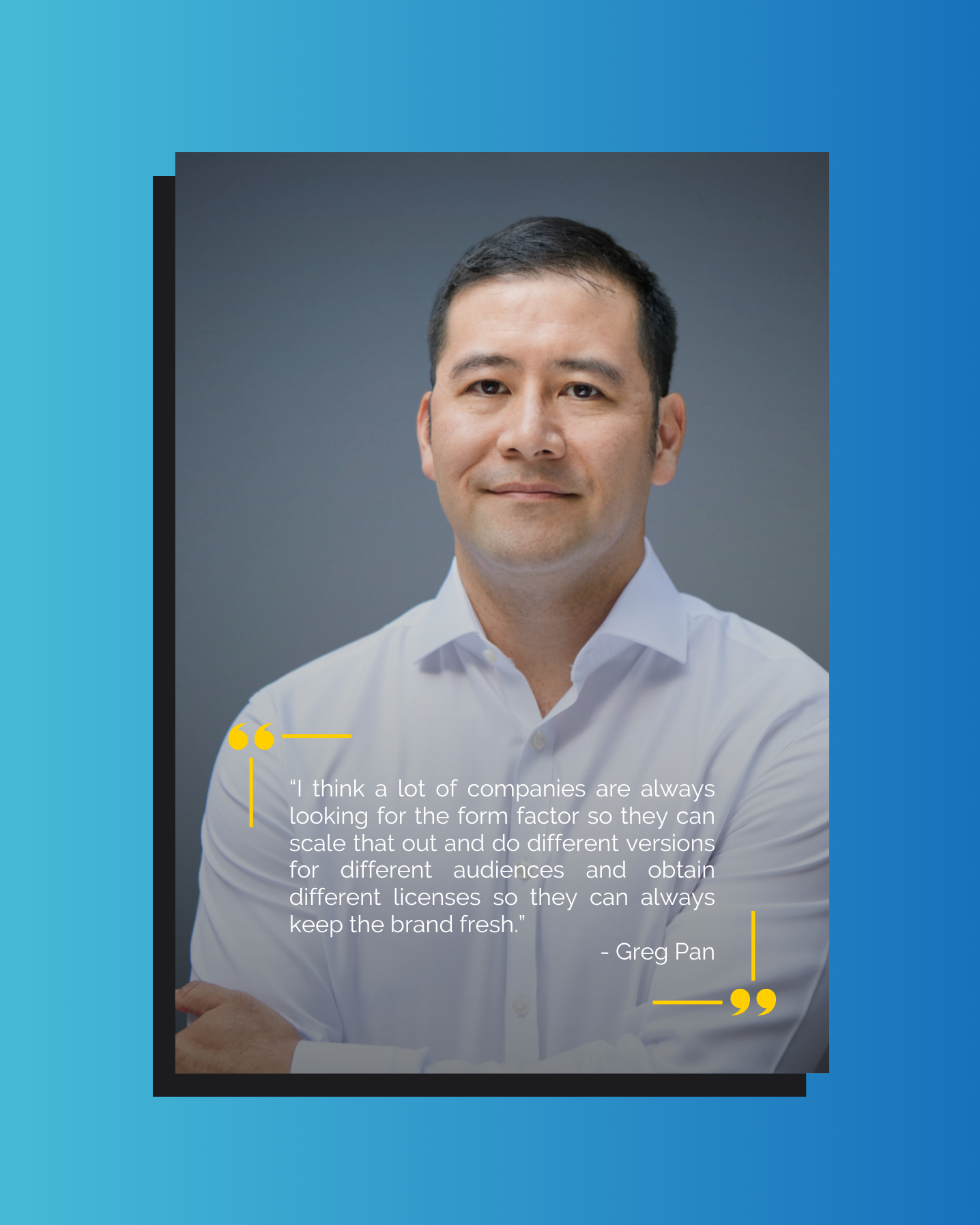
Greg Pan: Yeah. I think a lot of companies are always looking for the form factor so they can scale that out and do different versions for different audiences and obtain different licenses so they can always keep the brand fresh.
Genna Rosenberg: Yeah, and I think especially that's one of the things that we pride ourselves on is helping people see the vision of the potential with the ideation that we have. So, most of the time we're adding licenses to our mock ups so that people can see that potential.
David Schnider: So, one of the things that I think distinguishes you in the industry is you talk a lot about purpose and you have this lean into purpose platform. How do you think that factors into toy development in the licensing industry? Or any industry for that matter.
Genna Rosenberg: Yeah, I'm so excited about the potential for this space. I think there's a lot of things that are factoring into it. I think for the last decade or so, the industry has done a decent job. There's much more to do, but being more inclusive from a race and gender standpoint, in terms of who we're developing products for, who we're showing in advertising. Who are the people who are actually developing the products and making sure that they're really authentic. But I think in the we have a lot more to work to do in the disability space. I think there's a lot of products also that are like adaptive products or products that are geared toward different groups that could really make kids of all ages and adults who are buying a lot of toys feel seen. For example, there was the autistic Barbie that came out this year. And I know I saw a post from my niece who happens to have autism, and she said, I've never ever bought a Barbie before, but I finally feel seen.
David Schnider: It's that's very powerful.
Genna Rosenberg: That's very powerful. And then I'm very honored to not to date things, but I'm going to today I've been invited to go to Paris Hilton's house. And she is having an ADHD summit, the power of ADHD for content creators. And funnily enough, I was really interested in this space, but I also recently got an ADHD diagnosis and it makes so much sense. But I have been drawn to this space for a long time. And one of the things that I love that Paris is doing is she's talking about it. She's talking about her own ADHD, but she's also incorporating it into content that she's creating. So, she's a great example of someone who's leaning into purpose where she's saying, I have such influence, I want to make sure that I'm showing, you know, possibilities and example so in her new show Paris and Pups her character has ADHD and her dog has ADHD and then she also her toys have ADHD features in them her toys from Playmates so I love that so much and I've decided after all of these years, about three years ago, I stopped taking on PR clients and I decided I wanted to use my storytelling skills to tell the stories that I want to tell.
So sure, I promote our deals and our partners, but more importantly, I'm spending most of my time writing articles about companies who are doing incredible purpose-driven work, shining a spotlight on many, many different issues and in the Toy Book, in Global Toy News, and the Los Angeles Business Journal, and hopefully others. So, it's interesting. I'm like finding myself sort of being called to tell these stories that I didn't necessarily plan. Like certainly some of them I planned and they're there are observations though that once I see them, I can't unsee them.
And they really connect to the work that I feel passionate about. So, for example, I'm writing a three-part series on economic advancement for women and the opportunities for toys and licensing in India. And this story has like taken on a life of its own as I've been talking with, a dozen different people about those opportunities. And there's a lot of licensing that's happening actually in India with American Brand Group and major brands are doing manufacturing there and it's really creating a lot of economic advancement for people to participate in the economy now.
David Schnider: I think sometimes there's pushback on this idea of including purpose and product development because yes, well it's nice to support communities. I think people sometimes struggle to understand the business value. Do you think there's a business case for why this is an important element of product development?
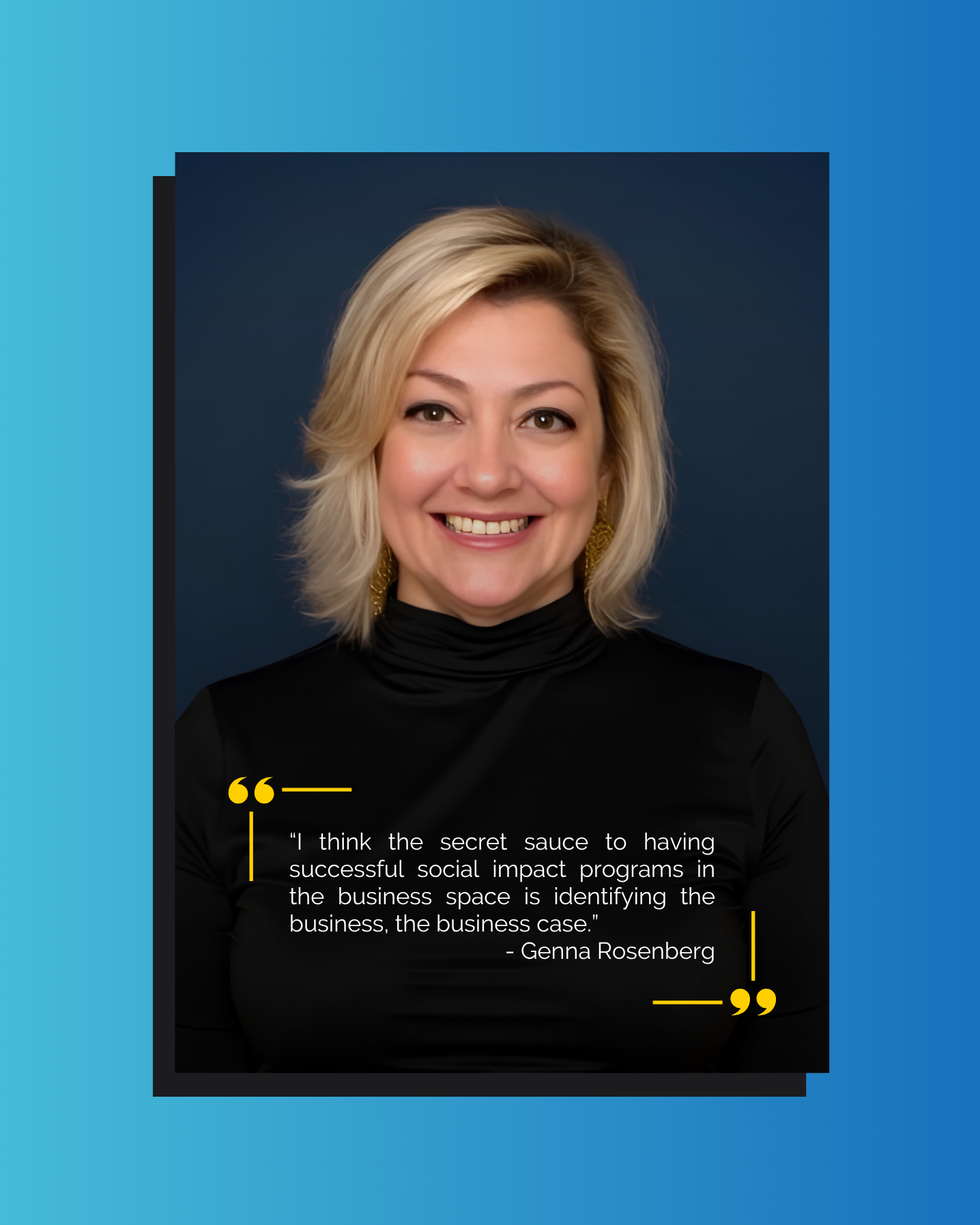
Genna Rosenberg: I definitely do. I think that here's the thing, Greg and David, I think the secret sauce to having successful social impact programs in the business space is identifying the business, the business case. Because at the end of the day, people, you know, it's a nice to have to be generous but it's not something that's going to have longevity unless it's a win-win for everyone. So, for example, when I was at Jack's, they didn't just give me $60 million worth of toys to give away. I noticed an opportunity to help them manage inventory, excess inventory, and then I identified a way to cost effectively move the goods in a timely manner and have people pick up and identify distribution partners that had the distribution on their side. And then it became a function of inventory management. So, I think in every case, if you can look at, the GAP has a body quality new program where they are using technology to make women feel seen with different body shapes.
But guess what? Now this, like with technology and it's not exactly print on demand, but similar to that, they're able to make more different sizes, cater to women, they have the technology at their fingertips. So yes, they're promoting positive body image, but it's good for business because they're going to be selling to a wider range of people.
And there's example after example after example of how companies, brands, products can really connect with consumers who are really activists with their pocketbooks. They're really making decisions on supporting companies that have more of a humanitarian mission attached to them and it increases sales when it's done right. I have a some of my clients will say, you know, we tried to do a thing and it didn't work. Nobody wanted it. But maybe it wasn't the right thing. So, I think you have to really look at what is going to be an authentic connection to a particular product or brand or character and not just label slap, but have it be something that's authentic. I did a LinkedIn post a couple of weeks ago. I saw a licensing collaboration between Liquid Death like canned water, liquid the brand, and good wipes. So, like, butt wipes, okay?
David Schnider: (laughs)
Genna Rosenberg: Liquid death and good wipes. And I wrote some commentary on it that wow, that would have been an amazing opportunity for them to have built in a cause tie-in from the beginning of this collaboration to donate their wipes to homelessness or people who have housing instability. So, I think that if you really think about, you know, who don't have access to always to have water and sanitary tools. So that's the kind of thinking that I like to do. And I think it layers another, you know, again, like in my heart I'm also a storyteller. So, I think that, you know, there could be incredible PR value, but it's got to start organically.
Greg Pan: Yeah. And there's numerous studies to support that for especially Gen Z and Millennials. They're only willing to support companies that do advocacy in in causes they believe in. There's a little bit of backlash to the soulless like corporation that's only in it for money.
Genna Rosenberg: Yes, I agree. I'm really moved by- so I've been working on a book called Steal the Play Book, proven pathways to social good. And my premise is we don't have to reinvent the wheel. We can look there are proven, tried and true, many, many different models of ways that people can help. You don't have to just write a check or volunteer or make a product or any one thing. And so, it's pretty exciting to like look at the wide range. I'm hoping to inspire business people and everyday do-gooders to think about how they can set intention, invite up participation and really create a ripple.
So, in working on it, one of the things I was looking at are, people who give really big and people who give really small. And so micro donations is actually one of the fastest growing but very, very meaningful ways for people to donate. I'm sure you've seen, if you go into a restaurant or a fast-food place and they'll ask you or even Uber, they'll ask you, do you want to round up?
And these roundup campaigns are raising hundreds and hundreds of millions of dollars. so that's like donating pennies, right? And then you look at the opposite end of the spectrum where there's like a hundred percent profit pledge. And Newman's licensed food is a really great example of that. Paul Newman started this food company years ago and said, if we're going to put my face on it, then we're going to donate all the profit. And so, they have raised hundreds of millions of dollars or more for a variety of charities. And the latest company to join that is the Dr. Seuss Company. So, I love that.
They're like, we've made enough money over the years with our books and publishing and hundreds of licensees. They're going to take off money to run the business and they're going to give the rest away. And there's so much in between pennies and a hundred percent, but I think companies can really think about, what do we do? What's the asset we have? And then how can we give that. So, you can really create frictionless activism, I think, when you kind of approach it that way.
David Schnider: Yeah, I think you think about there are some companies like Tom's Shoes and REI where they kind of build that into their DNA from the beginning. And I think beyond-
Genna Rosenberg: That's right.
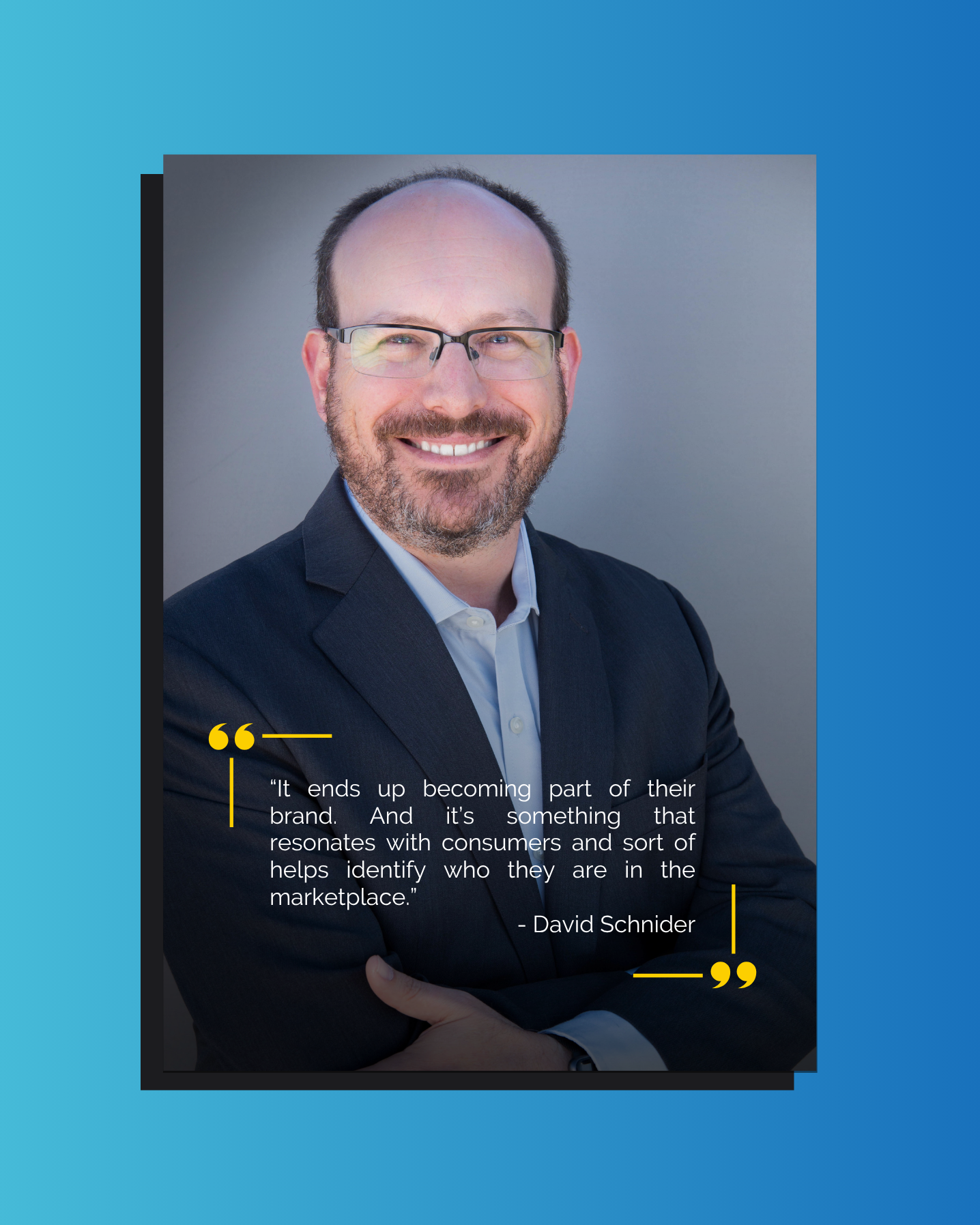
David Schnider: -just the business case, it ends up becoming part of their brand. And it's something that resonates with consumers and sort of helps identify who they are in the marketplace and how they're different from other companies selling similar products.
Genna Rosenberg: That's right. Yeah. And you just said a great point, David, which is when they build it from the beginning that way. And of course that's the best way to do it. But also, sometimes you have a juggernaut and it came out of nowhere, or maybe it didn't come out of nowhere. It's been building and building and getting bigger and bigger. And it's really never too late to start. I was doing some commentary recently about the US Open that has these signature cups with Gray Goose and they created a signature cocktail that they do at the US Open and it's the honey deuce and it's like this very famous drink, and everywhere I go I see people with these cups. I think they're probably going to start to sell those licensed cups at some point. They should, but right now they're collectible from going to the US Open.
And so, I was thinking wow, what a bummer that I went down a rabbit hole of doing some research around how does the US Open give back? And so. they do actually. They raise money from a few different things and they give back. But I started doing the math on it and where my mind went is called It's the Honey Deuce. What if they added a deuce? What if they added $2 to every cup? People are already spending twenty-three dollars for this drink. If they make if they rounded up a deuce and created a campaign around it, so it's twenty-five dollars, no they're not going to lose any sales and they might actually make more sales. So, if they had added a deuce to every one of these drinks, they would have been able to donate one point eight million dollars this year alone.
David Schnider: Wow.
Genna Rosenberg: And over eight million dollars since the program started. I was like looking at the reported sales of this signature cocktail. So, my gosh, next year I hope they added it.
Greg Pan: I wanted to ask so you, you've been in the industry for a while, you mentioned licensing show. are there other conventions that you typically go to? And I'm also curious what's kind of your game plan when you go there? What are you typically trying to accomplish?
Genna Rosenberg: I attend New York Toy Fair every year and I'm going to be speaking this year with Ashley Mady who's the CEO of Zigazoo at Toy Fair University, and around connecting with Gen Alpha and safety, and you know, what marketers should know essentially.
And I also have been the last couple of years connecting with students at Toy Fair at the student congress. So, I love that. I do a lot of mentoring. last year I was invited to give a talk of sort of mastering the toy fairish floor. For me, I am a little bit of a different beast in that I love to just walk the show. For many years I was locked or trapped in a booth with my clients and meeting with media. And now with the evolution of my career, I don't have to do that. And for me, it's so much fun to just walk the hall, like walk the aisles and run into people.
David Schnider: Yeah.
Genna Rosenberg: And it's very inspiring for me. I will run into someone and say, I have this thing we should do together because we're working on so many different types of things. And that's really actually worked out well for me. And I guess the takeaway of that is like plan, think about who you want to meet with, but don't have such a tight agenda that you miss opportunities that the universe might put in front of you. Where it might just be, which happens to me a lot, that the exact person that I needed to talk with is walking toward me in the aisle. And if I was booked every minute of the show, I wouldn't have time to talk to them. So that's one of the things that I really like to do.
I love a conference called the Social Innovation Summit. So. it's really incredible. This is a summit where corporate do-gooders come and talk about the programs that they’re doing, putting into the world, and they bring their partners with them. There are some celebrities there. Rainn Wilson was there talking about his new book, Soul Boom, and Steve Harvey came and he was talking about the program that he does to like mentor young black men to do wonderful things and so, yeah, Social Innovation Summit is so awesome. And I was really moved participating in the first Autism in Entertainment conference. And I'm going to be helping to produce the second one. So, I love to form the stories and figure out like panel topics and the perfect people who can really bring newness and fresh ideas to conferences.
So, hoping to speak at Licensing Show too, I've submitted a proposal for this.
David Schnider: You mentioned Autism In Entertainment, we talked about at the top of the show too. We should probably take a minute and tell us what that organization is and what it does.
Genna Rosenberg: Yeah, so Autism In Entertainment is incredible. It is an organization that creates career pathways for adults on the spectrum in the entertainment industry. And there's like one in four people have a disability, like eighty-five to ninety percent of people with autism for some reason are not employed. And I think there is so much talent that is really - think about it from the industry perspective there is so much talent that we should be welcoming into our organizations and benefiting from. And then from their perspective, we have so much opportunity to provide livelihoods, participation in our economy, and even more purpose for them. So, I went to this conference, my dear friend Marlene Sharp invited me to speak on a panel about careers in video in gaming, and I extended it into toys and licensing. And this is an organization founded by Judi Utall. And it was so incredible. I brought my niece, and just one quick short story, brought my niece, who I mentioned before, she had literally never ever done anything in the autism space.
She was in her late 20s, not unhappy, but finished college, moved home, lived with her parents and her cat, and didn't really do much. And she came with me. It literally changed her whole entire life. She said to me, Aunt Genna, I feel like I finally found my people. I didn't even I never identified with being autistic, but I am. I have a diagnosis. She found recruiters who helped her get jobs. She met resources of many different companies that hire differently. She found a community in an amazing place called the Spectrum Laboratory where she takes classes in improv, voiceover work. She's starred in their plays. She's been MC at places like the Laugh Factory. I mean it's and she met a boyfriend who she now lives in a community that was just created for adults on the spectrum. So, my point is there are so many ways that people can thrive if they're just given opportunities. And so, I'm doing this work. I'm feeling very passionate about it. I've developed a program for them, which is their official ambassadorship program to help open doors and create more opportunities for the licensing industry.
David Schnider: Yeah, I think I've told you before I have a cousin who, through that program, was hired. I don't, he's autistic and I don't know that he was ever sure he would find a job and he was hired to do special effects work, which he's now been doing for years and absolutely loves.
Genna Rosenberg: Yeah. Yeah. Everyone on the spectrum doesn't have the same superpowers, but whatever their superpowers are, they could be really, really good at it, you know, and incredible focus and attention or knowledge or, you know, whether it's in an accounting role, in a creative role, in you know, pop culture. So, there is so many different things that we could really be tapping this incredible talent.
David Schnider: Excellent. Well, Genna, it's been great talking to you. We really enjoyed it. Thank you for coming on the show. If people want to find you or find Genncomm, where should they look?
Genna Rosenberg: Yeah, thank you so much for having me. I'm pretty active on LinkedIn and love to share my views and thoughts on how people can lean into purpose there. And so, you can find me at, you know, Genna Rosenberg on LinkedIn. Genncomm has a website, Genncomm.com. And yeah, would love to connect. Thank you so much.
David Schnider: For listeners, you should probably explain how to spell your first name.
Genna Rosenberg: Yes, it's I was almost going to do that. It's G E N N A. So Genna with a G and then Rosenberg R O S E N B E R G, and Gennco dot com.
David Schnider: All right. well thank you.
Greg Pan: Right. Thank you, Genna. It’s great to have you on the show and learn more about your amazing career and all the different disciplines that you've picked up on the way.
Announcer: Thanks for listening to the Licensing Exchange. If you enjoyed the show, please share with others and kindly rate and review us on your favorite podcast platform. For more information on how we can help with your own legal needs, check out our services at nolanheimann.com. That's N-O-L-A-N-H-E-I-M-A-N-N.com.