
The Licensing Exchange Ep.4: From Style Guides to Trendsetting: Derrick Baca & Liz DeSilva on Building Fandom-First Merch
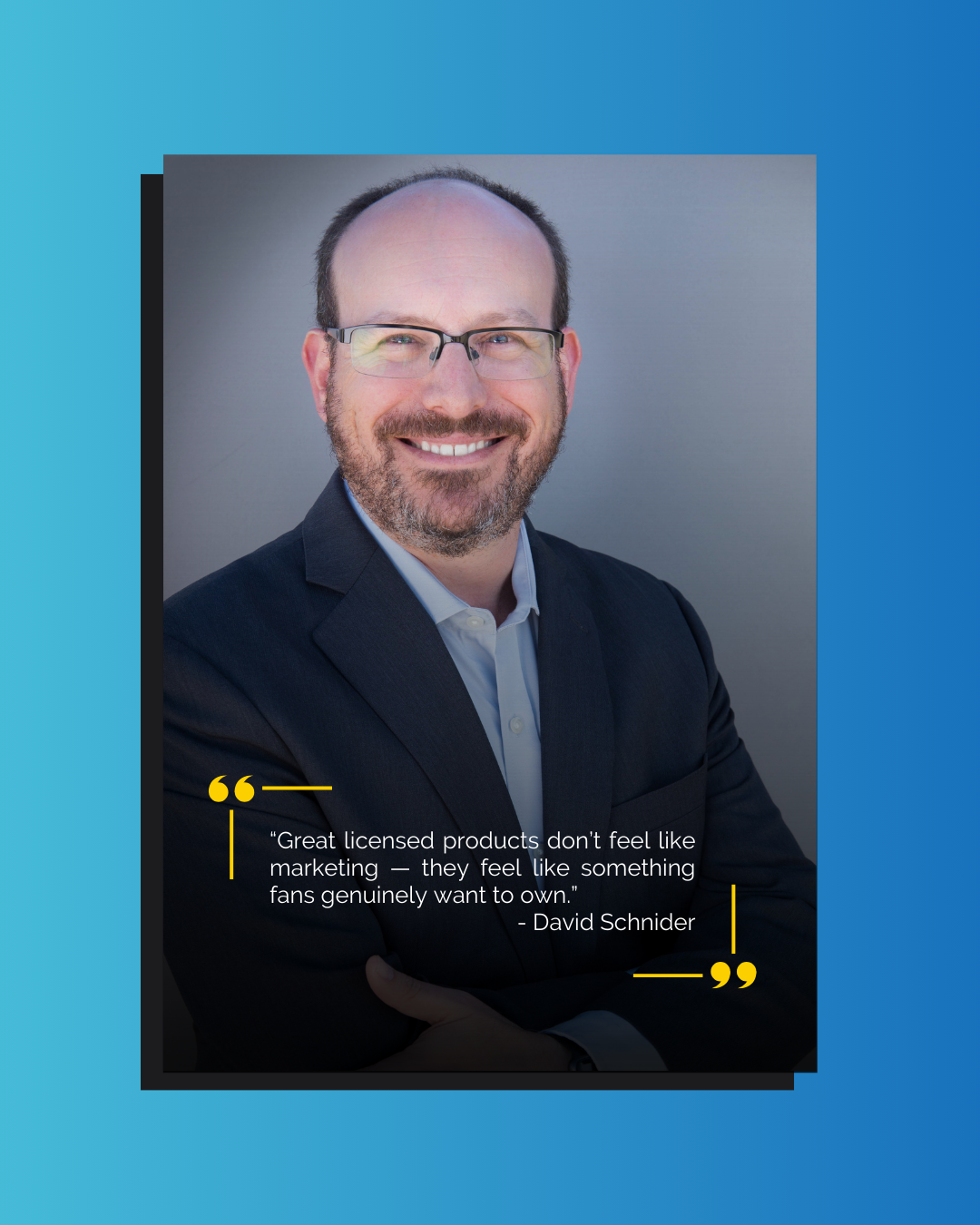
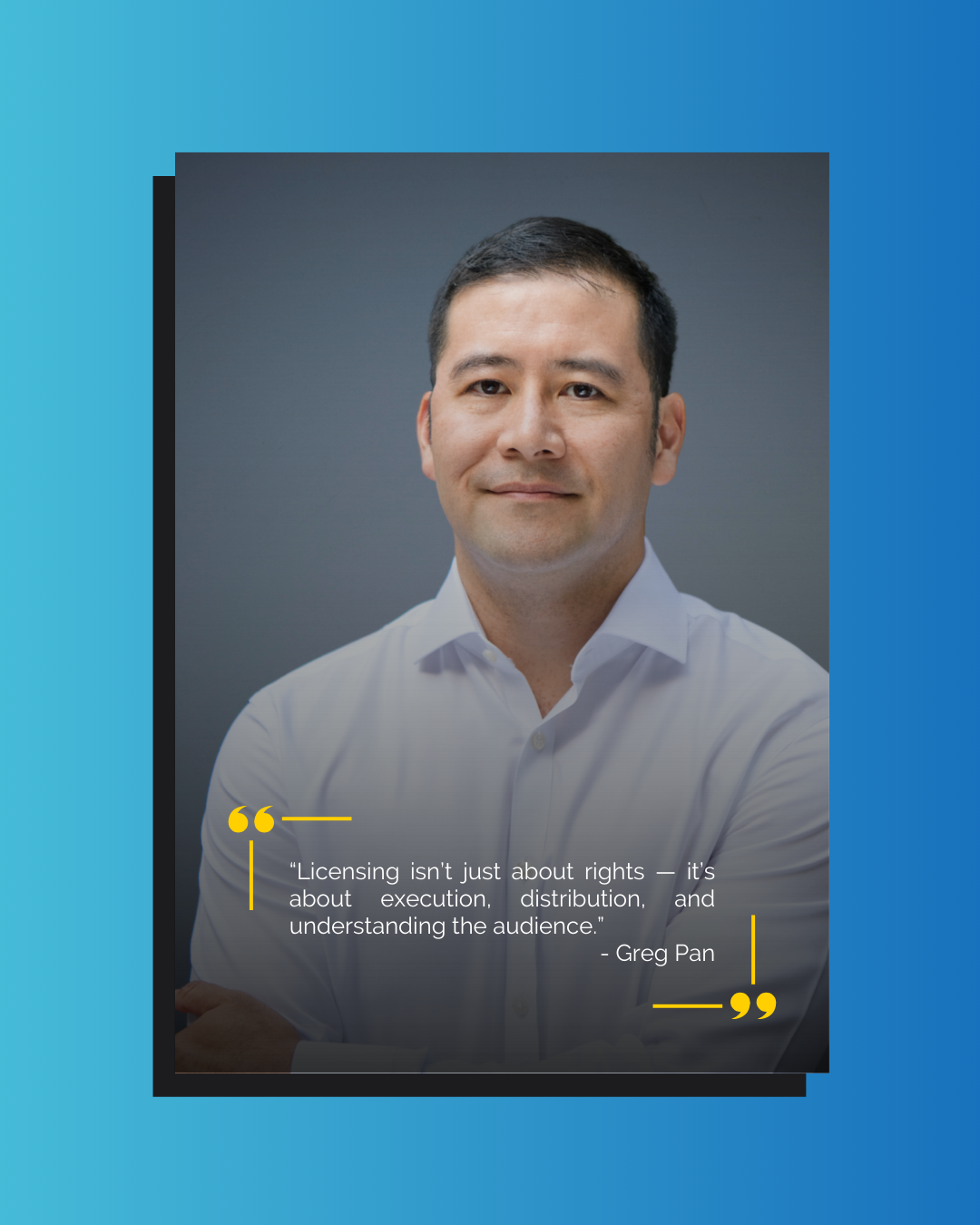
In this episode of The Licensing Exchange, hosts David Schnider and Greg Pan speak with Derrick Baca and Liz DeSilva, two creative-operators who helped shape culture-forward licensed merchandise across entertainment and consumer products.
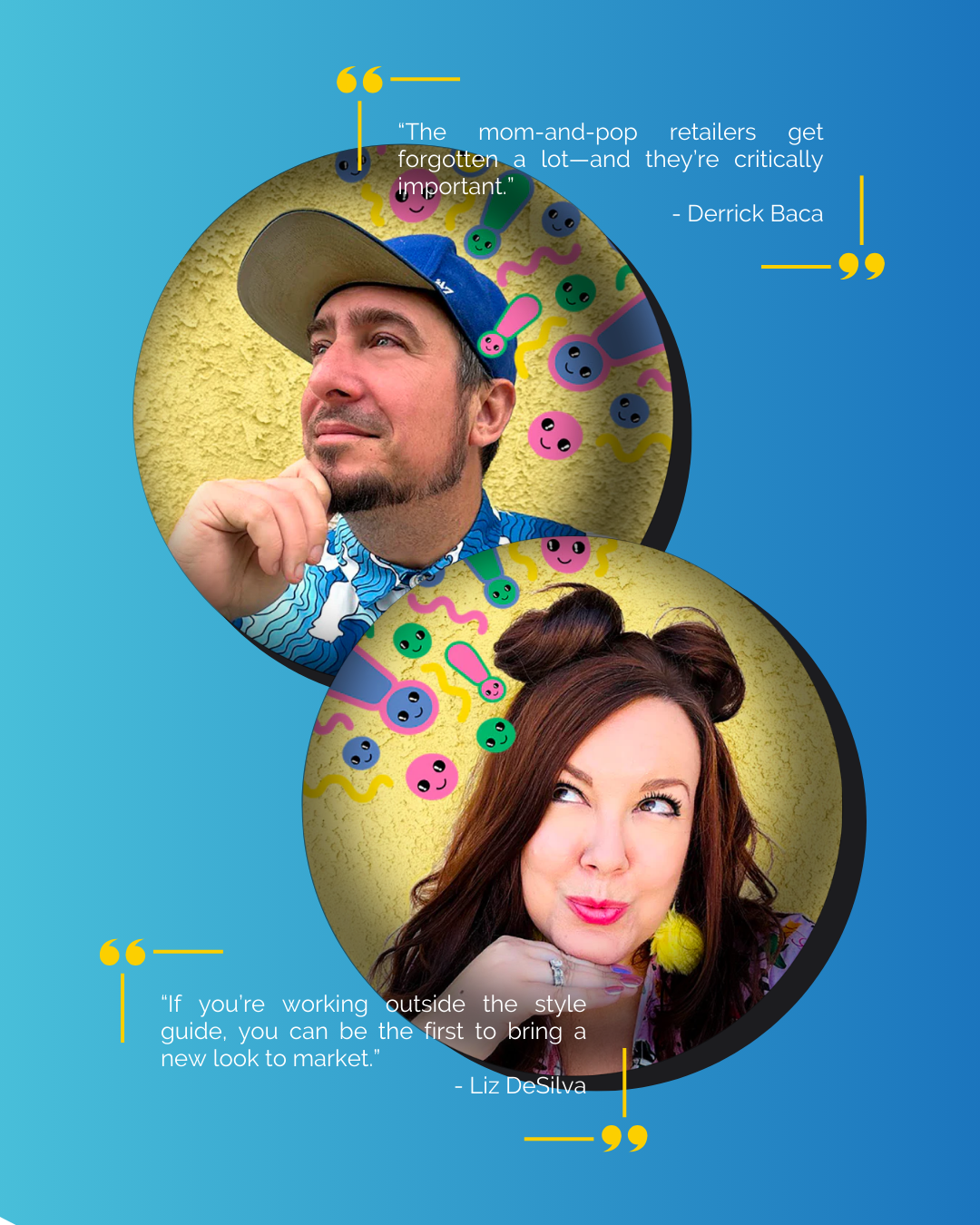
Derrick reflects on his journey from retail buying into leading licensing strategy, while Liz shares how deep fandom knowledge and creative execution beyond standard style guides turned accessories into true collectibles during Loungefly’s rapid growth.
Together, they discuss what actually drives success in licensing today:
choosing fringe and under-merchandised IP to stand out
earning trust with licensors to create original art
building community and collectible culture through limited drops
balancing studio expectations with retail realities
why mom-and-pop retailers still play a critical role
the mission behind their current venture, The Whatever Company, and the joy-driven brand “Whatever Makes You Happy”
For anyone navigating modern licensing, retail, or brand partnerships, this conversation offers both strategic insight and creative perspective.

The Licensing Exchange Ep. 4:
Podcast Transcript:
Announcer: You're listening to the Licensing Exchange, part of the Look Legal pods from the law firm Nolan Heimann lawyers for creative business makers. And now, here are your hosts, attorneys David Schnider and Greg Pan.
Greg Pan: So, today we've got not one, but two powerhouse guests in the studio. First up DerrickBaca, a licensee industry veteran with a proven track record of scaling product brands and developing their brand strategy. Joining him, Liz De Silva, a creative force who brings a deep understanding of fandom and trends, is able to translate those styles and storytelling into fashion accessories and collectibles. If you don't know them, you have seen their work in the wild as part of the creative collectible and culture shaping products in the industry.
Derrick and Liz have worked for Hybrid Apparel, one of the largest licensees in the US for entertainment and character-driven fashion. Then they continue their creative and brand-building endeavors at Loungefly, which if you're not familiar, make those very trendy mini backpacks that you see everywhere, especially at theme parks. Today, they're the dynamic duo behind The Whatever Company, which is a private label and licensed novelty merchandise company working with some of the trendiest licenses and serving well-known specialty retailers.
So, Derrick and Liz, welcome to the show. We're very excited to this conversation. It's going tobe very creative focus, which is great. That's both your backgrounds. We do want to get into what you've been doing in whatever company and how you got there, but I think it's important to kind of know a little bit of your history in the licensing industry. How'd you get your feet into doing licensing and kind of what drew you towards working with these brands?
Derrick Baca: All right, well, I can start. Well, number one, thank you for having us. I really appreciate the opportunity. For me personally, I started out in the industry as a buyer at retail. So going back to the 90s, I was a t-shirt buyer for a little company called Mr. Rags. And I started buying licensed products. And then around the year 2000, Hot Topic recruited me and I becamethe t-shirt buyer and apparel buyer there as well. And as I worked my way up and became a divisional merchandise manager and really my mentor, Cindy Levitt in the industry, kind of taught me the ways of the licensing world. And really that's kind of one of the biggest, I would say, steps into the world of licensing. After I left Hot Topic, I joined Hybrid Apparel to run their licensing division. So really working with all of the major studios and small independent boutiques in terms of IP. And so, as I went to LoungeFly, I kind of stepped back from the licensing day to day and really went into the merchandising, but really licensing is all a part of the entire process. And then with Liz joining also at whatever company, again, very active in the licensing area, but not the day-to-day business, but it really helps us determine our merchandising strategies for going forward, what license we want or not.
Liz DeSilva: I entered the industry through the fashion world. I started my career after going to Otis College at Self Esteem Clothing, designing and drawing cute little animals for girls' clothing. And I got my first taste of the licensing world when they got a Candy license. And I really, really enjoyed being able to work with iconic brands that I grew up with and when an opportunity arose at Hybrid Apparel, it really intrigued me to be able to work with the Disneysand the Warner Brothers and the Nickelodeons of the world. And as like an avid pop culture fan and especially huge Disney collector, I definitely was intrigued by the job and it all worked out and I've been in licensing ever since.
Greg Pan: So, when you start working at Loungefly, it was a pretty well-known brand with very popular with fans, but it really exploded when you were there. Can you tell us a little bit about that growth and how you were able to kind of tap into that fandom and turn Loungefly into like a household brand?
Liz DeSilva: I think from my creative perspective, Loungefly had great bones, right? They had some great silhouettes and some great partners and licensed partners. And what Derrick and I really tried to do was give it some very ownable details and things for the fans to grab onto. We really built up a community of fans on social media and really gave everyone a place to celebrate their fandoms. So, we had good bones, but really built it into more of a lifestyle brand than it existed as previously and expanded it into global parks and got eyes on it around the world.
Derrick Baca: I think another thing that we focused on as well is we expanded the distribution. So originally, I would say when we first got there, majority of their volume came from a very few amount of customers. So, it was a strategy of opening up to all the mom and pops in the independent boutiques in the nation. I've always called them the forgotten tier of distribution. So really going towards them and getting involved in, we used to do shop small Saturdays, really pushing and driving customers to go to small shops. And then also, obviously,at that time Funko had acquired LoungeFly and so they also had global distribution. So, in Europe there was Funko UK and Europe overall so that expanded. Then we went to Australia, etc. that kind of thing. So aside from the Disney parks, the Universal parks, that we really got that global spark, but the Funko was blowing up as well so that allowed us those opportunities to get into those markets.
Liz DeSilva: I think we also focused on more unique fringe licenses. We focused on lot of licenses within even like the larger Disney portfolio that companies wouldn't really take a chance on, things that didn't have assets, things that had great fan communities behind them, but they never had any merch to buy. So, we came out with things that nobody ever had anything to buy before. So random, you know, Robin Hood didn't have merch. Disney's The Brave Little Tailor. Just some like really fun fringe things that we created a lot of artwork for. And I think also going outside of style guide, which is something we're really well known for, really, really helped build Loungefly by creating unique art that wasn't available anywhere else.
Derrick Baca: And we really tried to make LoungeFly a collectible accessory company. I remember having a conversation with Brian Marriotti at the time going, accessories aren't collectibles, backpacks aren't collectibles, and going, no, no, no, wait. So really, we talked about and really focused on our website to do limited edition. We're only going to make 600 of these or 1,000 of these. And really, I would say during the pandemic, when a lot of retailers closed when we did these limited edition exclusives on our website, it went kind of hysteria. And then we started working with even mom and pops and they were able to purchase the quantities to get these exclusives. So that exclusivity, the lack of like opportunity to get merchandise at retail stores, cause everyone's at home, that all kind of catapulted the overall volume as well.
Greg Pan: Liz, you talked a little about picking less-known licenses and brands. What was your methodology for picking those more obscure ones?
Liz DeSilva: I think being a fan when you're shopping, you're seeing a lot of the same, right? And it's totally understandable because once you get into the licensing industry and you see everybody's working from those same style guides, but if you are an avid park goer like me, you see that people are actively going out and creating their own merch or, you know, you'll dig up stuff on Etsy because there's nothing to buy. So, the fact that I would see it out in the world and people were creating their own, there is a demand for it, but there's nothing on the studio side to provide for those fans. So, I think between creating unique art styles that didn't exist and giving those fandoms some love, I remember people getting so excited about The Rescuers and getting and Rescue Rangers and some of the more unique things that you used to love and there's never ever been merched. So, I think it was just showing that we could really be an accessory company that had something for fans of everything, not just the big blockbuster characters.
Derrick Baca: And I think that the licensors through our track record working with them for so many years really trusted Liz and I because we were those nerds that really understood the properties and what the real IP was about. And through Liz’s creative direction really paid the proper homage to the actual IP and it was never too off model or anything like that. And she worked really closely with a lot of the CP teams that really allowed the opportunity to have our unique vision, our unique kind of art style to do it. Because at the time, I would say that, you know, we've seen the Redbubble, you've seen the Threadless, you've seen all these like artists, collectives trying to do this stuff, but it's never like approved. It's always on that bootleg site. So,Liz, and she always has the best artists that she always works with. And so being able to work closely with these studios, the studios trusted people bring a different point of view, but still follow the guidelines.
Liz DeSilva: Yeah.
David Schnider: Do you do feel like when you're picking sometimes these less well-known or niche properties that you're taking a risk or you are you confident in the market research what you're seeing in the market that it's going to work most of the time?
Derrick Baca: Always a risk. I would say it just always is. There are trend followers, there's trendsetters, and I think if you take things in a unique way, not everything will work. So, you do take that risk, but not everything works that you think is going to work too. At one point Marvel or DC or all these superheroes, they don't always work too because they get saturation in the market for even things like that. So, I think that because the licensing industry and the licensing competition, let's say if you're Disney or Warner Brothers or any of these big studios, you typically have between two and four competitors in your space all utilizing the same thing. So, in that case, what can you offer that's not going to be that top A property all the time? And sometimes when you're a brand as well, it's OK to do these smaller things and be differentiated in the market so people and fans know that they're going to come to something unique there. If they need something that's wildly popular or a huge movie, they know they can go to a Walmart or a Target or any of those kinds of places to find that merchandise.
David Schnider: Are there particular hits or misses you can share with us? Things where you were surprised that something did really well or really poorly?
Liz DeSilva: Ooh, I have a hit. So, I did a whole Disney like Mickey and Minnie ghost, floral ghost collection. And it was like super girly; it was bows and flowers. And Derrick, I remember Derrick being like, are you sure about this Liz? This is weird. You know, it's a little out there. And I was like, no, I really feel like this is where the trend's going. People are going to get it.
And two years after that, it's essentially like the entire theme of Disney Parks Halloween collection this year. So, I definitely think sometimes taking a chance is, mean, always, think you have to take chances. If you're going to be a brand that matters and a brand that's staying on top, you have to continue to not just try new trends, but create trends and create that new innovation. Because I always say, well, everybody's busy copying what you did as long as you're not worried about them and you're focusing on the next new thing to offer your fans. You'll always like stay ahead of the game. Derrick, I'm trying to think about a miss.
Derrick Baca: I would say that well there's.
Liz DeSilva: Maybe taking Star Wars too deep.
Derrick Baca: There's that, so at LoungeFly I would say that we're predominantly a female - I would say customer overall ladies handbags I would say we tried a lot of DC superheroes and they were always really challenging because I think it was a little more male and we didn't have that many male silhouettes but you know you want to support your licensing partners and put stuff in the market but overall - I mean as a brand too, we never really had major misses in terms of we're always forecasting our purchases ahead of time and getting the interest quantities. So,when we make our purchase decisions, we kind of have the placement. We're not just bringing in inventory and hoping it sells kind of a thing, but in terms of just overall rate and selling online we did see some like it's more those male types of things, there's even some Marvel or like some Star Wars or just dude heavy products didn't always work for that particular brand.
Greg Pan: Liz, you talked a little bit about style guides and kind of going off-road and coming up with your own art. For listeners who are not familiar, can you kind of describe what the style guides are and kind of how you're convinced licensors to not follow them and make your own thing?
Liz DeSilva: Yeah, so style guides are created by the studios to give to all their partners in consumer products to create their categories. And they usually include a handful of character poses, some spot graphics, some all over prints. But those style guides are typically shared amongst all their partners. Sometimes there's an exclusive one for a retailer, but then you're still competing with that same artwork with other manufacturers. So, I really found success in convincing the studios to let us create, not just unique to us, but unique to retailers too, creating different looks and feels for different retailers. Like within Marvel, we went into like some, like 70s comic book looks and like the neon colors and in Star Wars created some like art nouveau, like really beautiful female focused art nouveau art. In Disney we created everything, but I think one that people can see out now is we did beautiful like stained glass Disney princesses and just creating all of that art in house just allows you to not only separate from other partners, but you know, to give your retail partners something unique so that in the specialty world, everybody wants to have that unique fan focused collection. And if you're working outside of style guide, you can be the first to bring a new look to market and offer that to your partners. And that's really, I think where I and Derrick have really grown our reputation where we put a lot of energy into differentiating unique product in the market.
Derrick Baca: I think challenge for, for licensors is that when they're building style guides, they have to take into account companies that maybe don't have deep creative teams. And so, they have to keep it on a certain level of basic and we've been mostly involved in like I would say specialty tech retail, except when we're a hybrid, obviously you did stuff for mass and discount and all that kind of stuff.
But really, you'll get a style guide where sometimes it almost feels like it's a packaging guide, that they're more concerned about the packaging than the actual art. But then if you get art, then you'll get, like Liz said, a pose or two. But I think one of the interesting things that Liz and I would do when we would decide to go into a property is we would actually watch that movie or watch that cartoon. We would take screenshots of specific, if you know, you know moments and then go, okay, these assets don't exist. But this is a moment, and that's where we would be able to work with the character artists of the different studios or different licensors and say we want to do this. There's a lot of pre-work to getting that done. So really, we have to create a bunch of trend boards. We have to have the actual images of what we want to do and work through that because the approval timeline when doing that could take weeks and months. So, it's a thing you take on when you want to do that.
David Schnider: Do you find that the licensors are usually open to that kind of creative work that departs from their style guide?
Derrick Baca: It took time. I would say it took time and people used to what we do. Not always at front. I think it's different by the tip type of license. If it's an anime out of Japan, I'm going tosay no. They are not interested in anything like that. But some of the like, I would say smaller IPs are just building their brands. They are very open to it. So, I guess it all depends.
Liz DeSilva: Yeah, I mean, we've redrawn everything from Disney to Star Wars, Nickelodeon. Just recently I redrew Strawberry Shortcake. I mean, there are a lot of partners that are open to it because really, you're helping them. You're helping them not have to create more assets and you're creating more retail moments for them. So, the ones that allow us to, we've been able to really grow great partnerships and great retail collections. And I love working with those studios.
Greg Pan: Yeah, to me it sounds impossible because I've worked with the licensors, the Disney and Marvel, and they have extensive creative departments. These people have held these jobs for decades and have created all these style guides for every single new property, new movie. They're not cheap either. Style guides can easily spend, easily cost 40,000, even $100,000 to develop and produce. They don't just slap them together with a bunch of images. So, to kind of go to them and say, hey, your style guide's great, but we actually don't think it's great. We want to make our own stuff because we think this is what the fandom wants. Trust me, many licensees have tried and it's almost like always an automatic rejection. So, I'm just curious, do you kind of come up with this style and show it to them or do you kind of get buy-in from retailers and buyers or what's kind of your approach?
Derrick Baca: Liz - before you do that really quick, the best parts of going to these summits and when we talk about creative, it's usually after the end of the summit, after them presenting, they would always ask Liz and I, okay, now what do you think? What can you use? What do you think you should do different? They were always waiting for, because we always had a presentation about their brands to be after they presented us. So, I'll let Liz finish that.
Liz DeSilva: Yeah, so definitely always a super collaborative process. That's the only way it works. And we would do quarterly or, you know, twice a year meetings where I would pitch all my ideas, you know, broken down by say it's Disney, broken down by Princess, Pixar, classics, villains, everything. And I put a lot of time and energy into the why explaining why this trends important where it's coming from, which retailers I see buying this, so nothing is ever shown to a retailer like that until there's that partnership, with the studio. So, it definitely is a process. It's not something if you're looking for a quick turn program, to throw out there. But I think, I think that the studios are open to it. They want to be on trend and their style guides, like you said, are massive, you know, undertakings, but that also includes working way ahead.
And so, your ability to react quickly to trend is pretty limited when you're working that way as a major studio. Whereas for me, we're smaller and nimble. We have great artists that we're working with. I can turn an asset pack in a week if I need to. So, we have that flexibility that we can offer that to the studios.
Derrick Baca: And I think every IP owner or studio, whatever, they have their own point of view when it comes to creative direction. And so not everything fits into this glitch trend or this, like, they will always come out with like three or four different trends, but like, on a macro level that may work because they saw something in Japan or Europe or this and that, but like there's so many trends happening by tier distribution or even retailer that you just can't use those things as well. So, I think that their challenge is, is they have to put something out there in terms of the style guides and their visual directions that again, the companies that don't have those people out in the market or they're just pumping out mass produced stuff that they don't have the time to really get that creative and they utilize those style guides just to put it out in the market.
David Schnider: I know sometimes you're working with existing properties, sometimes you're working with newer properties. When it's a newer property that isn't as established in the market, like I know you guys were, I think, early on board with the Minions. How do you find properties that you think are going to do well and assign into them, you know, early on when you don't have the kind of nostalgia and market presence that you do with the more established properties?
Derrick Baca: That's always a crap shoot. I would say that the licensors have their job to sell it. Their RBD teams that go to the retailers to try to get programs based on the marketing that they have. I mean, when I was at Hybrid, I mean, one of the first things I did sign was Despicable Me. And I did decide to sign that and convince the ownership to sign it because I did see one little yellow minion. And from my history of buying, I knew that little yellow things sold, I remember Pokemon, I remember Pac-Man, so was like, yep, Tweety Bird, little yellow things will sell, so I decided to go on that. But even when we first launched, it was still kind of under known, and I only had a couple retailers even testing it, but then the movie happened and it did what it did, and it was wildly successful. But for every Despicable Me new property, I've had some other very difficult things I thought would work that didn't work as well.
So, I think a lot of it has to do with your relationship at retail and how well your salespeople can really convince the buyers into this is going to be important. And really, it's like those IP owners, how well their retail business development team is selling in the property as well. Because a lot of times buyers, they're going to react more so than anything. Now, when you're a big studio, you have the, I would say the financial means to be able to do bigger promotions and work with your retail partners so they work in a different manner. But new up and coming things, I remember Napoleon Dynamite when I was at Hot Topic. Like it was kind of a, we bought a couple things, that movie hit. Man, we went bonkers trying to get as much product as possible. Now that was very specific to that, but no one could have predicted that. I think that Vote for Pedro shirt was like the biggest t-shirt in the history of that company. And even take Frozen for example like Disney didn't know what they had, that thing came out and then I felt like it was a year and a half before retailers really even finally got on board to getting it all, so you win some ones-
Liz DeSilva: I mean, look at K-pop Demon Hunters. Look at what's happening right now. No one was ready for that. No one.
Derrick Baca: I mean, Sony sold it and made a good chunk, but not what Netflix is going tomake from it now.
Greg Pan: Right. Yeah, think at Disney they looked at Tangled and Princess the Frog and kind of said, Frozen's probably going to do similar. They kind of based on that because they don't want to overproduce or make too much and they stuck with a problem where their stuff doesn't sell because that looks worse for them. I guess for whatever reason, they didn't realize they could capitalize on Princess Sisters. They didn't see the value in that initially.
Derrick Baca: I really think it's the power of music that touches a culture. any of that to K-pop's the same way, like the certain movies that have music that touch the zeitgeist of culture, I mean, Let It Go became this big, like all of it. So, I think when you have that type of stuff, that's what's important.
David Schnider: I still have an Elsa wig somewhere here in my office.
Liz DeSilva: Haha!
David Schnider: So, Derrick, there's something I wanted to ask you about. You had talked about the small mom and pop shops. And I saw firsthand; I was in-house at a company that worked with mom and pops and ultimately had to give up that market because they were costume sellers and they all got pushed out by the bigger retailers. Do you think that's still a viable market for collectibles?
Derrick Baca: Absolutely, think it's interesting because a lot of big retailers, let's just take Pop Mart, for example. A lot of big retailers want to buy Pop Mart, but since they're opening their own stores here, like they can't get access to it. But all the mom and pops, they actually will have more access than even like the major retailers because it's a cool hip - it keeps that halo effect and that search and kind of search for the item where it's not in the most available spaces. So, if you go and try to find a Labooboo anywhere, it's never going to be at a Hot Topic or a Spencer's or anything like that. It's going to be in that random anime shop that you're how do they get that kind of thing? So, I think in the collectible space, I think it's extremely important that tier distribution. So again, when we launched our new brand, Whatever Makes You Happy, the mom and pops again are a big target for us because I think a lot of creators work very closely with these mom and pops where they don't have the access to work with the bigger retailers. And so, as they're trying to build content and their followers, when they can partner with a smaller shop and to get that kind of exposure, I just feel like it gives this sense of like community, the sense of like, like importance to continue the economy going through these mom and pops. So, I think they get forgotten a lot and they're critically important.
Greg Pan: There’re challenges too, right? Can you talk a little bit about what are the challenges of working with moms and pops and just finding them too?
Derrick Baca: So, yeah, well, challenges, well, there's a couple ways. One, when you do direct, but two, there are some distributors out there that have a big business. Now, obviously, we just saw what happened with Diamond and the turmoil going there, but there are some other distributors out there that are doing well and can reach there. I would say the biggest challenge is - it's always credit. So, you're working with a lot of credit cards with a lot of these people. Shipping.
It could be all over the country. It's like a centralized shipping place There are logistical issues with that and the quantities are always pretty low but if you can stock inventory it can make it available, you typically have way better margins when you sell to the mom pops versus selling to a retailer because like for example if you want to sell your product to a specialty retailer, they're going to expect 60, 65 points, the mom and pops who are used to buying from, would say distributors, they're used to working on 20 to 40%, rarely 50%. So, they're used to it being smaller margins because distributors again are buying from companies like us and then they're putting their markup on it, right? And so, when you could work directly, I think that's one of the big things when we work directly with mom and pops at LoungeFly is that we were selling $80 backpacks, but they were able to buy them at our wholesale cost of $40 and they were makingmore money on a backpack than they would on any toy product like five toys or something like that. So, I think that that also helped, but we had just an onslaught of those accounts or like this is an actual huge moneymaker for them to keep the lights on. So, but there are the challenges that's I would say the challenges of like this this guy got it before I did or like they put it on sale too fast. So, it's like a policing state sometimes that kind of drove me crazy.
Liz DeSilva: It is like a community of small shops, definitely like all know each other and in a lot of cases support each other, but it is also like a competitive landscape. I will say that you asked about how do we find them. So, I have honestly found so many of our current partners just by being on social media and just my For You page, like organically from posting about, know, Miffy and Killer Clowns From Outer Space. I organically have found so many or spent 10 minutes searching around for other, you know, fans of this or that and it's, social media is such an incredible tool in terms of just connecting where you couldn't do that before. And it's just such a, it's so much easier to find the people that should be selling your product.
Derrick Baca: And also on our website, we also have like a wholesale inquiry. And so, if you're a mom and pop and you run across our brand, you go to our website, you can fill out a little form and then we can consider you as well.
David Schnider: Yeah, we've talked a little bit about your company, but can you tell us about the whatever company and what you guys are doing now?
Derrick Baca: Whatever company, whatever it is you need, whatever you want.
So, we do a lot of things. So, kind of broken up into, I would say, three segments. First segment, like you mentioned before, was kind of private label. So, when a lot of retailers have their own licenses or DTRs, we become a manufacturer for them where we can design, develop, and then they'll submit it for approvals, and then we'll manufacture it, ship it to them. Or we're a traditional licensee where we have licenses ourself, and then we will design for all the retailers - sell it, design, develop, etc. And then we've just recently launched a brand called Whatever Makes You Happy and that brand includes bags, jewelry, a lot of mystery box, bag charms, enamel, small accessories, and things like that.
A lot of what we do, no one's going to know about because when you do licensed product, it's not about your name, you're just the manufacturer and it says SpongeBob, you're not going to find what that is. And when you do DTRs, again, it's that retailer and there's the license. So, when it's our brand, that's more of a halo brand. So, I'd say our licensed manufacturer stuff and our DTR stuff is price point conscious to fit a retailer's margin structure. And then our brand is a little bit more halo, a little bit higher priced, but still very affordable in the world of branded, but it's a different quality level as well.
Liz DeSilva: And I'd say that our brand, like our major focus there is really bringing joy in a time of, it's just rough. You know being an adult, adulting in this world is not the easiest, just existing in this world. You know, people are struggling and there's this, there's this escape, right? In pop culture, there's this beautiful escape. Whether it's a feeling of nostalgia or it's just you escaping your current reality and watching the new episode of Peacemaker or Wednesday or whatever it is, whatever world you want to escape into, whether it's a book, it's TV, whatever it is. And our brand really just kind of celebrates that and makes it okay and gives you a little mystery box to open at the end of the day that you cannot just
display in your home, but carry with you, which I love. And I really think that we're just trying to bring a little bit of happiness and let people know that no matter what your age is, it's okay to have those bits of joy in your life and to have that escape. It's 100 % okay.
Derrick Baca: And I think it's all ages too. From young to my mom who's 72, would loves to buy mystery box toys and just opening it and just having that excitement of like, what am I going toget? So, I think that culture is really healthy considering the current climate that's going on right now.
Greg Pan: Is there a particular type of licenses that you're pursuing, whether it's nostalgia or kind of more fun and cute type of brands?
Liz DeSilva: I think it's definitely a mix of nostalgia and a lot of our brand ideation came during a trip to Tokyo. We really, really love Japan's attention to detail and the way they support the fans by putting the “in the know “details into the bags. always love Sanrio says, small gift, big smile.And so, I've always fully believed that those details matter. And I think the details are from functionality and design. And so, we're really striving to hit those details on both sides and really offer something different. And when we look at licenses, we're doing the same. There are some evergreen licenses that we feel like we can really refresh and offer something different and unique, as well as going into some new licenses like, you know, we're having a lot of fun with San X and Rilakkuma and Sumikko Gurashi and all these great things that don't have a ton of placement. So, I think we're very open to licenses that fit our mission of bringing joy. And some of these more fringe licenses have such an amazing story behind them that I love to then interpret that story into product.
Derrick Baca: I think Pop Mart has had a real impact on the retail landscape because it's not even their licensed products, it's their own internal brands. If it's cute, it's going to sell. And I think that there's a lot of licenses out there that never got the attention or even the opportunity because it wasn't one of the big ones and you didn't know it. But now we have opportunities of testing so many more licenses that are just adorable. And if you could do cute plush or pins or all these kind of like impulse blind box things it's almost that's adorable. I don't even know what this I'm going to learn about this, I think people are open to learning more about new things and expanding their fandom versus just the same kind of things that have always been there. But even so in the world of like blind boxes, it's been predominantly plush and just action figure toys or things like that. We're getting into all different types of blind box things.
Liz DeSilva: Vinyl figures
Derrick Baca: Whether it is a bag charm, it's dangled keychains, I mean even buttons, like you could put things, anything into a blind box and then it's just as fun. So, I think that we're actually adding different things in the market than just things that are always shown loose. I we're seeing bags, like how can we do bags blind box? It's kind of a crazy idea but I'm now seeing big huge like thousand scale plush items and vinyl toys that are sold for like a thousand dollars being sold so kind of wide open.
Liz DeSilva: I think yeah, us and I'm sure others are definitely going to push the boundaries of what you can expect in a mystery box. It has definitely been pretty limited so far, but I think you're going to see some really extreme options for you to purchase in mystery form.
Greg Pan: That's fascinating, think that's kind of the story of licensing is, you can look at what movies are coming out and kind of listen to the big media brands and studios, like what are they going to push, but you can't really predict what's going to be popular, what's going to resonate with fans. And I think what we enjoy hearing from both of you is there's kind of a derogatory side of licensing where it's just logo slapping, where you just take something and just slap it on a shirt or a product and there's no love put into it. And you both definitely see that there's a fan, there's consumer at the end of this chain who needs to fall in love with the product, needs to actually like it. They're not just buying it because they're a fan. They need to resonate with the actual execution of it. So, I think that's what really has distinguished your careers from where you've been and where you are now. That's why you've been able to tap into these markets and succeed.
Liz DeSilva: There is nothing, nothing that pains me more in this world than a logo slap collab that could have been amazing, but it's just a logo slap that very much hurts my heart. So, I think you nailed it with that.
Derrick Baca: Yeah, I think one of the interesting things that we've been getting into for just overall whatever company has been these book properties. And so, as we've just recently signed A Court of Thorns and Roses, so Akatar, as most people know it, like there's no movie. There's no like anything really to it. You have to know the book. You have to know insides of it and developing. You get some like a couple icons on the book and some pages that it does force you to really get creative. And if you don't have fans working for you who actually know, the properties, and I feel like Liz always does the best job of finding artists who are just the most deep into their fandoms. We have a great artist who's into horses and loves reading books. And so, we're like, Akatar, this is the perfect thing. She's like, I've read all the books. I know exactly what to do because these even book publishers getting into licensing, they don't know about merchandise. They don't know anything about that stuff. So, it really takes a licensee who's got a creative team to really put that together.
Greg Pan: Yeah, young adult publishing is a completely untapped market in terms of licensing and there's millions and millions of readers.
Derrick Baca: Yep, the spicy book talk world is an interesting one.
Liz DeSilva: Don't judge Derrick, we all love a spicy book.
Greg Pan: So, yeah, thank you both for joining us today. It was great to hear your perspectives on licensing industry, how you've been able to break out creatively and come up with identities for the products that you work with. And it's been, I'm sure the fans have been thankful. They, know, again, buying a product is, it's not just buying merchandise because you're fans, because you want to feel something, you want to tap into and escapism from the world we're in. So, you can kind of dive deep into your fandom. Thank you so much. It was great hearing from both of you.
Derrick Baca: Thank you for having us.
Liz DeSilva: Thank you.
Announcer: Thanks for listening to the Licensing Exchange. If you enjoyed the show, please share with others and kindly rate and review us on your favorite podcast platform. For more information on how we can help with your own legal needs, check out our services at nolanheimann.com. That's N-O-L-A-N-H-E-I-M-A-N-N.com.